New Regulations: An August 2026 Presidential Executive Order and an FCC ban on foreign-made connected inverters are reshaping the market¹.
Cost and Availability: Expect potential price increases and limited choices for solar inverters, batteries, and generators due to these new restrictions.
Existing Equipment: Currently installed equipment and inverter models authorized before July 28, 2026, are generally not affected by the FCC's July 2026 action².
Domestic Opportunities: The rules may boost US solar manufacturing, but domestic panels could remain pricier than tariff-free imports⁵.
Tax Credit Changes: The 30% federal solar tax credit for purchased systems expired at the end of 2025, impacting overall project affordability³.
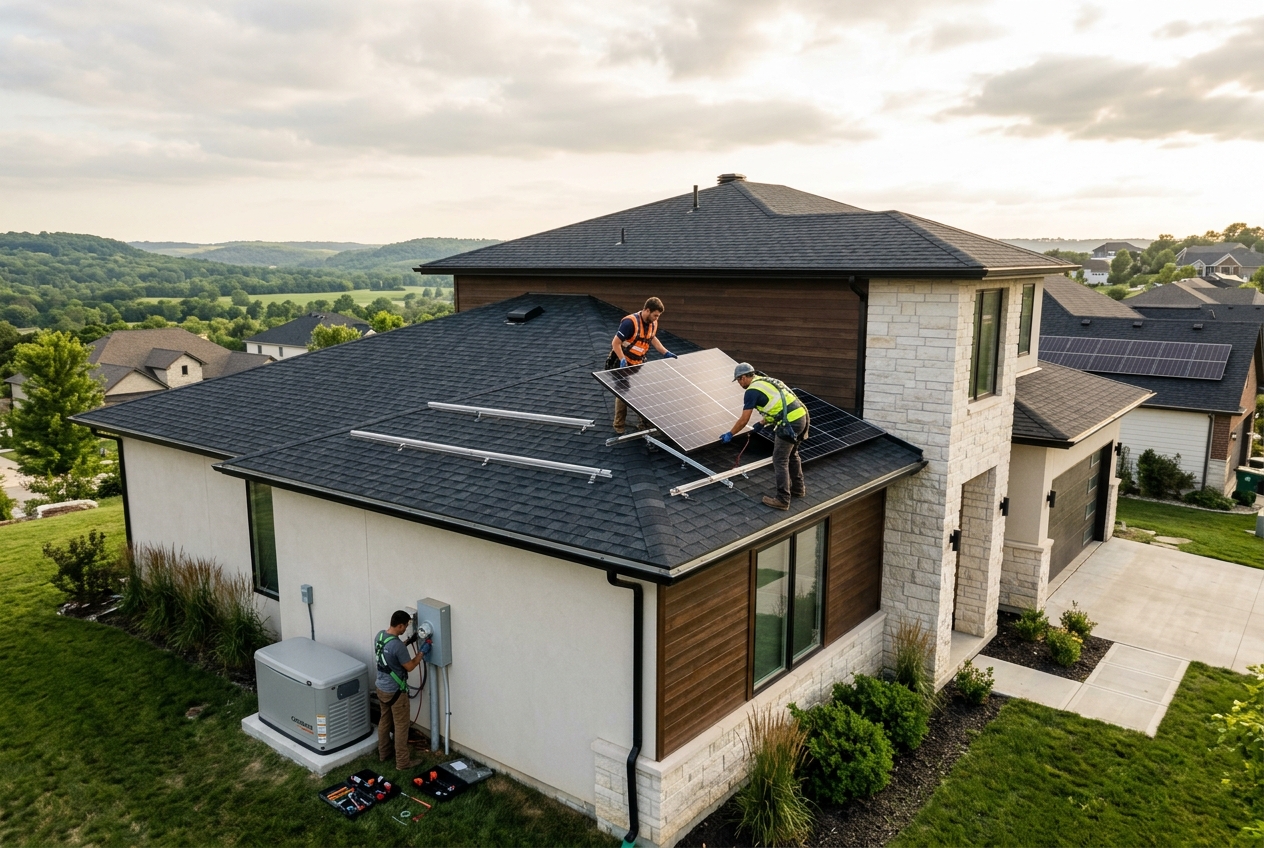
Homeowners considering solar panel installations or backup generators in the US face new regulations that could significantly affect project costs and equipment availability in 2026. On August 26, 2026, President Trump declared a national emergency for the US power grid. This action, through Executive Order 14420 (EO), targets "unusual and extraordinary foreign threats" to the nation's bulk-power system¹.
The EO specifically prohibits transactions involving foreign-produced electric equipment, including inverters, batteries, and generators, from "Covered Foreign Entities" after August 26, 2026, where the Energy Secretary determines that covered equipment is associated with a Covered Foreign Entity and presents specified national-security risks. This applies to "non-distribution level equipment" and interactions with "transmission lines of 69kV or greater," meaning equipment connected directly to large parts of the grid rather than purely residential systems . Separately, an FCC regulation from July 28, 2026, already banned new foreign-made connected power inverters from the US market due to cybersecurity concerns².
Impact on Solar Inverters and Systems
The FCC ban directly targets new foreign-made connected power inverters, impacting residential solar installations. This includes inverters with Wi-Fi, cellular, or Bluetooth communication capabilities . "Dumb" inverters without these communication features are exempt from the FCC ban².
Currently installed equipment and inverter models authorized before July 28, 2026, are generally not affected by the FCC's July 2026 action. This effectively gives these grandfathered devices a market advantage². Roughly 50% of the US inverter market for solar energy is currently dominated by Chinese companies . US-based Enphase Energy and Israel-based SolarEdge already supply most inverters for residential rooftop solar systems . Enphase microinverters, for example, are generally outside the scope of the foreign-production concerns driving the FCC action .
Expected Market Changes
The FCC ban is expected to limit consumer choices for new solar installations and off-grid battery projects. It will also likely increase prices for these projects. Innovation in home solar and off-grid battery technology may slow as a result². The ban applies to new inverter models from all foreign countries, regardless of their allied status .
Homeowners should prioritize checking if their desired inverter models were FCC-authorized before July 28, 2026, or are produced by US-based companies to ensure compliance.
Before these new regulations, declining solar system costs were a key driver for market growth in the US . Additionally, the 30% federal residential solar tax credit (Section 25D) expired on December 31, 2025, for purchased systems. This means homeowners buying solar systems now will not receive that federal tax credit³. Some federal credits under Section 48E might still be available for third-party owned systems (leases, PPAs) through the end of 2027, but this is conditional on installation before the deadline and adherence to "foreign entity of concern" (FEOC) rules⁴.
Solar Panel Manufacturing and Costs
While the new rules primarily affect inverters and other components, the broader solar supply chain is also seeing shifts. US solar module manufacturing capacity surged from 8 GW to almost 70 GW by June 2026, an increase of 750% due to tax credits . For the first time in over a decade, the US now actively produces all major solar supply chain components: polysilicon, ingots, wafers, cells, and modules .
However, domestic solar panels will likely remain $0.03-$0.08/W more expensive than comparable tariff-free import equivalents. This is due to inherently higher domestic manufacturing costs for labor, energy, and materials compared to Asian production. The advantage of domestic panels lies in avoiding tariff uncertainty and qualifying for FEOC bonuses. Several US manufacturers offer compliant panels, including Q.CELLS, First Solar, Silfab, Meyer Burger, Heliene, and Mission Solar⁵.
Pros
- + Increased domestic solar manufacturing capacity
- + Reduced reliance on foreign components for panels over time
- + Domestic panels avoid tariff uncertainty and may qualify for FEOC bonuses
Cons
- - Domestic panels generally cost more than tariff-free imports⁵
- - US cannot yet build enough precursor components to meet panel demand
- - Potential for higher overall system costs due to component restrictions
Qcells is developing a factory in Georgia, where solar-cell production began in June and full production is expected by Q3 2026, with 3.3 GW each of ingot, wafer, and cell capacity and 3.5 GW of modules. Qcells describes Cartersville as the first and only U.S. vertically integrated solar factory producing major components from ingot through finished modules under one roof.
Battery Energy Storage Systems (BESS)
The August 26, 2026, Executive Order explicitly includes battery energy storage systems (BESS) as covered equipment⁶. The US currently relies heavily on Chinese-made batteries . Existing tariffs have already contributed to higher costs for home battery storage . Despite these challenges, home battery storage installations set a new US record in 2026⁷.
The US residential lithium-ion battery storage market was valued at $1.52 billion in 2024 and is projected to grow at approximately an 18% compound annual growth rate (CAGR)⁷. This growth is largely driven by increasing grid disruptions, extreme weather events, and a growing dependence on electricity. Manufacturers are responding by focusing on higher-capacity batteries and better solar integration⁸.
Generators and Backup Power
The August 26, 2026, EO also explicitly includes generators among the foreign equipment that may be prohibited⁶. The US residential backup power market, which includes home battery backup systems and generators, is expected to grow from $5.9 billion in 2026 to $9.9 billion by 2033, at a CAGR of 7.5%. This growth is fueled by increasing grid reliability concerns and a rising frequency of power outages⁸.
The global standby generator sets market is valued at $31.9 billion in 2026 and is growing at an 8.7% CAGR. The US home standby gensets market exceeded $3.3 billion in 2025⁹. Demand for residential standby generators typically rises sharply after major storms and prolonged outages, often leading to weeks-long backlogs for installers⁴.
Standby generators accounted for the largest revenue share (38.6% in 2025) of the U.S. residential backup power market⁸. The primary cost driver for generators is installation and fuel, not the core unit itself. Homeowners are increasingly opting for quieter inverter generators or battery systems for selected circuits, rather than oversizing whole-home units⁴. For specific details on costs, read about the portable generator costs.
Current Market Outlook
Despite the loss of the federal solar tax credit and potential cost increases from new regulations, solar and battery investments may still be worthwhile. Rising electricity rates, which hit a national average of 18.05 cents per kilowatt-hour in early 2026 (a 5.4% jump from 2025), make independent power generation more attractive³. US electricity customers experienced an average of 11 hours without power in 2024, the highest in over a decade. This increasing frequency and duration of outages drive demand for reliable backup power⁹.
The Department of Energy has 120 days from August 26, 2026, to publish rules implementing the Executive Order. This means specific details about how foreign equipment is prohibited and how it affects residential installations are still pending. This creates a period of uncertainty for homeowners regarding the exact scope and impact of new regulations. The EO also grants the Secretary of Energy power to impose conditions, including potential disconnection, on bulk-power system equipment acquired or installed before August 26, 2026¹.
The distinction for homeowners largely depends on whether their equipment is considered "non-distribution level" and thus covered by the EO, or purely residential/distributed, making it more directly impacted by the FCC ban on connected inverters². This complex regulatory landscape underscores the importance of consulting with local installers and staying informed about the final implementation rules from the DOE.
Final Considerations
Homeowners typically face $150 to $500 or more in losses per outage event⁹. The decision to invest in solar, batteries, or generators will increasingly weigh the upfront costs against the long-term benefits of energy independence and grid resilience, especially given the ongoing market adjustments due to these new rules.
FAQ section to validate
Frequently asked questions
What are the new rules for home solar and generators?
President Trump issued an Executive Order on August 26, 2026, declaring a national emergency for the US power grid, prohibiting certain foreign-made equipment like inverters, batteries, and generators from "Covered Foreign Entities" if they pose national security risks. Separately, an FCC ban on new foreign-made connected power inverters took effect July 28, 2026.
How do these rules affect solar inverter costs and availability?
The FCC ban on new foreign-made connected inverters is expected to limit choices and increase prices for new solar installations. Existing inverter models approved before July 28, 2026, are not affected.
Will my existing solar system be affected by the new regulations?
The FCC ban specifically targets new foreign-made connected inverter models, meaning existing installations and previously authorized inverter models are generally not affected². The Executive Order primarily concerns "non-distribution level" equipment and interactions with large transmission lines, not typically purely residential setups .
Did the federal solar tax credit change?
Yes, the 30% federal residential solar tax credit (Section 25D) for purchased solar systems expired on December 31, 2025. Homeowners buying systems in 2026 will not receive this credit³.
How do the rules impact home battery storage systems?
The August 26, 2026, Executive Order explicitly includes battery energy storage systems (BESS) as covered equipment. This could lead to restrictions on foreign-made batteries, potentially increasing costs, especially since the US relies heavily on Chinese-made batteries and already has tariffs in place .
Are domestic solar panels cheaper now?
While US solar manufacturing capacity has significantly increased , domestic solar panels are still likely to be $0.03-$0.08/W more expensive than comparable tariff-free import equivalents due to higher production costs. They do offer the advantage of avoiding tariff uncertainty⁵.
What is the impact on home generators?
The August 26, 2026, Executive Order also includes generators among the foreign equipment that may be prohibited⁶ if sourced from "Covered Foreign Entities" and deemed a national security risk. This could affect the availability and cost of new generator units.
When will the full details of the Executive Order be clear?
The Department of Energy has 120 days from August 26, 2026, to publish the rules for implementing the Executive Order. This means specific details regarding prohibited foreign equipment and its effect on residential installations are still pending¹.
Key takeaways to validate
New Regulations: An August 2026 Presidential Executive Order and an FCC ban on foreign-made connected inverters are reshaping the market¹.
Cost and Availability: Expect potential price increases and limited choices for solar inverters, batteries, and generators due to these new restrictions.
Existing Equipment: Currently installed equipment and inverter models authorized before July 28, 2026, are generally not affected by the FCC's July 2026 action².
Domestic Opportunities: The rules may boost US solar manufacturing, but domestic panels could remain pricier than tariff-free imports⁵.
Tax Credit Changes: The 30% federal solar tax credit for purchased systems expired at the end of 2025, impacting overall project affordability³.
President Trump issued an Executive Order on August 26, 2026, declaring a national emergency for the US power grid, prohibiting certain foreign-made equipment like inverters, batteries, and generators from "Covered Foreign Entities" if they pose national security risks. Separately, an FCC ban on new foreign-made connected power inverters took effect July 28, 2026.
The FCC ban on new foreign-made connected inverters is expected to limit choices and increase prices for new solar installations. Existing inverter models approved before July 28, 2026, are not affected.
The FCC ban specifically targets new foreign-made connected inverter models, meaning existing installations and previously authorized inverter models are generally not affected². The Executive Order primarily concerns "non-distribution level" equipment and interactions with large transmission lines, not typically purely residential setups .
Yes, the 30% federal residential solar tax credit (Section 25D) for purchased solar systems expired on December 31, 2025. Homeowners buying systems in 2026 will not receive this credit³.
The August 26, 2026, Executive Order explicitly includes battery energy storage systems (BESS) as covered equipment. This could lead to restrictions on foreign-made batteries, potentially increasing costs, especially since the US relies heavily on Chinese-made batteries and already has tariffs in place .
While US solar manufacturing capacity has significantly increased , domestic solar panels are still likely to be $0.03-$0.08/W more expensive than comparable tariff-free import equivalents due to higher production costs. They do offer the advantage of avoiding tariff uncertainty⁵.
The August 26, 2026, Executive Order also includes generators among the foreign equipment that may be prohibited⁶ if sourced from "Covered Foreign Entities" and deemed a national security risk. This could affect the availability and cost of new generator units.
The Department of Energy has 120 days from August 26, 2026, to publish the rules for implementing the Executive Order. This means specific details regarding prohibited foreign equipment and its effect on residential installations are still pending¹.
Will is a Home Improvement Editor with a passion for helping homeowners make confident, well-informed decisions about their homes. He specializes in reviewing and refining content covering home renovations, solar energy, roofing, HVAC, insulation, windows, flooring, plumbing, electrical systems, and other key areas of residential improvement.
With a strong background in research and technical writing, Will is committed to ensuring every article is accurate, accessible, and backed by reliable sources. He carefully reviews content for factual accuracy, clarity, readability, and relevance, helping readers understand complex home improvement topics in straightforward, practical terms. His editorial approach focuses on translating industry information into guidance that homeowners can trust when planning repairs, renovations, or energy-efficient upgrades.
Will has experience evaluating home improvement content against current industry standards, manufacturer guidance, and reputable government and consumer resources. He believes that high-quality editorial standards are essential in helping readers navigate major purchasing decisions, whether they are comparing roofing materials, selecting solar panels, upgrading insulation, or planning a complete home renovation.
As an editor, Will collaborates closely with writers and subject matter experts to ensure content remains comprehensive, unbiased, and up to date. He is particularly interested in emerging trends within the home improvement industry, including sustainable building practices, energy efficiency, smart home technology, and cost-effective renovation strategies that deliver long-term value for homeowners.
Outside of editing, Will enjoys staying informed about developments in residential construction, building products, and consumer technology. His attention to detail and commitment to producing trustworthy content help ensure readers have access to reliable information that empowers them to make informed decisions with confidence.
Sources:
828959 (utilitydive.com)
US Ban on Foreign Solar Inverters: Homeowner Impact, Peter Madida (solarreviews.com)
Is Solar Still Worth It in 2026? — Current Connected (currentconnected.com)
Home Generator Market Statistics 2026: Demand and Backup Trends, Jarrod Gravison, 2026 (emergencyenergy.co)
Solar Tariffs Domestic Panels 2026 (nuwattenergy.com)
Executive Order 14420 Restricts Foreign Equipment in the U.S. Bulk-Power System, Michael Lowell, Kevin Levy, Lizbeth Rodriguez-Johnson, Justin Angotti, Alaina Billingham, Kirsten Lowell, Megan Finelli, Mitch Bailey, Karla Perez Chacon, Bradley J. Myrthil, Lee Williams, Erika Yeager, 2026 (tradecomplianceresourcehub.com)
Emergency Power Statistics 2026: 45 Key Facts, Trends & Data Points, Jarrod Gravison, 2026 (emergencyenergy.co)
Us Residential Backup Power Market Report (grandviewresearch.com)
Standby Generator Statistics 2026: Insights You Need to Know, 2026 (safeelectricco.com)