Energy Savings: Homeowners can reduce heating and cooling costs by 15-25% with proper insulation.²
Rapid ROI: Blown-in insulation typically pays for itself in 2–4 years, a faster return than many other home improvements.
Tax Credit Eligibility: The federal 25C tax credit expired Dec 31, 2025, due to federal legislation enacted in 2025.⁴ Homeowners should confirm current eligibility with a tax professional.
Homeowners often view insulation as a routine maintenance item, but investing in blown-in insulation offers significant long-term financial benefits beyond just immediate comfort. This type of insulation can substantially reduce energy bills and offers a relatively fast return on investment (ROI).
Improving your home's thermal envelope, particularly in the attic, directly impacts energy consumption. Heating and cooling systems account for nearly 50% of yearly energy costs.¹ Proper insulation can reduce these costs by 15-25% according to EPA and ENERGY STAR data.²
Energy Savings and Return on Investment
Blown-in insulation provides a notable reduction in a home's energy consumption. The U.S. Department of Energy states that adding insulation can save homeowners an average of 15% on electricity bills.¹ For many homes, this translates into substantial annual savings, especially with rising utility prices.
According to the ASU Energy Efficiency Center, adding insulation can save homeowners an average of 15% on electricity bills¹.
Calculating Your Payback Period
The return on investment (ROI) for insulation projects is often quicker than for many other home improvements. Attic insulation jobs typically pay for themselves in 3–5 years.² However, most homeowners recoup their investment in 2–4 years with blown-in insulation, which is faster than the traditional 5–8 year timeframe. Rising energy costs (residential electricity up 14% since 2023, natural gas up 23%) accelerate the ROI of insulation projects.³ This means your investment works harder and faster for you.
An important consideration for managing blown attic insulation cost is ensuring quality installation. Improper installation can reduce insulation effectiveness by up to 30%, extending payback periods.³ This directly extends the payback period, diminishing your overall financial benefit.
Long-Term Value and Resale Appeal
Beyond direct energy savings, blown-in insulation contributes to a home's long-term value. Energy-efficient homes, including those with blown-in insulation, typically sell for 3-5% more.³ This added value provides a tangible return if you decide to sell your home.
The comfort factor also plays a role. A well-insulated home maintains more consistent temperatures, reducing drafts and hot spots. This improves indoor air quality and creates a more pleasant living environment.
Federal Tax Credits for Insulation
Federal tax credits for home improvements can be complex, and eligibility often changes. For insulation projects, the primary incentive for homeowners has been the Energy Efficient Home Improvement Credit (Section 25C).
The 25C tax credit, which provides incentives for energy-efficient home improvements, expired Dec 31, 2025, due to the "One Big Beautiful Bill Act (OBBBA)".⁴
Consult a tax professional or the IRS website for the most current information regarding the 25C tax credit. Eligibility and specific requirements can change.
It is important to note that if the tax credit applies, it typically covers materials only, not labor.² This means you can claim a percentage of the cost of the blown-in insulation material itself, but not the installation fees. To claim any applicable tax credit, homeowners should keep all receipts, contracts, and certifications.⁵ This documentation is critical for tax filing purposes.
When evaluating insulation costs, factor in these potential savings. For more details on the general costs associated with insulating a home, including different materials and applications, you can consult our comprehensive guide on Home Insulation Costs.
Overall Insulation Costs
The overall insulation costs will vary based on several factors, including the type of insulation, the size of the area, and regional labor rates. While this article focuses on the long-term benefits of blown-in insulation, the initial investment is still a consideration.
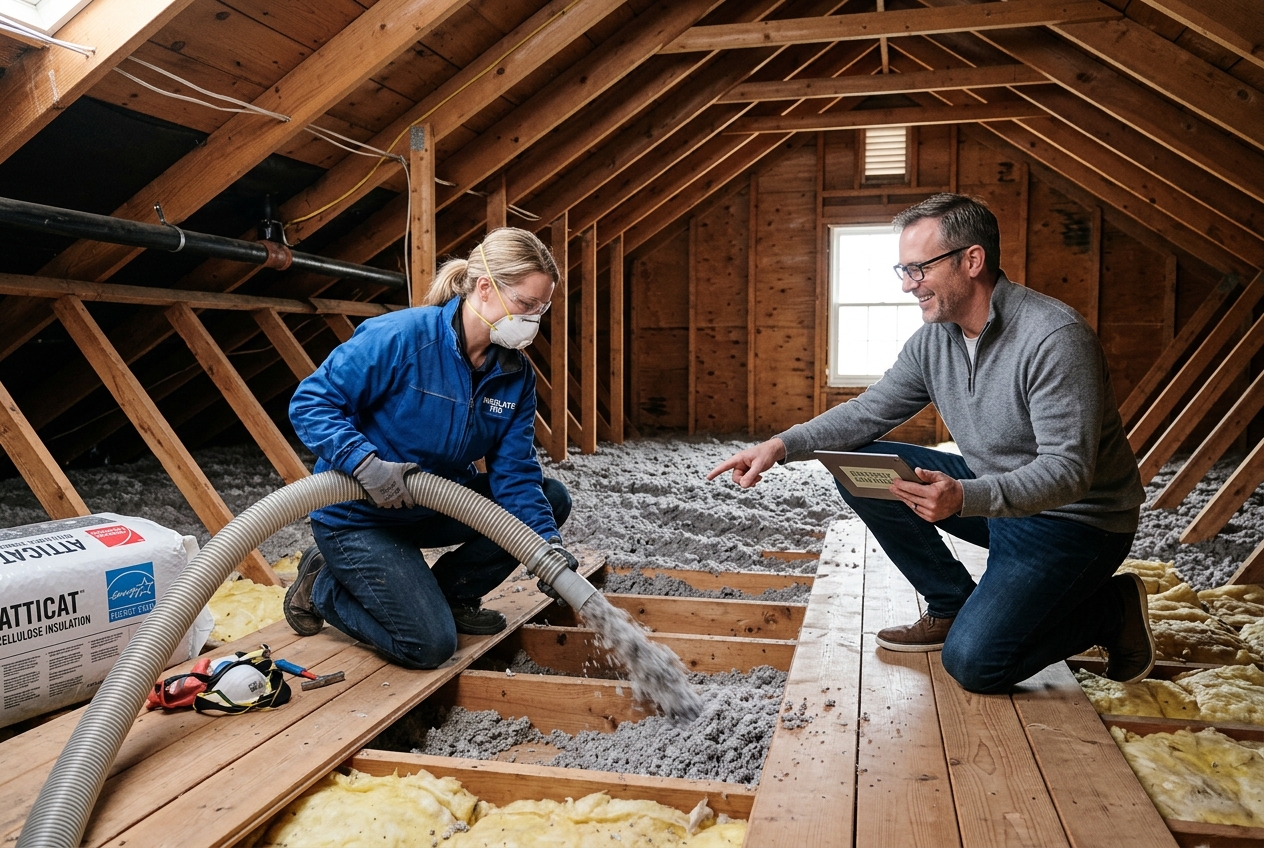
Blown-in insulation is typically installed in attics, wall cavities, and crawl spaces.³ For instance, you can find detailed information about attic insulation costs and garage insulation costs on our site, which often incorporate blown-in options. The specific material chosen, such as cellulose or fiberglass, also impacts the per-square-foot cost.
Pros
- + Significant energy savings (15-25% based on EPA and ENERGY STAR data)²
- + Faster ROI (2-4 years) compared to other insulation types
- + Can increase home resale value (3-5%)
- + Potential federal tax credits for material costs
Cons
- - Initial installation cost
- - Effectiveness reduced by improper installation
- - Tax credit eligibility can be complex and may require professional verification
The financial benefits of blown-in insulation extend far beyond the initial project expense. From significant annual energy savings and a rapid return on investment to potential federal tax credits and increased home value, it represents a strategic investment in your property's efficiency and financial health.
Blown-in insulation can reduce heating and cooling expenses by 15% with the U.S. Department of Energy stating that adding insulation can save homeowners an average of 15% on electricity bills¹. The exact savings depend on your home's existing insulation levels and local climate.
Most homeowners can expect to recoup their investment in blown-in insulation within 2–4 years. This is faster than the traditional 5–8 year timeframe for other insulation projects.
The federal 25C tax credit, which provided incentives for energy-efficient home improvements, expired Dec 31, 2025, due to federal legislation enacted in 2025.⁴ Homeowners should confirm current eligibility with a tax professional.
No, if the tax credit applies, it typically covers only the cost of the insulation materials, not the labor for installation.²
Improper installation can reduce the effectiveness of insulation by up to 30%.³ This directly impacts your energy savings and extends the time it takes to see a return on your investment.
Yes, energy-efficient homes, including those properly insulated with blown-in materials, typically sell for 3-5% more than comparable homes.³ This provides an additional long-term financial benefit.
Overall insulation costs depend on the type of insulation, the area to be insulated (e.g., attic, walls, crawl space), the square footage, and local labor rates. Material choice, like cellulose or fiberglass, also affects the price.
"Blown attic insulation cost" is a specific application of blown-in insulation, usually targeting the largest area for heat loss or gain. While it's a component of general blown-in insulation costs, specific project requirements for an attic may influence the total price differently than, for example, insulating wall cavities.
Deana is a Home Improvement Editor with a passion for helping homeowners navigate renovation, repair, and remodelling with confidence. Specializing in roofing, kitchen and bath remodelling, and outdoor living spaces, she combines industry knowledge with a genuine commitment to making complex home projects feel approachable for readers at every stage of their journey.
Her path into home improvement media began after several years working alongside licensed contractors in project coordination, where she gained firsthand exposure to the realities of home renovation - from permitting delays to material sourcing challenges. This hands-on experience gave her a practical, ground-level understanding of what homeowners actually need to know before hiring a contractor, choosing materials, or starting a project - insight that now shapes every piece of content she creates.
As an editor, Deana oversees content covering product reviews, cost guides, seasonal maintenance tips, and contractor vetting advice, working closely with writers and industry experts to ensure accuracy and relevance. She has a particular interest in emerging trends like smart home technology and energy-efficient upgrades, and enjoys translating technical information into clear, actionable guidance for homeowners.
Beyond editorial oversight, Deana stays closely connected to the pulse of the home improvement industry - tracking shifts in consumer preferences, pricing trends, and the challenges homeowners face when navigating renovation projects, from budgeting to finding trustworthy professionals.
When not editing, Deana enjoys visiting local open houses for design inspiration and tackling small DIY projects around her own home. Based in Adelaide, Australia, she believes a well-maintained, thoughtfully upgraded home is one of the most meaningful investments people can make in their day-to-day quality of life.
Sources:
Energy Savings by Insulation, Trenton Vermeer, 2023 (eec.asu.edu)
Home Insulation Cost in 2026: What You'll Pay by Type, Area, and R-Value, 2026 (alhomeservices.us)
Blown-In Insulation ROI 2026: Fast Returns Guide, 2026 (highcountrysol.com)
What to Know About Expiring Energy Tax Credits, 2025 (nahb.org)
Energy Tax Credits for Insulation in 2026: Complete Homeowner Guide, 2026 (findsprayfoam.com)