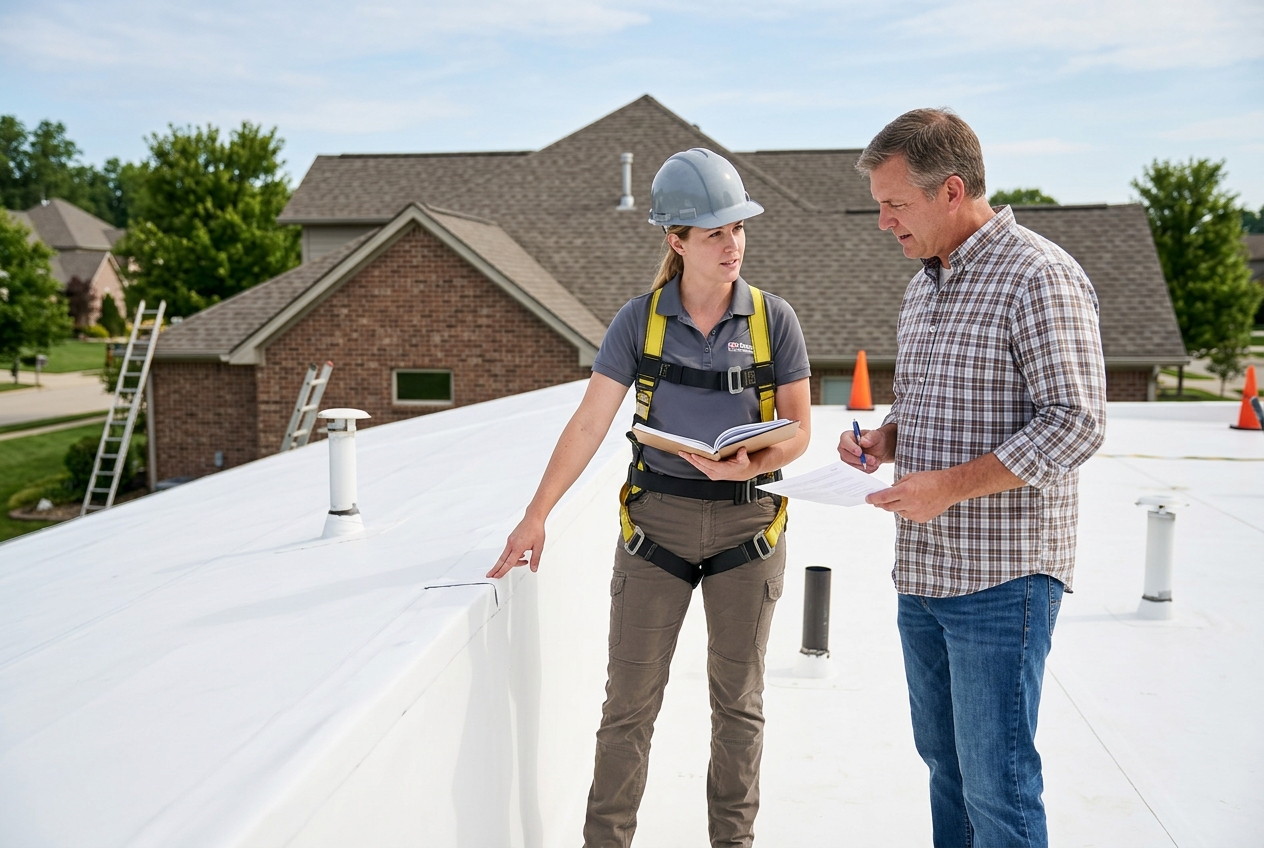
Cost Range: TPO roofing installation typically costs $4.50 to $16 per square foot, varying by thickness and complexity.
Financing Options: C-PACE programs offer long-term, property-tied financing for energy-efficient TPO roofs on commercial properties.
Energy Savings: Reflective TPO surfaces reduce cooling costs, contributing to a quicker return on investment over the roof's 15–30 year lifespan.
TPO (Thermoplastic Polyolefin) roofing is a popular choice for low-slope or flat roofs in commercial, industrial, and increasingly residential settings. This single-ply reflective membrane combines polypropylene and ethylene-propylene rubber¹. Property owners often choose TPO for its durability, energy efficiency, and resistance to UV rays, chemicals, and punctures².
Understanding the upfront investment and available financing options is crucial for anyone considering a TPO roofing installation. This guide explores the costs involved, the long-term benefits of TPO, and various ways to finance your project, including C-PACE programs and traditional loans.
TPO Roofing Costs
The total cost for TPO roofing installation varies significantly based on several factors. On average, you can expect to pay between $4.50 and $16 per square foot in the US³. Other estimates suggest a range of $6.50 to $13.50 per square foot².
For a typical commercial low-slope project, installed TPO often starts at around $8.04 to $10.29 per square foot⁴. This range covers materials, labor, and other project specifics. You can learn more about the specifics of TPO Roofing: Pros, Cons, and Cost.
Material and Labor Breakdown
Material costs for TPO roofing generally range from $3.00 to $6.00 per square foot². This can vary depending on membrane thickness. For instance, 45-mil TPO can cost $6 to $9 per sq ft, while 80-mil can be $9 to $14 per sq ft . Thicker membranes offer greater durability and longer warranties⁵.
Labor costs typically fall between $3.50 and $7.50 per square foot². The specific installation method also impacts labor. Fully adhered TPO systems, for example, can add 15 to 20 percent to the cost compared to mechanically attached systems⁶. Ballasted TPO roofs are often the most economical membrane system⁷.
Project Size and Scope
The overall project cost depends heavily on the roof's size and complexity. A 1,500-square-foot TPO roof might cost between $6,500 and $24,000, with a national average around $10,700³. Larger commercial projects, like a 10,000-square-foot TPO roof, typically range from $65,000 to $115,000 .
Additional costs can include insulation upgrades, which add $0.50 to $3.00 per square foot². Removing an existing roof can add $1 to $2 per square foot⁷. Opting for a TPO overlay over a good-condition existing roof can reduce costs⁵.
Geographic Location Impacts
Where you install your TPO roof plays a significant role in the overall expense. Costs vary due to differences in local labor rates, material transportation expenses, and regional regulations. States with a higher cost of living, such as California or New York, typically see higher installation prices. Conversely, states like Arkansas or Mississippi often have lower costs².
Financing Your TPO Roofing Project
Financing a TPO roofing installation can help manage the significant upfront cost, especially for larger commercial projects. Several options exist, catering to different property types and financial situations.
Commercial Property Assessed Clean Energy (C-PACE)
C-PACE programs are a key financing solution for commercial property owners in many US states. These programs allow businesses to finance energy-efficient upgrades, including new TPO roofs, through a property assessment. The payments are typically made annually with property taxes³.
C-PACE financing can be amortized over 20-30 years, often aligning with the TPO roof's expected lifespan. The financing is tied to the property, not the owner, making it potentially transferable upon sale. C-PACE is suitable for major roof replacements that enhance energy efficiency, resilience, or renewable energy generation, not routine repairs.
C-PACE payments are tied to the property, not the owner, and can often be transferred if the building sells.
Traditional Loans and Lines of Credit
Businesses can secure traditional loans or lines of credit from banks for property improvements. These can be secured or unsecured, with interest rates and repayment terms depending on the borrower's creditworthiness. Many roofing contractors also partner with third-party lenders to offer custom payment plans⁸.
For a $35,000 TPO roof financed over 15 years at 7% interest, monthly payments would be about $314-$315². Extending that to 20 years at 7% would result in payments of roughly $271-$272 per month .
Government Programs and Incentives
Local and federal government programs may offer grants, tax incentives, or low-interest loans for projects that improve energy efficiency. Installing an energy-efficient TPO roof can qualify for tax deductions, which help offset upfront costs⁹.
For commercial projects, leasing a roofing system can also be an option. This converts a capital expense into an operating expense, spreading costs over time⁸.
Financial Benefits of Financing
Financing preserves business capital, allowing funds to be used for other operations. The energy savings from a reflective TPO roof can help offset the monthly financing costs¹. Additionally, interest on business loans for property improvements may be tax-deductible, and C-PACE payments are often treated as operating expenses for tax purposes⁹.
When arranging financing, ensure the terms align with the roof's warranty and expected lifespan⁸. This ensures that the roof's benefits outlast the repayment period.
Long-Term Return on Investment and Energy Savings
Investing in a TPO roof offers significant long-term benefits beyond its immediate installation. The durability and energy efficiency of TPO contribute to a strong return on investment.
Durability and Lifespan
TPO roofs typically last 15 to 30 years, with some systems exceeding 30 years with proper installation and maintenance². High-quality 60-mil TPO from leading manufacturers often comes with 20 to 25-year material and labor warranties⁶. Premium TPO membranes can offer warranties up to 30 years .
The field service life estimates vary by attachment method:
Fully adhered systems: 22 to 28 years
Mechanically attached systems: 18 to 25 years
Ballasted systems: 15 to 22 years⁶
Factors like membrane thickness, installation quality (especially hot-air welded seams), local climate, and regular maintenance all affect the lifespan. TPO's hot-air welded seams are significantly stronger than taped or glued seams, contributing to its longevity⁵. TPO is generally a durable, low-maintenance option¹.
Pros
- + Energy-efficient due to reflective surface
- + Durable with a long lifespan (15-30 years)²
- + Strong, watertight hot-air welded seams⁵
- + Low maintenance requirements¹
Cons
- - Higher upfront cost compared to some alternatives
- - Installation complexity requires experienced contractors
Energy Efficiency and Cost Savings
One of the most compelling benefits of TPO roofing is its energy efficiency. Its reflective surface, especially for white membranes, significantly reduces air conditioning costs, particularly in warmer climates. TPO meets or exceeds EPA Energy Star requirements¹.
These energy savings can help offset the initial investment over time. When financing, the reduced utility bills can partially cover your monthly or annual payments, improving the project's cash flow. This makes a TPO roof an attractive option for properties seeking to lower operational expenses.
Choosing a Contractor and Project Execution
Selecting the right contractor is as important as choosing the right financing. An experienced contractor ensures proper installation, which is critical for the TPO roof's performance and lifespan⁵.
Always choose a contractor with extensive experience in single-ply membrane installation⁵. Verify their licensing, insurance, and ask for references. Obtain at least three bids to compare costs, proposed materials, warranties, and installation methods².
A detailed contract is essential. It should outline the scope of work, specific materials, project timeline, payment schedule, and warranty information⁵. This protects your investment and ensures clarity throughout the project.
Recommendation
For commercial and residential property owners considering a low-slope roofing replacement, TPO roofing stands out as a strong candidate due to its durability, energy efficiency, and long lifespan. The initial investment, which can range from $4.50 to $16 per square foot³, is significant but often justified by the long-term energy savings and reduced maintenance.
For commercial properties, C-PACE financing offers an excellent pathway to fund these projects. This mechanism allows you to spread the cost over the roof's lifespan and ties the payments to the property, offering transferability benefits. For residential or other situations, traditional loans, lines of credit, and government incentives provide flexible alternatives. Focus on securing a comprehensive financing plan that aligns with your budget and the roof's expected longevity, and always partner with a reputable, experienced contractor for installation.
TPO (Thermoplastic Polyolefin) roofing is a single-ply membrane made from a blend of polypropylene and ethylene-propylene rubber. It is commonly used for low-slope or flat roofs on commercial, industrial, and residential buildings due to its durability and reflective properties.
The average TPO roofing installation cost in the US generally ranges from $4.50 to $16 per square foot. This includes both materials and labor, but the final price depends on factors like roof size, membrane thickness, and location.
C-PACE (Commercial Property Assessed Clean Energy) allows commercial property owners to finance energy-efficient upgrades, like TPO roofing, through an assessment added to their property taxes. Payments are typically annual and can be amortized over 20-30 years, often aligning with the roof's lifespan³.
TPO roofing, especially in white, has reflective properties that significantly reduce air conditioning costs by lowering heat absorption. This energy efficiency helps offset the initial installation cost over the roof's lifespan, meeting or exceeding EPA Energy Star requirements.
A TPO roof typically lasts 15 to 30 years, with some systems performing for 30 years or more with proper installation and maintenance. The lifespan is influenced by membrane thickness, installation quality, local climate, and regular upkeep.
TPO roofing is generally considered a durable and low-maintenance option¹. Regular inspections and basic cleaning can help ensure its longevity and performance.
Yes, installing a TPO overlay over an existing roof that is in good condition can be a cost-saving option compared to a full tear-off and replacement⁵. This reduces the labor and disposal costs associated with removing the old roof.
Factors that increase TPO roofing costs include larger and more complex roof designs, thicker membranes (e.g., 80 mil), additional insulation requirements, the need for old roof removal, and fully adhered installation methods. Geographic location and specific contractor rates also play a role².
Deana is a Home Improvement Editor with a passion for helping homeowners navigate renovation, repair, and remodelling with confidence. Specializing in roofing, kitchen and bath remodelling, and outdoor living spaces, she combines industry knowledge with a genuine commitment to making complex home projects feel approachable for readers at every stage of their journey.
Her path into home improvement media began after several years working alongside licensed contractors in project coordination, where she gained firsthand exposure to the realities of home renovation - from permitting delays to material sourcing challenges. This hands-on experience gave her a practical, ground-level understanding of what homeowners actually need to know before hiring a contractor, choosing materials, or starting a project - insight that now shapes every piece of content she creates.
As an editor, Deana oversees content covering product reviews, cost guides, seasonal maintenance tips, and contractor vetting advice, working closely with writers and industry experts to ensure accuracy and relevance. She has a particular interest in emerging trends like smart home technology and energy-efficient upgrades, and enjoys translating technical information into clear, actionable guidance for homeowners.
Beyond editorial oversight, Deana stays closely connected to the pulse of the home improvement industry - tracking shifts in consumer preferences, pricing trends, and the challenges homeowners face when navigating renovation projects, from budgeting to finding trustworthy professionals.
When not editing, Deana enjoys visiting local open houses for design inspiration and tackling small DIY projects around her own home. Based in Adelaide, Australia, she believes a well-maintained, thoughtfully upgraded home is one of the most meaningful investments people can make in their day-to-day quality of life.
Sources:
The Pros and Cons of TPO Roofing, proceedinnovative, 2026 (reliable-roofing.com)
TPO Roofing's Pros and Cons: Is It the Right Choice for Your Building?, 2022 (heidlerroofing.com)
Tpo Roofing Cost (angi.com)
TPO Roofing Cost Per Square Foot (2026 Pricing Guide) (generalroof.com)
How Long Does A TPO Roof Last? (15–30 Year Guide), 2026 (kcroof.net)
TPO Roof Cost Calculator (2026) — 45/60/80-mil Installed (roofingcalculatorhq.com)
Tpo Roofing Cost (homeguide.com)
Commercial Roof Financing (5 Affordable Options), 2025 (northfaceconstruction.com)
Commercial Roofing Financing: Covering Your New Roof, Michaela Good, 2024 (temaroofingservices.com)