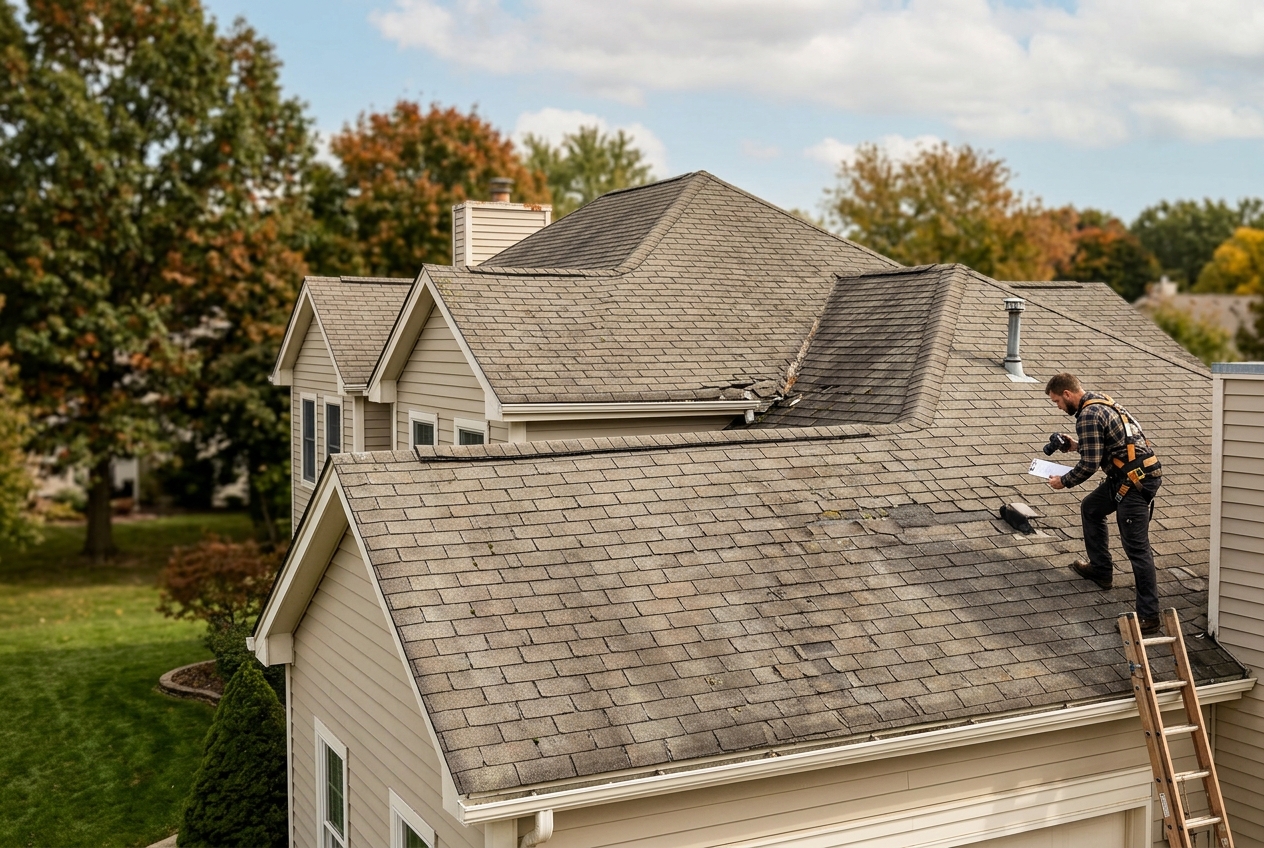
Insurer scrutiny: Older roofs lead to higher claim rates, prompting stricter insurance policies.
Regional impact: Storm-prone areas, like the Gulf Coast and Hail Alley, face the toughest restrictions.
Homeowner actions: Options include professional inspections, targeted repairs, full replacement, or shopping for new insurance.
Homeowners with roofs nearing 15 to 20 years old are increasingly encountering resistance from insurance companies. Insurers are becoming more reluctant to offer full coverage or even renew policies for these older roofs. This shift impacts homeowners nationwide, particularly in regions prone to severe weather.
The growing wariness stems from actuarial data. Insurers' data shows older roofs lead to more claims, especially after 15-20 years. This has led to adjustments in how policies are underwritten and what coverage is offered.
Why Insurers Are Targeting Older Roofs
Insurers are tightening their policies on older roofs for several reasons. Primarily, insurers are increasingly wary of roofs 15-20 years old due to their higher susceptibility to damage from perils like wind, hail, and storms, leading to more frequent and costly claims.¹
The total cost for U.S. roof repair and replacement reached nearly $31 billion in 2024, representing a nearly 30% increase since 2022.¹ Insurance claims data shows the average roof replacement cost was $17,631 in 2025.² This rise in costs puts pressure on insurers.
Severe weather events are also a major factor. The growing frequency and intensity of severe weather events across the U.S. contribute significantly to insurer scrutiny of older roofs.³ This makes older roofs even more of a liability. For example, asphalt shingle roofs, which cover nearly 75% of single-family homes, can become vulnerable to damage from severe convective storms as early as 8-10 years after installation, despite advertised lifespans of 20-25 years.⁴
Some insurers also suspect a "moral hazard." Some insurers believe homeowners with older roofs might be less proactive with maintenance, waiting for storm damage to claim a full roof replacement, which they view as a moral hazard.¹ This perspective further drives their cautious approach. Insurers increasingly use technology like aerial imagery, AI, drones, and satellite imaging to assess roof condition and identify those that fail underwriting criteria.⁵ They can identify roofs that fail their underwriting criteria before issuing or renewing policies.
Where the Crackdown Is Most Common
The insurer crackdown on older roofs is not uniform across the U.S. The crackdown on older roofs is most prevalent in storm-prone regions.⁶ These areas experience higher rates of severe weather, leading to increased claim activity.
Gulf Coast States
States along the Gulf Coast, such as Florida, Louisiana, and Texas, are particularly affected.⁷ These regions frequently experience hurricanes and tropical storms, which can cause extensive roof damage.
Florida has a specific "15-year roof rule" where insurers cannot deny coverage solely based on age if the roof is under 15 years old, but for roofs 15 years or older, an inspection determining at least five years of useful life is required.
Hail and Tornado Alley
Hail Alley and Tornado Alley states (Texas, Oklahoma, Kansas, Nebraska and Colorado) also face strict rules because of frequent hail and severe storms.
Colorado, for instance, ranks second nationally for hail-related insurance claims, with hail accounting for 55-70% of homeowners insurance costs statewide. Many Colorado insurers enforce a "10-year rule," switching coverage from Replacement Cost Value (RCV) to Actual Cash Value (ACV) at 10, 15, or 20 years, depending on the carrier.⁵ ACV coverage leaves a larger out-of-pocket expense for the homeowner.³
Older Housing Markets
Beyond storm-prone areas, regions with a higher concentration of older homes are more likely to face issues with roof age restrictions. These homes naturally have older roofs, increasing the overall risk for insurers.
What Homeowners Can Do
If your roof is approaching the 15-20 year mark, or if your insurer is questioning its condition, you have several options. Proactive steps can help you maintain coverage and avoid costly surprises.
Get a Professional Roof Inspection
A professional roof inspection can assess the current condition and remaining lifespan of the roof. An inspection report detailing the roof's good condition can sometimes convince an insurer to offer or maintain coverage, or remove an old roof exclusion. Some insurers may require an inspection for older roofs before renewing or issuing a new policy.¹
The national average cost for a professional roof inspection in 2026 is $252, with most homeowners paying between $125 and $383. Roof inspection costs can range from $75 to $1,150 depending on roof size, pitch, material, and inspection type. A physical walk-on inspection costs $75-$200, a drone inspection $150-$400, and infrared imaging $400-$600. A roof certification, often required by lenders or insurers, typically costs $75-$200 and documents the roof's condition and estimated remaining life. Some roofing contractors offer basic inspections for free.⁸
Consider Targeted Repairs
If an inspection reveals minor issues, targeted repairs can extend the roof's life and potentially satisfy insurance requirements.³ Roof repairs typically cost $150–$5,000 in 2026. Minor repairs (e.g., shingle replacement) range from $150-$1,000, and major repairs exceed $3,000.⁹ For more details on repair costs, see our roof repair cost guide.
Keeping thorough records of all roof maintenance and repairs can demonstrate proactive care and help in discussions with insurers.
If repair costs approach 30-50% of the replacement cost, or if the roof is over 20 years old, replacement is often recommended.
Plan for Full Roof Replacement
For roofs nearing the end of their life (15-20+ years old) or with significant damage, a full replacement is often the most comprehensive solution to secure better insurance coverage.⁹
The average roof replacement cost in 2026 for a standard asphalt-shingle roof is $11,450, with most homeowners paying between $8,700 and $16,200. Overall roof replacement costs typically range from $5,500–$14,000+, with some projects reaching $46,000 or more. Roofing is priced per "square" (100 square feet), with labor making up approximately 60% of the total cost.⁹
Material choices significantly impact the total cost and lifespan. For a 2,000 sq ft roof:
Asphalt shingles: $9,000–$16,000 ($4.50–$8.00 per square foot installed) for a 2,000 sq ft roof, with a lifespan of 15-30 years.
Metal roofing: $14,000–$32,000+ ($9.00–$16.00 per square foot installed for standing-seam), with a lifespan of 40-70 years.
Tile/Slate roofing: $18,000–$50,000+ (slate can exceed $50,000), with a lifespan of 50+ years.⁹
You can explore more material options and their costs in our article on The Best Roofing Materials for Your Home: Types, Pros, Cons, and Cost. For insights on managing rising expenses, read Roofing Costs Are Up 30%: What It Means for Homeowners and How to Save in 2025.
Shop Around for Insurance
Homeowners with older roofs should shop around and compare quotes from multiple insurance providers. Policies vary greatly. Some policies might offer "Actual Cash Value" (ACV) coverage for older roofs instead of "Replacement Cost Value" (RCV), meaning the payout will be depreciated based on the roof's age and condition.¹ ACV coverage leaves a larger out-of-pocket expense for the homeowner.³
Some insurers implement "Roof Payment Schedules" where payouts decrease with roof age, for example, 100% for new roofs, declining to roughly 60% at 11-15 years, and 40% at 16-20 years.⁵
Pros
- + Potential for lower premiums with ACV coverage initially
- + Some specialty insurers may cater to older homes
Cons
- - Higher out-of-pocket costs with ACV in case of a claim
- - Coverage might be more limited with specialty insurers
- - Finding new insurance can be harder after a non-renewal
Some smaller or specialty insurers might cater to homes with unique characteristics, including older roofs, though premiums may be higher and coverage potentially more limited.¹
In states where homeowners cannot obtain insurance through the standard market, Fair Access to Insurance Requirements (FAIR) Plans serve as state-mandated insurers of last resort.⁵ FAIR plans often provide basic coverage but can be more expensive and may offer only ACV coverage for older roofs. The California FAIR Plan offers only ACV coverage for homes more than 25 years old unless the roof has been replaced within that period.⁷
If an insurer threatens non-renewal, homeowners should act proactively, as a cancellation can make it harder to secure new insurance.⁵
Insurers are wary of roofs 15-20 years old because they are more susceptible to damage from severe weather like wind and hail, leading to more frequent and costly claims. Actuarial data shows a clear correlation between roof age and claim likelihood after 15-20 years.
In Florida, insurers cannot deny coverage solely based on roof age if it's under 15 years old. For roofs 15 years or older, an inspection determining at least five years of useful life is required to maintain coverage.
RCV (Replacement Cost Value) coverage pays for the full cost to replace your roof without depreciation. ACV (Actual Cash Value) coverage pays a depreciated amount based on the roof's age and condition, meaning you pay more out-of-pocket.
The national average cost for a professional roof inspection in 2026 is $252, typically ranging from $125 to $383. Costs can vary based on roof size, pitch, material, and inspection type.
You should consider a full roof replacement if repair costs approach 30-50% of the replacement cost, or if your roof is over 20 years old. A full replacement often secures better insurance coverage.
FAIR (Fair Access to Insurance Requirements) Plans are state-mandated insurers of last resort. They provide basic coverage in states where homeowners cannot obtain insurance through the standard market, though they can be more expensive and may offer only ACV coverage for older roofs.
The average cost to replace a standard asphalt-shingle roof in 2026 is $11,450, with most homeowners paying between $8,700 and $16,200. This can vary based on roof size and complexity.
You should keep thorough records of all roof maintenance, repairs, and any professional inspections. This documentation can help demonstrate proactive care and be valuable when discussing coverage with your insurance provider.
Deana is a Home Improvement Editor with a passion for helping homeowners navigate renovation, repair, and remodelling with confidence. Specializing in roofing, kitchen and bath remodelling, and outdoor living spaces, she combines industry knowledge with a genuine commitment to making complex home projects feel approachable for readers at every stage of their journey.
Her path into home improvement media began after several years working alongside licensed contractors in project coordination, where she gained firsthand exposure to the realities of home renovation - from permitting delays to material sourcing challenges. This hands-on experience gave her a practical, ground-level understanding of what homeowners actually need to know before hiring a contractor, choosing materials, or starting a project - insight that now shapes every piece of content she creates.
As an editor, Deana oversees content covering product reviews, cost guides, seasonal maintenance tips, and contractor vetting advice, working closely with writers and industry experts to ensure accuracy and relevance. She has a particular interest in emerging trends like smart home technology and energy-efficient upgrades, and enjoys translating technical information into clear, actionable guidance for homeowners.
Beyond editorial oversight, Deana stays closely connected to the pulse of the home improvement industry - tracking shifts in consumer preferences, pricing trends, and the challenges homeowners face when navigating renovation projects, from budgeting to finding trustworthy professionals.
When not editing, Deana enjoys visiting local open houses for design inspiration and tackling small DIY projects around her own home. Based in Adelaide, Australia, she believes a well-maintained, thoughtfully upgraded home is one of the most meaningful investments people can make in their day-to-day quality of life.
Sources:
Insurance Won't Cover Older Roof [2026 Solutions], 2026 (krausecompanies.com)
Roof claims severity hits record highs even as storm activity falls, Verisk data shows, 2026 (insurancebusinessmag.com)
Homeowners Insurance Canceled Roof Condition (plattinsurance.com)
Severe Convective Storms A Growing Insurance Challenge (aon.com)
15 Year Roof Insurance Rule: Why Insurers Drop Coverage, 2026 (winik.io)
Understanding Roof Age and Home Insurance: A Guide for Homeowners — Starr Mathews Insurance, David Ferguson, 2025 (starrmathews.com)
California insurers tighten roof coverage rules, 2026 (insurancebusinessmag.com)
How Much Does Roof Inspection Cost (angi.com)
Roof Replacement Cost in 2026: What Homeowners Pay, Dan, 2026 (empirehomeprotect.com)