Extended Heat: Triple-digit temperatures are persisting into September 2026 across the South and Central Plains, challenging seasonal expectations and preventing overnight cooling.
Grid Stress: Record electricity demand, particularly in Texas (ERCOT), is stressing regional power systems, raising concerns about reliability during peak usage.
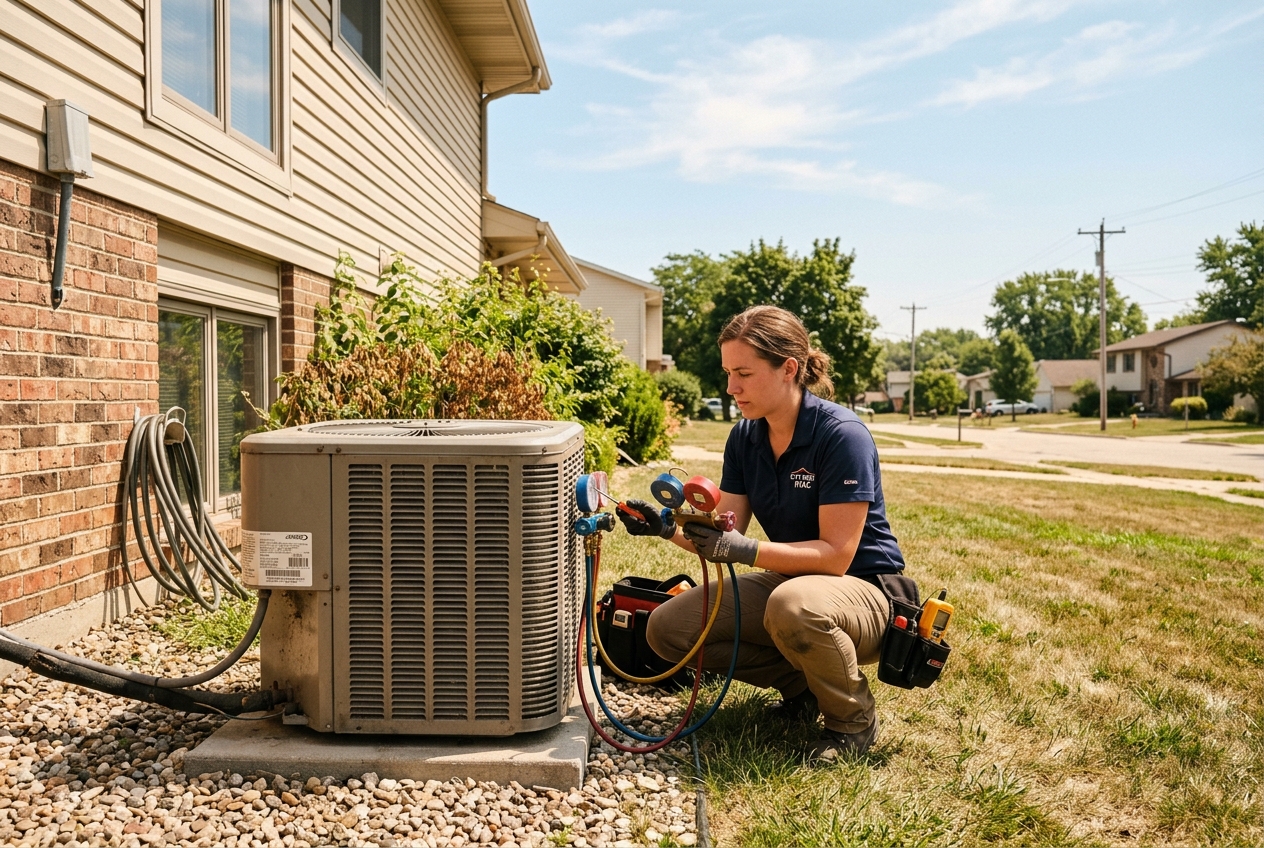
HVAC Damage: Prolonged operation at peak capacity increases wear and tear on HVAC systems, potentially shortening their lifespan and increasing the need for repairs.
Rising Costs: Households face significantly higher cooling bills due to increased energy consumption and rising electricity prices, with average residential cooling costs projected to reach $792 in 2026.
A severe heatwave is causing triple-digit temperatures across the South and Central Plains, specifically in Texas, Oklahoma, and Kansas¹. This persistent warmth is extending summer conditions well into September 2026, challenging typical expectations for early autumn weather. The extended heat is driving up cooling costs for households and placing immense strain on local power grids and individual HVAC systems².
Heat index values were forecast up to 113°F (45°C) in southern Texas, with parts of Arkansas and Oklahoma seeing up to 112°F (44°C). Daytime highs in the central Plains into the mid-Mississippi Valley are expected to reach the upper 90s°F and locally exceed 100°F (38°C) through September 8, 2026³. This persistent heat, rather than just single hot afternoons, is a major concern because it prevents overnight cooling for homes and bodies.
The Mechanics of Grid Strain
The extreme and continuous cooling demand puts significant strain on power systems infrastructure in the Central US. This pressure is particularly evident in regions like Texas, managed by the ERCOT grid.⁴
On July 22, 2026, the ERCOT grid surpassed 91 gigawatts (GW) for the first time due to extreme heat, according to Energy News Beat, breaking its previous official record of approximately 85.5 GW set in August 2023⁴. ERCOT had projected record electric demand could exceed 92,000 megawatts for summer 2026, partly due to high temperatures and data center growth⁵.
Despite anticipating sufficient generation as of June 8, 2026, ERCOT acknowledged the potential for a new peak demand record⁶. Reports from July 2026 indicated a 0.21% chance of a grid emergency in July and a 4.38% chance in September⁵. Variable wind and solar output can create operational challenges when generation falls during periods of high demand, although storage and other generation resources can help balance the grid. By the end of 2026, ERCOT projects over 45 GW of solar and 27 GW of storage capacity⁴.
Other regional grids are also feeling the impact. The Midcontinent Independent System Operator (MISO) warned of tight conditions and increased its normal reserve requirement.⁷ The US Department of Energy authorized the Southwest Power Pool (SPP) to use additional generating units and backup generators in July 2026 to help maintain grid reliability during extreme conditions. This authorization was mentioned in Energy News Beat.
How Heat Damages Your HVAC System
Prolonged heatwaves force HVAC systems into longer periods of peak operation, increasing wear and tear and leading to equipment failures⁸. This continuous strain accelerates the degradation of mechanical parts, potentially shortening an AC system's lifespan by years.
AC units work harder to transfer heat on warmer days, straining the outdoor condensing unit. Continuous operation wears down components like compressors, fan motors, and refrigerant lines faster⁹. Extreme heat and prolonged operation can increase wear on HVAC components and potentially shorten equipment life, particularly without proper maintenance.⁸ For example, in Central Oklahoma, HVAC systems typically last 12-15 years due to climate factors including triple-digit summer heat, high humidity, and rapid temperature swings.
Pros
- + Extended cooling during severe heat
- + Maintained indoor comfort levels
Cons
- - Accelerated wear on components
- - Increased risk of system failure and costly repairs
- - Reduced overall lifespan of the unit
- - Higher utility bills from constant operation
Overworked AC units can lead to several problems beyond just shortening their lifespan. These include reduced cooling efficiency, unusual noises, and refrigerant leaks⁹. Air filters and fans can clog faster in hot weather due to increased dust and debris, reducing airflow and forcing the unit to work harder. Continuous operation can also cause systems to overheat, malfunction, fail, or shut down entirely⁸.
Prolonged extreme heat can expose capacity limitations in HVAC systems, particularly if equipment was not designed for unusually severe conditions.⁸ This highlights the challenge homeowners face in regions experiencing prolonged heat. For information on maintaining your system, refer to our guide on HVAC Maintenance.
July 2026 was the hottest month ever recorded in the contiguous United States. Nights did not cool enough for equipment to recover, intensifying the strain on HVAC systems.
The Financial Burden of Relentless Heat
The persistent heatwave directly impacts household finances through increased cooling costs. US households are facing an average 40% increase in cooling costs since 2020, including a 10.5% jump since summer 2025. Average residential cooling costs are projected to rise from approximately $717 in 2025 to $792 in 2026². Americans are projected to spend around $800 on electricity between June and September 2026.
Rising electricity prices and hotter, longer summers requiring extended AC use are driving these increased cooling costs². Households in the West South Central region (Texas, Oklahoma, Arkansas, Louisiana) are expected to face some of the largest increases in cooling costs. Higher energy consumption from overworked ACs directly results in higher utility bills⁸. This unexpected financial hit in September, a month usually associated with lower utility costs, catches many households off guard.
A struggling HVAC system with dirty coils, restricted airflow, or failing components can operate less efficiently and increase electricity consumption, further contributing to higher bills. Aging HVAC equipment also contributes to higher cooling costs as efficiency declines and components wear out². This extended season of high temperatures means AC systems run more often without rest, leading to more frequent repair needs. If you're considering a new system due to aging equipment, consult our guide on HVAC installation costs.
The southern US remains "stubbornly stuck in prolonged mid-summer heat" well into September 2026, while the northern US sees signs of autumn. This regional disparity underscores the unique challenges faced by homeowners in the Central and Southern Plains during this extended heatwave.¹ Regular HVAC inspection can help identify potential issues before they become major problems.
This heatwave is concerning because of its persistence and triple-digit temperatures extending into September 2026. This prevents overnight cooling and forces HVAC systems into continuous peak operation, leading to increased wear and tear and higher electricity demand. Heat index values were forecast up to 113°F (45°C) in southern Texas and 112°F (44°C) in parts of Arkansas and Oklahoma.³
A persistent heatwave can significantly shorten an AC unit's lifespan. The constant operation and strain accelerate the degradation of mechanical parts, potentially shortening an AC system's lifespan by years.
Overworked AC units can experience reduced cooling efficiency, unusual noises, and refrigerant leaks⁹. They may also suffer from clogged air filters, fan issues, and component failures like compressors or fan motors⁸.
Yes, US households are facing an average 40% increase in cooling costs since 2020, with a 10.5% jump since summer 2025. Average residential cooling costs are projected to reach approximately $792 in 2026².
Households in the West South Central region, which includes Texas, Oklahoma, Arkansas, and Louisiana, are expected to face some of the largest increases in cooling costs due to the severe heatwave.
The heatwave raises concerns about electricity demand due to increased air conditioning use, putting immense pressure on power systems infrastructure. Grids like ERCOT in Texas have seen record demand, increasing the risk of grid emergencies⁴.
Yes, a struggling HVAC system with dirty coils, restricted airflow, or failing components can operate less efficiently and increase electricity consumption. This inefficiency adds significantly to higher utility bills, especially during extended operation.
A 'heat dome' phenomenon, attributed to high pressure trapping hot air, is moving eastward and affecting the Southern and Central Plains. This atmospheric condition is responsible for the prolonged and intense heat observed in the region.
Will is a Home Improvement Editor with a passion for helping homeowners make confident, well-informed decisions about their homes. He specializes in reviewing and refining content covering home renovations, solar energy, roofing, HVAC, insulation, windows, flooring, plumbing, electrical systems, and other key areas of residential improvement.
With a strong background in research and technical writing, Will is committed to ensuring every article is accurate, accessible, and backed by reliable sources. He carefully reviews content for factual accuracy, clarity, readability, and relevance, helping readers understand complex home improvement topics in straightforward, practical terms. His editorial approach focuses on translating industry information into guidance that homeowners can trust when planning repairs, renovations, or energy-efficient upgrades.
Will has experience evaluating home improvement content against current industry standards, manufacturer guidance, and reputable government and consumer resources. He believes that high-quality editorial standards are essential in helping readers navigate major purchasing decisions, whether they are comparing roofing materials, selecting solar panels, upgrading insulation, or planning a complete home renovation.
As an editor, Will collaborates closely with writers and subject matter experts to ensure content remains comprehensive, unbiased, and up to date. He is particularly interested in emerging trends within the home improvement industry, including sustainable building practices, energy efficiency, smart home technology, and cost-effective renovation strategies that deliver long-term value for homeowners.
Outside of editing, Will enjoys staying informed about developments in residential construction, building products, and consumer technology. His attention to detail and commitment to producing trustworthy content help ensure readers have access to reliable information that empowers them to make informed decisions with confidence.
Sources:
Climate change fuels extreme heat, flooding and tropical threats across the U.S. (climatecentral.org)
Summer Cooling Costs Expected To Rise More Than 10% In 2026 (midwesthvacpro.com)
Extreme Heat Warnings and Heat Advisories issued from the Central Plains to the Southwest U.S., Rishav Kothari, 2026 (watchers.news)
Texas ERCOT Grid Holds Beyond 91 Gigawatts in Heat Wave - At What Cost?, Clark Savage, 2026 (energynewsbeat.co)
ERCOT grid hits 90,000 MW of demand amid extreme heat, Hannah Norton, 2026 (communityimpact.com)
ERCOT braces for record-breaking power demand this summer, 2026 (energycapitalhtx.com)
Blackout risk rises as heatwave stresses largest US electric grids, 2026 (theguardian.com)
Find out how summer heat affects your air-conditioning system., admin, 2024 (boundshvac.com)
Can Air Conditioners Sustain Damage From Heavy Use After Summer?, Valley City Mechanical, 2025 (valleycitymechanical.com)