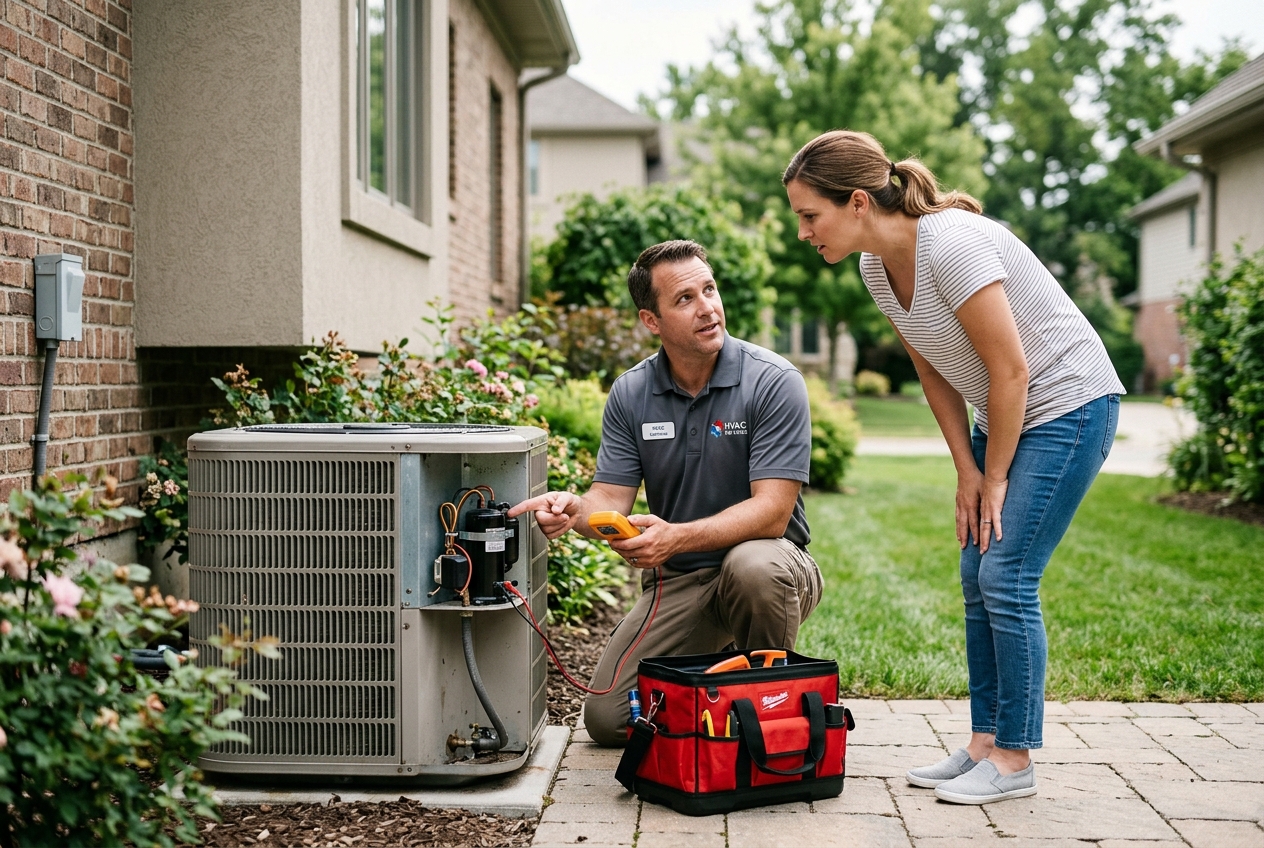
Typical Repair Costs: Most common AC repairs in 2026 range from $150 to $650, with the national average around $350.
Major Repairs vs. Replacement: Costs for significant AC issues can exceed $2,000 to $3,500⁴. Consider replacement if the repair cost is more than 50% of a new unit, especially for older systems.
Key Factors: Labor rates, parts, refrigerant type³, unit age, and geographic location² all influence the final repair bill.
Homeowners often face a critical decision when their air conditioning unit malfunctions: repair or replace? Understanding the typical ac repair cost for various issues can help you make an informed choice. In 2026, most common AC repairs generally fall between $150 and $650, with the national average sitting at about $350. However, major AC repairs can significantly increase these figures, sometimes exceeding $2,000 to $3,500
This guide explores common AC problems, their associated repair costs, and provides clear guidelines on when to opt for a repair versus investing in a new system. Considering your unit's age and repair history helps you evaluate the long-term value of your decision.
Common AC Repair Costs by Issue
The specific problem affecting your AC unit will largely determine the repair cost. Prices vary widely based on parts and labor.
Capacitor Replacement
A failing capacitor is one of the most frequent and least expensive AC repairs. This component helps start the motor for your fan and compressor. Replacing an AC capacitor typically costs $100 to $400. The national average for this repair is around $175. The capacitor part itself is inexpensive, usually costing $8 to $50¹.
Contactor and Electrical Issues
Small electrical problems, such as a faulty AC contactor, often cost between $150 and $400 to fix². A technician will diagnose the electrical fault and replace the necessary components.
Refrigerant Leaks and Recharges
Refrigerant is essential for cooling your home. A leak means your system cannot cool effectively. Repairing an AC refrigerant leak and recharging the system generally costs $200 to $1,600, with an average of $800³.
Refrigerant costs have increased significantly due to a federal phaseout of R-410A refrigerant, leading to a 40-60% price hike². Older R-22 (Freon) is even more expensive, costing $50-$150 per pound due to its phase-out. Newer R-410A costs $65-$120 per pound³.
Condenser Fan Motor Replacement
The condenser fan motor moves air over the outdoor unit's coils, helping to dissipate heat. If this motor fails, your AC won't cool efficiently. Replacing a condenser fan motor typically costs $200 to $700. The average cost for this repair is $500. The part alone can range from $60 to $400².
Blower Motor Replacement
The blower motor, located in your indoor unit, pushes cooled air through your home's ductwork. Replacing a blower motor can cost between $450 and $2,000 installed². The cost varies depending on the specific type of motor required for your system. If you suspect issues with your home's air delivery, exploring Ductwork Repair might also be useful.
AC Compressor Replacement
The compressor is the heart of your AC system, circulating refrigerant. It is one of the most expensive repairs. For residential systems, AC compressor replacement costs typically range from $800 to $2,800, including parts and labor, with an average of $1,550. Larger or more complex systems can see costs exceeding $3,000².
If your AC compressor is under warranty, you might only pay $600 to $1,200 for labor and refrigerant. The compressor part alone can cost $400 to $1,800².
Thermostat Replacement
Your thermostat controls your AC unit. Replacing an AC thermostat ranges from $100 to $500, depending on whether you choose a basic or smart model. Average costs for replacement are $150 to $450².
Evaporator Coil Issues
The evaporator coil, located in the indoor unit, absorbs heat from your home's air. Replacing an evaporator coil can cost $600 to $2,000. Sometimes, a simple cleaning is enough, which typically costs $100 to $400².
Clogged Condensate Drain Line
The condensate drain line removes moisture from your AC system. If it clogs, water can back up, leading to leaks and potential damage. Clearing a clogged condensate drain line is usually an inexpensive repair, costing $75 to $250².
Factors Affecting AC Repair Costs
Several variables beyond the specific malfunction itself can influence your total AC repair bill. Understanding these factors helps you anticipate expenses.
Labor Rates
Labor is a significant portion of the total AC repair cost. HVAC technicians typically charge $60 to $150 per hour, with some rates reaching $200 or more. The national median wage for HVAC technicians was $29.33 per hour as of May 2025 data².
Geographic Location
AC repair costs vary by region within the US².
Urgency and Timing
Emergency calls after hours, on weekends, or holidays almost always come with surcharges. These can add $50 to $200 or more to your bill².
Unit Age and Parts Availability
Older AC units often use harder-to-find or more expensive parts, especially if the unit uses phased-out refrigerants like R-22, which is now costly and scarce². The increased difficulty in sourcing parts can drive up repair costs.
Warranty Coverage
Manufacturer warranties often cover the cost of parts. If your unit is still under warranty, your out-of-pocket expenses for a repair might be significantly reduced, leaving you to pay only for labor and refrigerant².
Diagnostic Fees
Many contractors charge a diagnostic fee, typically ranging from $75 to $250. This fee covers the technician's time to identify the problem. Often, this diagnostic charge is applied towards the total repair cost if you proceed with the service².
Get at least two or three repair quotes from different HVAC contractors. This allows you to compare prices and ensure you're getting a fair rate for the necessary work.
Repair vs. Replace: Making the Right Decision
Deciding whether to repair your existing AC unit or replace it with a new one is a common dilemma. This choice hinges on several factors, including the unit's age, repair cost, and overall efficiency.
Unit Age
Most AC units are designed to last 10 to 15 years. If your unit is nearing or past this lifespan and requires a major repair, replacement often makes more financial sense².
The 50% Rule and $5,000 Rule
Two rules of thumb can help guide your decision:
The "50% Rule": If a repair costs more than 50% of the price of a new system, especially for an older unit, replacement is generally recommended. Some experts suggest this threshold could be 30-40% if the unit has had multiple recent repairs.
The "$5,000 Rule": Multiply your AC unit's age in years by the repair estimate. If the result exceeds approximately $5,000, replacement is usually the smarter long-term choice².
Cost of a New System
A new central AC unit, including installation, typically ranges from $3,000 to $7,500. If you need to replace both your AC and furnace, a full system replacement can cost $5,000 to $12,500². Comparing the repair cost to these figures is crucial. For insights into heating system repairs, consider reading our guide on Furnace Repair.
Frequency of Repairs
If your AC unit requires multiple repairs in a short period, it's a strong indicator that the system is failing². In such cases, continued repairs become a money pit, and replacement offers better long-term value and reliability.
Energy Efficiency
Older AC units are significantly less energy-efficient than newer models. Replacing an old, inefficient unit can lead to substantial long-term savings on your utility bills due to higher SEER2 ratings².
Refrigerant Type
If your older AC unit uses R-22 (Freon) refrigerant, and it has a leak, repair costs will be very high due to the scarcity and expense of R-22³. This situation strongly signals that replacement is the more economical option.
Pros
- + Extends the life of a relatively new unit (under 10 years old) with minor, isolated issues.
- + Generally less expensive for minor problems like capacitor replacement or clearing a drain line.
- + Avoids the upfront cost of a full system replacement.
Cons
- - Can be a poor investment for older units (over 10-15 years) or for major repairs like compressor replacement.
- - Doesn't improve energy efficiency or address the root cause of frequent breakdowns.
- - Risk of future, costly repairs on an aging system.
When Repair Makes Sense
AC repair typically makes sense if your system is under 10 years old and the repair cost is less than 30-40% of the price of a new system². This is especially true for isolated issues that don't indicate broader system failure. For example, replacing a capacitor on a 7-year-old unit is usually a sound decision.
When Replacement is Preferable
Consider replacing your AC unit if:
It's over 10-15 years old and needs a major repair like a compressor or evaporator coil replacement.
The repair cost exceeds 50% of the cost of a new unit.
You've had multiple repairs recently, indicating systemic issues.
Your unit uses R-22 refrigerant and has a leak.
You want to improve energy efficiency and reduce utility bills.
By weighing these factors, you can make a cost-effective decision that ensures your home remains comfortable for years to come.
The national average AC repair cost in 2026 is around $350, with many homeowners paying between $150 and $650 for common repairs. Major repairs, however, can exceed $2,000 to $3,500⁴.
Replacing an AC capacitor typically costs $100 to $400, with an average professional cost of about $175. The part itself usually costs $8 to $50¹.
Repairing an AC refrigerant leak and recharging the system ranges from $200 to $1,600, with an average cost of $800. This includes leak detection, fixing the leak, and adding new refrigerant³.
AC compressor replacement is one of the most expensive repairs, ranging from $800 to $2,800, including parts and labor, with an average of $1,550. Costs can exceed $3,000 for larger or more complex systems².
You should consider replacing your AC unit if it is over 10-15 years old and needs a major repair, or if the repair cost exceeds 50% of the price of a new system². Frequent repairs, low energy efficiency, or using R-22 refrigerant can also indicate it's time for a replacement.
HVAC technicians typically charge $60 to $150 per hour, though rates can sometimes reach $200 or more. Labor often accounts for a significant portion of the total repair cost².
Yes, older AC units can have higher repair costs due to harder-to-find or more expensive parts, especially if they use phased-out refrigerants like R-22².
The "$5,000 Rule" suggests multiplying your AC unit's age in years by the repair estimate. If the result exceeds approximately $5,000, replacement is generally considered a smarter long-term investment².
Deana is a Home Improvement Editor with a passion for helping homeowners navigate renovation, repair, and remodelling with confidence. Specializing in roofing, kitchen and bath remodelling, and outdoor living spaces, she combines industry knowledge with a genuine commitment to making complex home projects feel approachable for readers at every stage of their journey.
Her path into home improvement media began after several years working alongside licensed contractors in project coordination, where she gained firsthand exposure to the realities of home renovation - from permitting delays to material sourcing challenges. This hands-on experience gave her a practical, ground-level understanding of what homeowners actually need to know before hiring a contractor, choosing materials, or starting a project - insight that now shapes every piece of content she creates.
As an editor, Deana oversees content covering product reviews, cost guides, seasonal maintenance tips, and contractor vetting advice, working closely with writers and industry experts to ensure accuracy and relevance. She has a particular interest in emerging trends like smart home technology and energy-efficient upgrades, and enjoys translating technical information into clear, actionable guidance for homeowners.
Beyond editorial oversight, Deana stays closely connected to the pulse of the home improvement industry - tracking shifts in consumer preferences, pricing trends, and the challenges homeowners face when navigating renovation projects, from budgeting to finding trustworthy professionals.
When not editing, Deana enjoys visiting local open houses for design inspiration and tackling small DIY projects around her own home. Based in Adelaide, Australia, she believes a well-maintained, thoughtfully upgraded home is one of the most meaningful investments people can make in their day-to-day quality of life.
Sources:
AC capacitor replacement cost: 2026 Critical Guide, 2026 (accurateheat.com)
How Much Does AC Repair Cost in 2026? AC Repair Prices by Problem, 2026 (callhomerangers.com)
AC freon leak repair cost, angi.com (angi.com)
AC Repair Cost 2026: Why Quotes Are So High Right Now (armusmech.net)