
Updated: January 27, 2026
Written by Dan Simms
Dan was a property manager from 2015 to 2020, during which time he managed and oversaw the upkeep and repairs of over 2,000 residential properties. He uses that experience, as well as his extensive DIY knowledge, to bring reliable information to homeowners about renovations and home-related projects. Since 2020, he has been using his experience to write about home improvement, and his work has appeared on sites like USA Today, CNN, Angi, and Today’s Homeowner.
Learn moreReviewed by Dan Simms
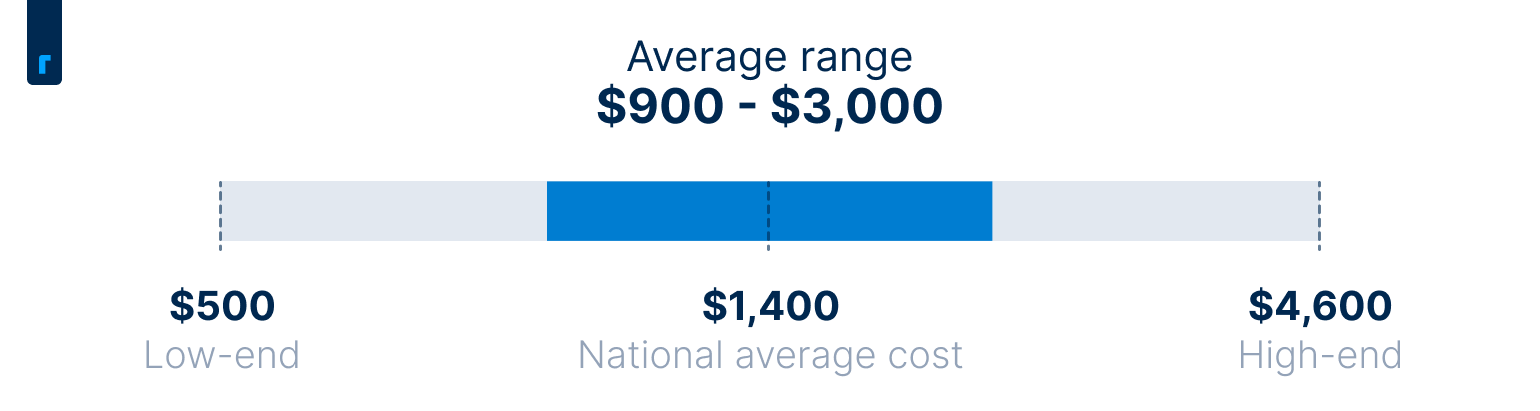
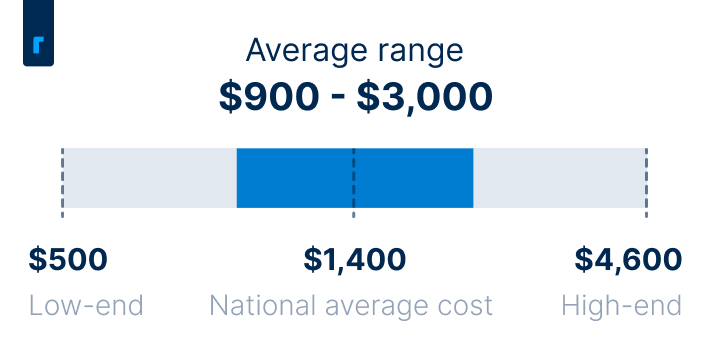
The average water heater installation cost is $1,400, with prices ranging from $900 to $3,000 for a natural gas, tank water heater. The exact cost will depend on the water heater capacity you need, the type of water heater you choose, and the fuel source. Tankless water heaters will cost closer to the upper end of that range, while tank-style water heaters will bring costs down to the lower end.
Your water heater is the unsung hero of your home systems, providing hot water for bathing, washing dishes, and cleaning clothes. Replacing your water heater can improve your home’s energy efficiency, make your water temperature safer and more comfortable, and even reduce your utility bills.
Cost of Water Heater Installation
Hot Water Heater Installation Cost by Type
There are four primary types of water heaters, and the type you choose will affect your installation costs.
Tank water heaters: Store hot water in a tank and keep it heated continuously. Lowest upfront cost and simplest installation, but higher ongoing energy use.
Tankless water heaters: Heat water on demand for better efficiency and lower utility bills. Higher installation complexity (often requires electrical or gas upgrades) and typically cost nearly twice as much as tank models.
Heat pump (hybrid) water heaters: Transfer heat instead of generating it, making them highly efficient, especially in warm climates. Require more space and specific installation conditions, and usually cost about twice as much as standard tank systems.
Indirect water heaters: Use an existing boiler to heat domestic water. Very efficient in homes with boilers and offer the longest lifespan, but come with higher upfront installation costs.
Tank systems are the most affordable to install, while tankless, heat pump, and indirect models cost more upfront but can offer better efficiency, performance, or longevity.
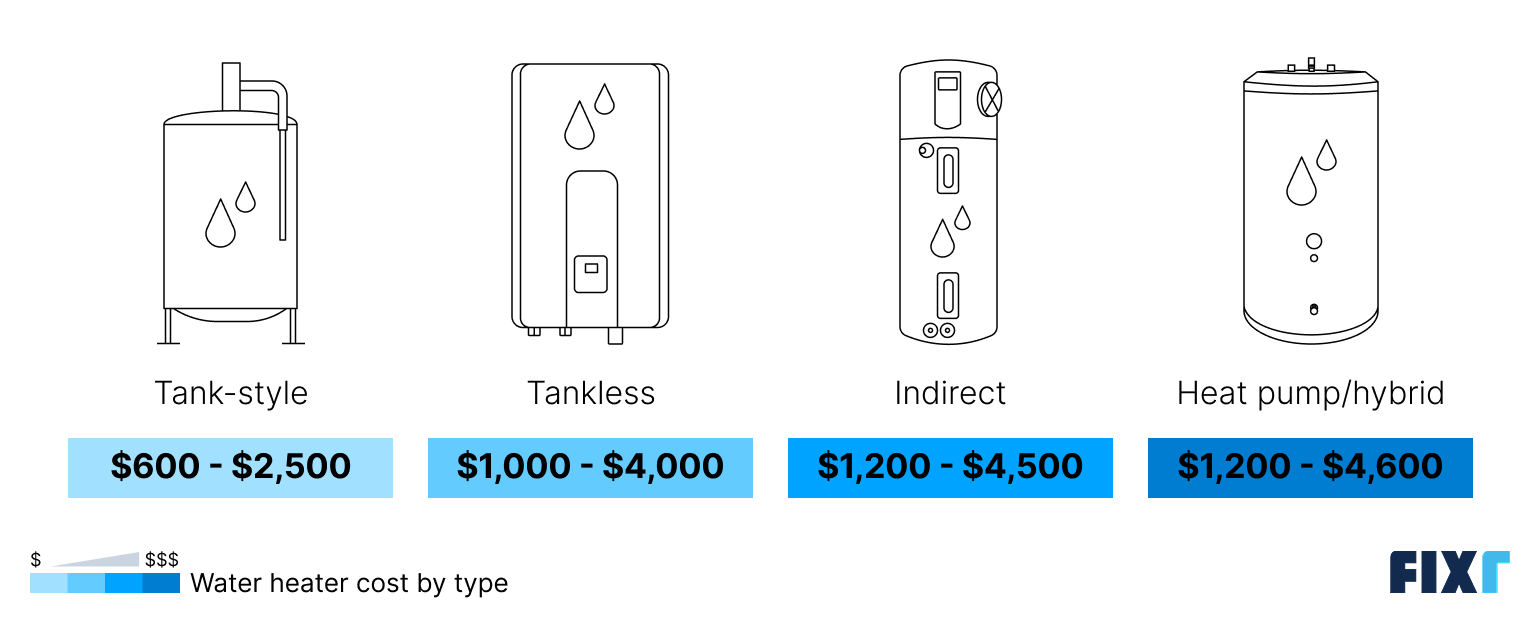
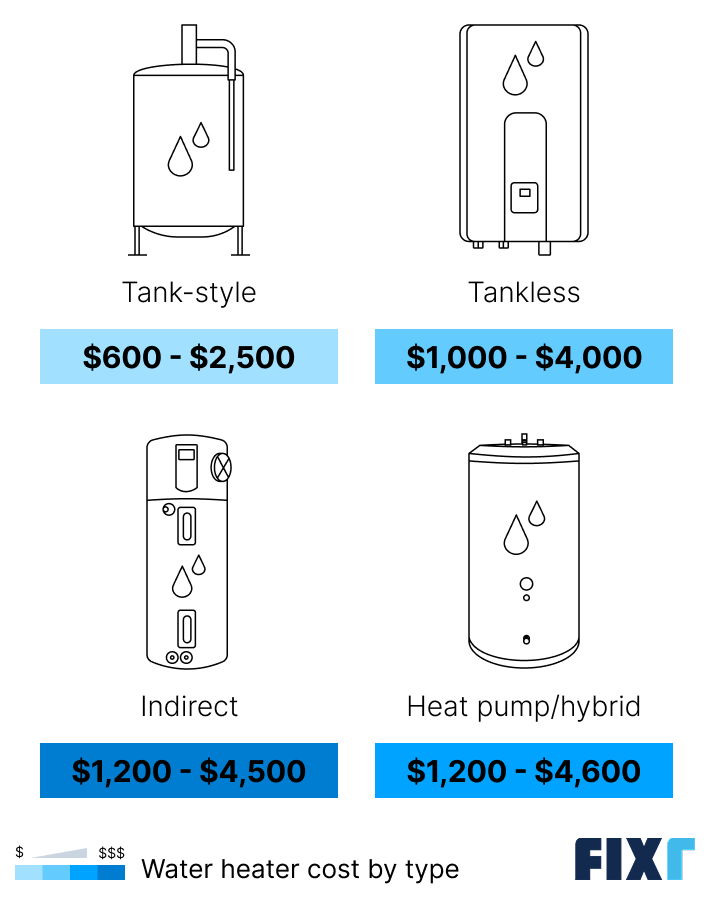
Type of Water Heater | Cost (Installed) |
Tank-style | $600 - $2,500 |
$1,000 - $4,000 | |
Indirect | $1,200 - $4,500 |
Heat pump/hybrid | $1,200 - $4,600 |
Cost of Water Heater Installation by Fuel Type
The type of fuel your water heater uses is a major factor in both installation costs and energy bills, as each option has different material and labor requirements. Common fuel types include natural gas, electricity, propane, oil, and solar.
Natural gas, oil, and propane water heaters all burn fossil fuels to generate the heat required. These usually cost the least for materials, although the labor to connect them to your existing fuel source can get expensive. Gas water heaters and oil water heaters are the most common options and are widely available throughout the country.
Electric water heaters use electricity to send power to internal heating coils that heat up the water inside the tank. This works particularly well for on-demand water heaters, but they may not be efficient enough for colder climates. Solar water heaters rely on sunlight or solar-powered electricity to heat water and may include electric or gas backup systems for consistent performance.
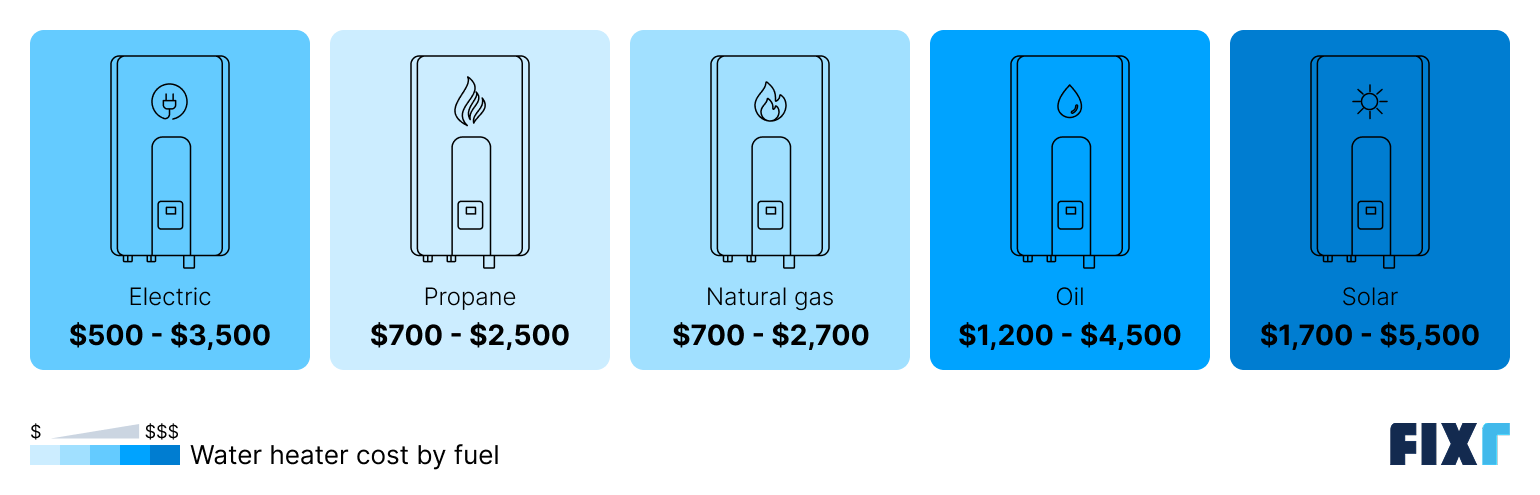
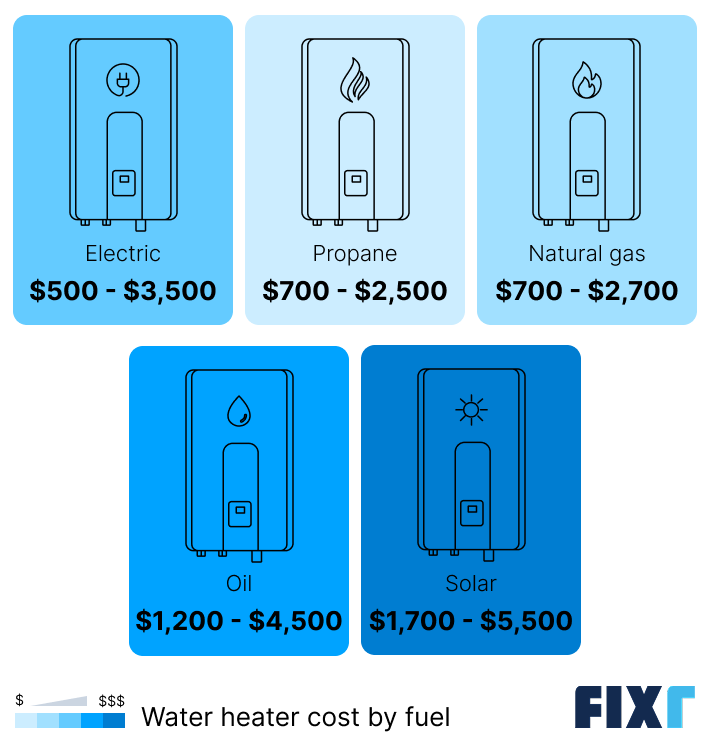
Water Heater | Cost (With Installation) |
$500 - $3,500 | |
Propane | $700 - $2,500 |
$700 - $2,700 | |
Oil | $1,200 - $4,500* |
$1,700 - $5,500 |
*Note that standalone oil-fired water heaters do exist, but most systems that use oil as a fuel source use an indirect water heater linked to an oil-fired boiler. Prices reflect this setup.
Tank Water Heater by Size
Unless you install a tankless water heater, you’ll need to choose a water heater tank size based on your household’s hot water consumption. Homes with more family members typically require larger, more expensive tanks to support frequent bathing and washing, while tanks that are too large can waste energy and reduce efficiency. Undersized tanks, on the other hand, may result in cold showers and insufficient hot water for daily use.
Tank size plays a major role in material costs and can also impact labor costs, especially if changing sizes requires rerouting plumbing to accommodate different tank dimensions.
Size | Cost (Installed) | Average Household Size |
30 gallon | $550 - $2,100 | 1 - 2 people |
$550 - $2,300 | 1 - 4 people | |
$700 - $2,500 | 3 - 5 people | |
$1,100 - $3,400 | 4 - 6 people | |
80 gallon | $1,200 - $3,600 | 6+ people |
Sizing your tankless water heater accurately is also important, but the sizing requirements are different given the lack of a tank. You can find more information in our guide on tankless water heater installation costs.
Water Heater Replacement Labor Cost
Labor makes up an average of between 18% and 50% of your total, on average, or between $300 and $1,500, on average. Some plumbers may charge an hourly rate, in which case you can expect to pay between $45 and $200 per hour, depending on experience and location.
More involved projects, such as converting from a traditional tank unit to a wall-mounted tankless model, or changing the water heater's location, will significantly increase labor costs. Additionally, converting between fuel types, like switching from a gas, propane, or oil unit to an electric one, or vice versa, often requires bringing in specialized professionals. This could mean a licensed electrician to handle new wiring or panel upgrades, or a specialist to install a new gas line, or move the water lines, which would add more to the overall cost.
Water Heater Replacement vs. New Installation Cost
Replacing your existing water heater with a similarly sized unit that uses the same fuel type is usually the most affordable option upfront. It means minimal plumbing and electrical work and should require little more than removing the old unit and connecting the new one. Your material costs will depend on the type and size of the heater you’re installing, but labor costs should be minimal.
Installing a water heater in new construction or adding a second water heater to support a home addition will cost significantly more, as you’ll need new plumbing lines and either new gas or oil lines run to your unit or a new electrical connection if you’re going with an electric water heater. Expect to pay an additional $400 to $1,800 to rough-in the utilities if you’re installing a water heater rather than replacing one.
Additional Cost Factors to Consider
There are many other factors that can affect your water heater installation costs, so be sure to consider all of the following when budgeting for your project.
Old Unit Removal and Disposal
Many plumbers will include the cost of disconnecting and hauling away your old water heater in their initial estimates, but some will charge an additional cost for this service. If yours charges extra, expect to pay between $75 and $500, including dumping fees.
Permits
Most local building departments will require permits to replace a water heater, and all will require permits for new water heater installation. Costs vary by location and typically range from $25 to $1,500, with higher fees applying when new gas lines, electrical connections, or major changes to plumbing are required.
Location and Accessibility
Labor fees vary by location and usually scale with the cost of living, so you can expect labor costs to drive up your total more in more expensive areas. The location of the water heater in your home matters, too, as you’ll pay higher labor costs if your plumber needs to maneuver equipment into and work in cramped crawl spaces or tight utility closets.
Warranties
Some plumbers may offer labor warranties that cover installation-related issues. These often come at a higher upfront cost but can be worth it for added protection and peace of mind.
Venting System
Water heaters that use natural gas, oil, or propane require a venting system for safety. Venting provides fresh air to support efficient combustion and carries exhaust gases outside to prevent toxic fumes from building up indoors, making it an essential safety feature for standalone units.
There are two main types of venting systems: direct and power. Direct venting uses a nearby chimney or flue pipe to naturally vent exhaust outside. Power venting relies on an electric exhaust fan and may be necessary when no chimney or flue is available. Installing a power vent and the required electrical connection can add $300 to $1,000 to the total cost.
Note that electric water heaters and indirect water heaters don’t require dedicated venting systems.
Code Requirements and Upgrades
Costs may increase if your installation requires changes to meet current building codes or upgrades for improved safety.
Recent building code updates may require additional work to keep your water heater compliant and safe, which can increase installation costs. Optional safety upgrades, such as drain pans or seismic straps, can add protection but will raise the upfront price.
What Size Water Heater Do I Need?
Choosing the right water heater size is important for efficiency, performance, and lifespan. Units that are too large waste energy, while undersized units won’t meet hot water demand and will wear out faster.
You can use the general sizing guidelines below to get an estimate for your water heater size.
Tank-style (by household size): A 30-gallon tank typically serves 1 to 2 people. Add about 10 gallons for every additional 1 to 2 people.
Tank-style (by demand): Consider how many hot-water fixtures and appliances you use at the same time. Choose a unit with a first-hour rating (FHR) that meets or slightly exceeds your peak hourly demand.
Tankless models: Size is based on gallons per minute (GPM). Start at around 5 GPM and add about 1 GPM per household member.
These guidelines can help you estimate what size water heater you need, but a licensed plumber can properly size your water heater based on home size, fixtures, climate, and usage patterns.
Signs Your Water Heater Needs Replacement
Replacing a water heater can be costly, but delaying it can lead to bigger problems and higher expenses. Consider a replacement if you notice any of the following:
Old age: Tank water heaters last 8–12 years, while tankless models last 15–20 years. Units near or past this range are more likely to fail.
Leaks: Water pooling around the base usually indicates corrosion or a cracked tank.
Insufficient hot water: A loss of efficiency that prevents the unit from meeting hot water needs.
Unusual noises: Sediment buildup can reduce efficiency and signal internal damage.
High utility bills: Older, inefficient units consume more energy.
Strange odors or discolored water: Egg-like smells or rust-colored water suggest internal corrosion.
DIY vs. Professional Water Heater Installation
Professional installation can significantly increase the total cost, with labor typically starting around $300 and sometimes doubling the unit price. If you have the right skills, tools, and local regulations allow it, a DIY installation may save money.
However, hiring a professional is the safer option. A licensed installer ensures the water heater is properly sized and installed, reducing the risk of leaks, inefficiency, and costly damage. DIY mistakes can leave you responsible for repairs, and insurance may not cover water damage if the unit wasn’t professionally installed. In many areas, water heater replacements also require a licensed plumber to meet local codes and permit requirements.
How to Save on Water Heater Installation
With hot water heater replacement costs commonly reaching as high as $4,600, it’s normal for homeowners to look for ways to reduce costs. Here are some things you can do to stay within your budget.
Replace your water heater with a similar type and size: Avoid high costs associated with rerouting plumbing, electrical, and gas lines by sticking with the same size, type, and fuel source.
Size your water heater properly: Have a professional size your unit for your home to avoid high utility and repair costs from an undersized or oversized water heater.
Install a high-efficiency model: Choose a high-efficiency water heater that’s certified by ENERGY STAR to reduce long-term operating costs.
Take advantage of tax credits and rebates: Check the Database of State Incentives for Renewables and Efficiency (DSIRE) to see if there are tax credits or rebates available for water heater replacement in your area.
Schedule installation during the off-season: Late spring or early summer is typically slower for plumbers, which may result in lower labor costs.
Get at least three quotes: Comparing at least three quotes helps ensure you get the best price.
FAQs
The average water heater replacement costs $1,400, including materials and labor. Prices typically range from $500 to $4,600, with tank-style units on the lower end and tankless systems on the higher end.
Tankless water heaters provide hot water almost immediately. Tank-style models typically take 30 to 60 minutes to heat up, with gas, propane, and oil units closer to 30 to 40 minutes and electric models up to 60 minutes.
In most cases, homeowner’s insurance will not cover water heater replacement. Insurance typically only covers replacement if the unit is damaged by a covered event, such as a natural disaster.
The clearest signs your water heater needs replacement include insufficient hot water, rising utility bills, leaks, or a unit that’s near the end of its lifespan.