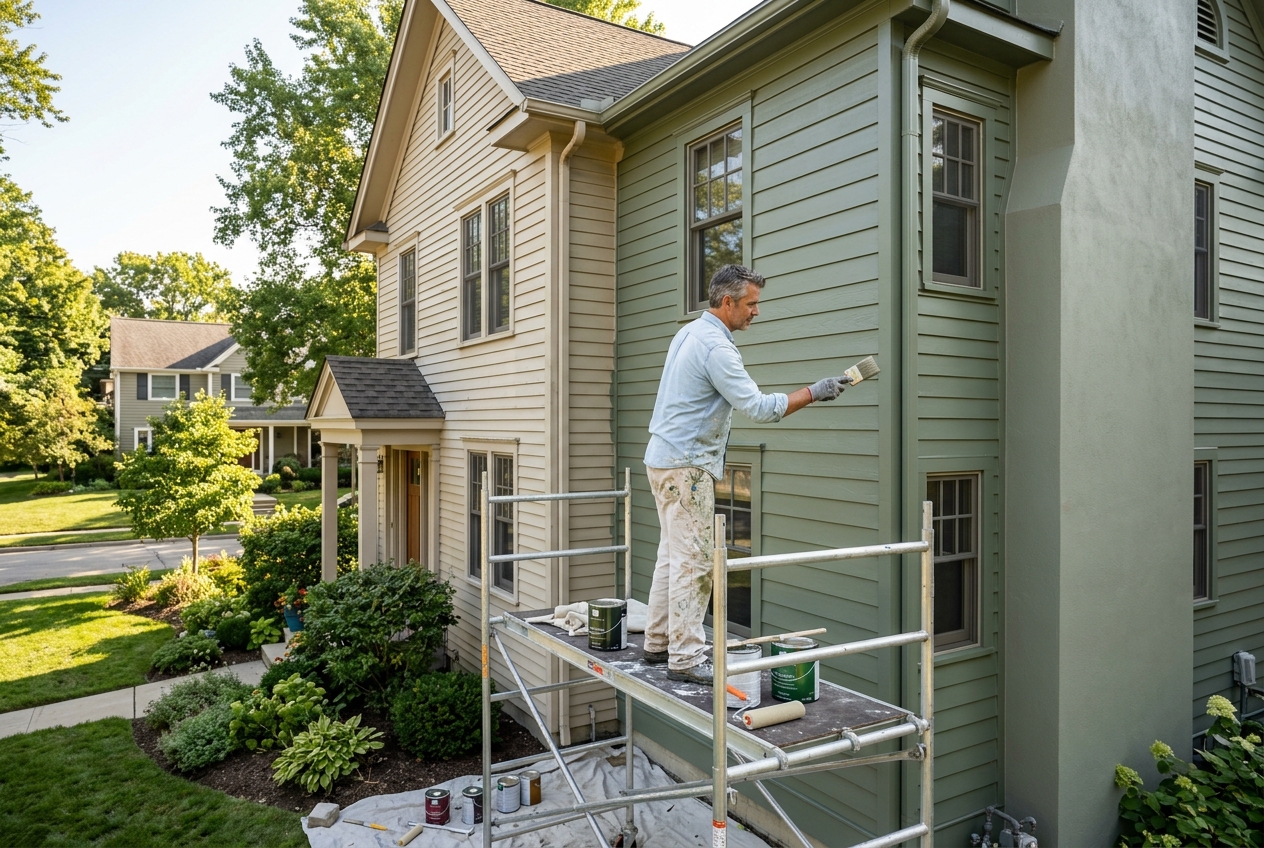
Overall cost: Traditional exterior painting for a 2,000 sq ft home costs $3,200 to $8,000, but modern coatings have higher upfront costs.
Lifespan comparison: Traditional paint lasts 5-10 years; modern coating systems can perform for decades.
Cost-effectiveness: While more expensive initially, long-term coatings often prove cheaper over time due to reduced repainting frequency.
Material differences: Modern coatings are thicker and elastomeric, resisting cracking and peeling better than traditional paint.
Homeowners planning an exterior refresh often face a choice: traditional paint or modern, long-term coating systems. This decision affects not only the immediate exterior painting cost but also the long-term maintenance and durability of your home's finish. A typical 2,000 square foot home's exterior painting cost in early 2026 runs between $3,200 and $8,000. The cost per square foot for exterior painting in 2026 ranges from $1.50 to $4.30¹.
Traditional exterior paint jobs typically last between 5 and 10 years². Modern exterior coating systems, however, are designed to last for decades, reducing the need for frequent repainting³. This guide compares these two options, helping you understand their differences in cost, lifespan, and suitability for various home surfaces and climates.
Traditional Exterior Paint: Costs and Longevity
Traditional exterior paint offers a familiar approach to refreshing your home's appearance. The initial investment is generally lower, but its lifespan requires more frequent repainting.
Material Costs and Quality
The quality of paint directly impacts its durability. Premium 100% acrylic latex paint, which costs $40-$60 per gallon, contains more resin and better pigments than budget options, which cost $20-$30 per gallon. Premium paint can cost twice as much per gallon but often lasts nearly twice as long, making it cheaper per year in the long run.
Premium acrylic resins maintain flexibility longer and resist UV damage better than oil-based alkyd resins⁴. Choosing a higher-quality paint is a key factor in extending the life of your exterior finish².
Application and Preparation Impact
Professional application significantly extends the lifespan of an exterior paint job compared to DIY efforts⁵. A professionally painted exterior typically lasts 7-10 years due to expert prep work, proper primer adhesion, and even application⁶. Professional preparation and application can help maximise service life.
Surface preparation, including cleaning, scraping, sanding, filling, and priming, takes 60-70% of the project time but accounts for 80-90% of the paint job's longevity. Skipping primer or using cheap primer can halve the life of an exterior paint job²⁰¹. You can learn more about professional painting services for your home's exterior.
Thorough surface preparation is critical. While it accounts for most of the project time, it's the biggest factor in how long your exterior paint will last.
Expected Lifespan by Surface
The type of siding material also influences how long traditional paint will last:
Paint adhesion can be an issue on smooth surfaces like aluminum siding². For metal siding, proper surface preparation and primer are crucial to achieve a longer lifespan, as corrosion can accelerate failure⁴. If you're considering painting your aluminum siding, review the specific cost and process details.
Modern Long-Term Coating Systems
Modern long-term coating systems offer an alternative to traditional paint, focusing on extended durability and reduced maintenance. These systems come with a higher upfront cost but aim to eliminate frequent repainting cycles³.
Material and Performance Advantages
These modern coating systems are often much thicker than traditional paint and are elastomeric, allowing them to flex with the home's natural movements. This flexibility helps them resist cracking, peeling, and chalking, issues common with traditional paints. They also offer long-term color retention, keeping your home looking fresh for years. While more expensive initially, their enhanced performance means they can perform for decades³.
The installed cost for residential elastomeric paint on stucco typically ranges from $1.50 to $5.00 per square foot, with a full professional job for a typical 2,000 sq ft home costing between $3,000 and $8,500²⁰⁷.
Application Process
The application of long-term coatings is often more specialized than traditional painting. It typically involves extensive surface preparation, similar to premium paint jobs, to ensure optimal adhesion and performance. The thicker nature of these coatings may require different application techniques and equipment, usually handled by certified professionals.
Cost-Effectiveness Over Time
Despite their higher initial cost, modern long-term coatings generally prove more cost-effective over their lifespan. A traditional paint job that lasts 7-12 years will need to be redone multiple times over the decades that a long-term coating remains intact⁸. The reduced need for repainting may offset the higher upfront cost of long-term coatings over time.
Pros
- + Significantly longer lifespan (decades vs. years)
- + Resistant to cracking, peeling, and chalking
- + Excellent color retention
Cons
- - Higher upfront material and labor costs
- - Specialized application may limit contractor choice
Climate and Environmental Factors
The local climate significantly influences the lifespan of any exterior finish, whether traditional paint or a long-term coating. Factors like UV rays, humidity, temperature swings, wind-driven rain, and coastal moisture all impact durability. Homes in high-UV or coastal regions may require repainting every 5-7 years with traditional paint⁷.
Modern long-term coatings are generally designed to withstand these environmental stresses better, making them a strong consideration for harsh climates. Their inherent flexibility and resistance to common weather-related failures offer a distinct advantage where traditional paint might degrade quickly. Homeowners in Florida, for instance, face specific challenges due to the climate that can benefit from durable coating options.
Overall Recommendation
When deciding between traditional exterior paint and modern long-term coating systems, the best choice depends on your budget, desired longevity, and tolerance for future maintenance.
For homeowners seeking the lowest initial cost and willing to undertake repainting every 5-10 years, traditional paint is the winner. It offers a wide range of color options and finishes at an accessible price point.
For those prioritizing long-term durability, reduced maintenance, and superior performance against weathering, modern long-term coating systems are the clear winner. While the upfront investment is higher, the extended lifespan may be more cost-effective over time. These coatings are particularly suitable for homes in challenging climates or for owners who want to avoid frequent repainting.
Most professionally applied exterior paint jobs using traditional paint last between 5 and 10 years. Some sources suggest a range of 7-12 years is common⁸.
Modern long-term coating systems are much thicker and elastomeric than traditional paint, allowing them to flex with the home. This makes them highly resistant to cracking, peeling, and chalking, and they offer superior long-term color retention.
Yes, modern long-term coating systems generally have a higher upfront cost than traditional paint. However, they are designed to last for decades, often making them more cost-effective over their much longer lifespan by eliminating frequent repainting cycles³.
Surface preparation is crucial. Professional surface preparation accounts for 60-70% of the project time and 80-90% of the paint job's overall longevity. Skipping proper prep or primer can significantly reduce the paint's lifespan²⁰¹.
Yes, climate and weather exposure significantly affect paint longevity. Homes in areas with high UV rays, humidity, or coastal moisture may require repainting every 5-7 years with traditional paint. Modern coatings are better equipped to handle these stresses.
No, professional application typically outperforms DIY results over the long run⁵. DIY paint jobs typically last 4-7 years, with common pitfalls like painting over unsound surfaces leading to premature failure⁶.
Yes, regular cleaning can help extend the life of an exterior paint job⁷. Keeping surfaces clean prevents mildew and dirt buildup that can degrade paint over time.
Will is a Home Improvement Editor with a passion for helping homeowners make confident, well-informed decisions about their homes. He specializes in reviewing and refining content covering home renovations, solar energy, roofing, HVAC, insulation, windows, flooring, plumbing, electrical systems, and other key areas of residential improvement.
With a strong background in research and technical writing, Will is committed to ensuring every article is accurate, accessible, and backed by reliable sources. He carefully reviews content for factual accuracy, clarity, readability, and relevance, helping readers understand complex home improvement topics in straightforward, practical terms. His editorial approach focuses on translating industry information into guidance that homeowners can trust when planning repairs, renovations, or energy-efficient upgrades.
Will has experience evaluating home improvement content against current industry standards, manufacturer guidance, and reputable government and consumer resources. He believes that high-quality editorial standards are essential in helping readers navigate major purchasing decisions, whether they are comparing roofing materials, selecting solar panels, upgrading insulation, or planning a complete home renovation.
As an editor, Will collaborates closely with writers and subject matter experts to ensure content remains comprehensive, unbiased, and up to date. He is particularly interested in emerging trends within the home improvement industry, including sustainable building practices, energy efficiency, smart home technology, and cost-effective renovation strategies that deliver long-term value for homeowners.
Outside of editing, Will enjoys staying informed about developments in residential construction, building products, and consumer technology. His attention to detail and commitment to producing trustworthy content help ensure readers have access to reliable information that empowers them to make informed decisions with confidence.
Sources:
Paint House Exterior (networx.com)
Exterior Paint Replacement Guide — When to Replace (replacementguide.com)
House Paint Alternatives for 2026: No More Repainting, wddevelopers, 2026 (deluxelifecote.com)
How Long Does Exterior Paint Last? The Minneapolis Homeowner's Paint Longevity Laboratory (headwaterspainting.com)
How Long Should Exterior Paint Last? Factors That Affect Its Lifespan, Greg Owens, 2026 (mccarthypainting.com)
DIY vs Pro Painting 2026: $800 vs $10K, 2026 (facadecolorizer.com)
How long does exterior house painting last?, caputodesignseo, 2026 (certapro.com)
How Long Does Exterior Paint Really Last? (And What Makes It Fail…, 2026 (williamsprofessionalpainting.com)