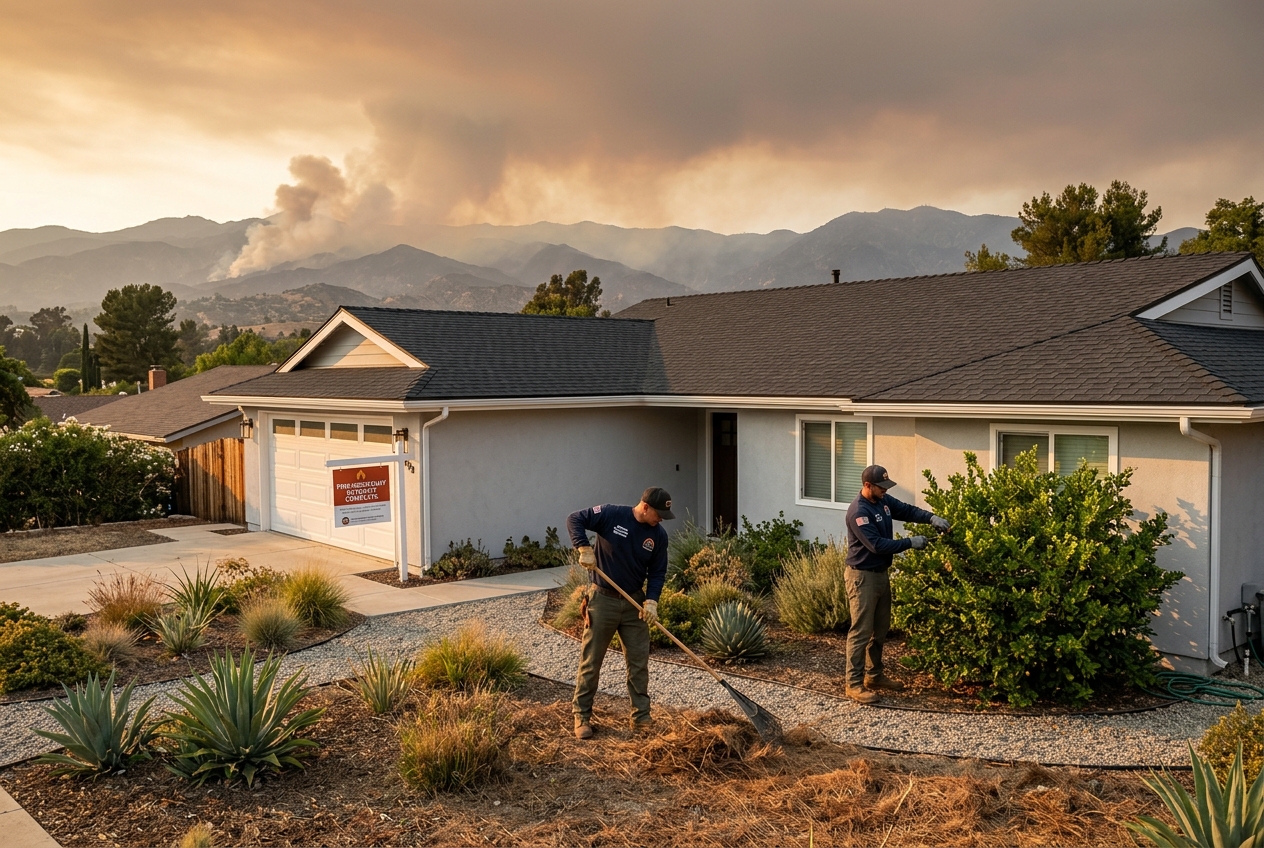
Defensible Space: Clearing around your property can cost $1,400 to $8,500, with annual maintenance from $500 to $1,600.
Home Retrofits: Simple fire-resistant upgrades range from $2,000 to $15,000, focusing on vents, roofing, and landscaping.
Insurance Impacts: Homeowners in high-risk zones face rising premiums and policy cancellations, with potential discounts for verified fire-resistant features.
The Western United States is currently experiencing a severe heatwave with record-breaking temperatures. This heat contributes to widespread wildfire activity across states like Washington and Utah. Emergency declarations, evacuations, and the destruction of hundreds of structures have followed. Millions of residents are under heat alerts, facing extreme conditions and heightened risks of heat-related illnesses and property damage. Protecting your home is critical during this time.
Home protection costs in the Western US, specifically for wildfire and heatwave mitigation, vary significantly. For a standard 1-acre property, typical defensible space clearing can range from $1,400 to $8,500¹. Simple home retrofitting actions to boost fire resistance typically cost between $2,000 and $15,000². More extensive measures or living in very high-hazard zones can drive costs considerably higher.
Defensible Space: Costs and Considerations
Creating and maintaining defensible space around your home is the first line of defense against wildfires. This involves clearing vegetation and flammable materials to reduce fuel for a fire. Costs for this work depend on several factors, including property size, how dense the vegetation is, the slope of your land, equipment access, and the specific treatment methods used, such as tree thinning or brush removal³.
For a 1-acre property in Washington, average clearing costs are $1,800 to $6,000. Properties in State Responsibility Area (SRA) zones in Washington may see a 10-20% surcharge. In Utah, average clearing costs for a 1-acre property start from $1,600⁴. Other Western states also show varying averages: Colorado is $2,200 to $7,000, Oregon $2,000 to $6,500, and Idaho $1,400 to $5,000¹.
Annual Maintenance and Professional Help
Annual maintenance for defensible space in Washington typically costs $500 to $1,600¹. This ongoing work helps ensure your property remains protected year after year. Removing flammable materials and debris from roofs and areas close to the home can often be done at little to no cost .
Many local fire districts provide free defensible space assessments. These assessments can help you understand specific vulnerabilities and prioritize tasks. Hiring licensed contractors for tasks beyond 5 feet from the home or those requiring ladders or chainsaws is recommended. These professional services can cost $1,000 to $4,000 per acre⁵.
Home Hardening and Retrofits
Beyond defensible space, structural modifications to your home can significantly improve its resistance to fire and extreme heat. Simple and effective home retrofitting actions can cost between $2,000 and $15,000. This covers upgrades like flame- and ember-resistant vents, metal flashing, and noncombustible mulch around the foundation².
A full home retrofit to the highest protection level could approach $100,000. However, this extensive level of protection is often not necessary for most homeowners².
Replacing standard vents with ember-resistant covers is a critical, cost-effective upgrade, costing $300 to $1,200 for materials.²
Key Retrofit Components and Costs
Ember-resistant vent covers cost $300 to $1,200¹. Retrofitting an average home with these vents might cost $1,500 to $3,000⁶. Professional roof vent installation typically costs $200 to $750 per vent .
Replacing roofing materials with Class A fire-rated options can cost $8,000 to $25,000. Overall roof modifications average around $5,860². Dual-pane tempered glass windows are another valuable upgrade, costing $3,000 to $12,000¹. The total cost for window replacement can range from $3,445 to $11,835 .
Pros
- + Significantly increases a home's chances of surviving a wildfire.
- + Can lead to discounts on homeowners insurance premiums.
- + Improves energy efficiency, helping against heatwaves.
Cons
- - Can involve substantial upfront costs, especially for extensive retrofits.
- - Some retrofits may require professional installation, adding to labor expenses.
Upgrading exterior wall siding with fire-resistant materials like fiber-cement costs $8,000 to $30,000. Exterior wall upgrades average around $12,190². Non-combustible deck replacement can run $5,000 to $20,000. Sealing garage doors is a smaller but important measure, costing $500 to $2,000¹. You can also review general fire protection measures for your home.
Landscaping and Heat Protection
Landscaping plays a dual role in both wildfire protection and managing extreme heat. Modifying landscaping near homes to create a noncombustible zone can add about $2,570 to overall expenses². In Utah, fire-resistant landscaping starts from $1,600, and in Washington, from $1,800⁴.
In Very High Fire Hazard Severity Zones (VHFHSZ), such as in Los Angeles, fire-hardened landscaping can cost $50,000 to $150,000 . This adheres to strict ember-resistant requirements and defensible space standards . Fire-smart landscaping is also cost-effective long-term, as it conserves water and can increase property value .
For heat protection, improving home insulation can help keep interior temperatures down during extreme heat events. This reduces reliance on air conditioning and lowers energy bills.
Impact on Homeowners Insurance
The rising threat of wildfires and extreme heat in the Western US directly impacts homeowners insurance. Rates have been increasing in wildfire-prone states, including California, New Mexico, Colorado, Oregon, Montana, and Washington . California saw an 84% surge in average home insurance premiums over the past five years, with significant impacts in high-risk fire zones⁷. Utah experienced a 59% increase in insurance rates from 2021-2024 .
Insurers are increasingly canceling policies or raising premiums in high-risk areas. Some large insurance companies are no longer writing new policies in these zones, pushing more homeowners toward state-mandated plans like California's FAIR Plan. The FAIR Plan itself saw an average 15.7% rate increase in early 2026⁷.
The devastating Spokane fires in August 2026, which destroyed around 700 buildings, are expected to intensify scrutiny of homeowners' insurance availability in Washington. These fires could potentially drive up rates for all insureds in Washington, not just those in wildfire zones. Insurers have already imposed moratoriums on new homeowners' policies in Washington's affected areas⁸. Updated wildfire risk maps released in late 2025 in Utah have led to higher insurance premiums and coverage challenges for residents in areas like Washington County, designated as high-risk zones .
Even when coverage is available in wildfire-prone areas, it may not be adequate due to wildfire sublimits and high deductibles . However, many insurers offer premium discounts of 5% to 15% for homes with verified fire-resistant features, such as ember-resistant vents⁶. Documenting defensible space is also becoming increasingly tied to insurance renewal decisions⁵.
Financial Assistance Programs
Several programs offer financial assistance for wildfire mitigation efforts. Eligibility for these grants varies by state, income level, and property location¹. Local wildfire mitigation specialists can provide guidance on available grants and incentives .
For instance, California's CAL FIRE Grants Program offers up to $5,000 for qualifying homeowners¹. A pilot program in California provides grants up to $40,000 for home retrofits, with preliminary reports showing average costs per home of roughly $50,000 .
In Colorado, the Wildfire Risk Reduction Program offers cost-share grants. Douglas County, Colorado, for example, offers a 50% cost-share match up to $25,000 per homeowner in 2026³. Additional funding opportunities in Colorado include the Colorado Strategic Wildfire Action Program (COSWAP) and Colorado State Forest Service Grant Programs . Oregon's ODF Defensible Space Program provides technical assistance and rebates¹.
Nationally, the USDA Forest Service offers Community Wildfire Defense Grants (CWDG) for communities and Tribes to plan and reduce wildfire risk¹. These grants prioritize areas with high wildfire hazard potential, low income, or those impacted by severe disasters within the previous 10 years . FEMA's Hazard Mitigation Grant Program (HMGP) and Pre-Disaster Mitigation (PDM) program also offer grants for structural retrofits and fire prevention programs .
Emergency Preparedness Kits
Beyond long-term mitigation, having an emergency preparedness kit is crucial. Pre-assembled 2-person wildfire emergency preparedness kits can cost around $200-$300 . A Deluxe 3-Day / 72-Hour Emergency Preparedness Kit from the Red Cross Store includes essential items like food bars, water pouches, a flashlight, multi-tool, and first aid supplies .
Individual items can also be purchased separately. Comprehensive burn kits are available for as low as $13. A 3-pack of fire extinguishers can be purchased for $24. A full fire survival kit was listed at $36 (down from $42) in April 2026⁹. These kits provide immediate resources in case of evacuation or direct threat.
For a standard 1-acre property in Western states, typical defensible space clearing costs range from $1,400 to $8,500. This depends on factors like vegetation density, property size, and terrain.
In Washington, annual maintenance costs for defensible space are typically $500 to $1,600. These costs ensure the cleared area remains effective year-round.
Simple and effective home retrofitting actions, such as installing ember-resistant vents and metal flashing, can cost between $2,000 and $15,000. A full, highest-level retrofit could approach $100,000 but is usually not needed.
Ember-resistant vent covers typically cost $300 to $1,200 for materials. Retrofitting an average home with these vents might range from $1,500 to $3,000 including installation.
Homeowners insurance rates have been rising significantly in wildfire-prone Western states, with California seeing an 84% surge in premiums over the past five years. Insurers are increasingly canceling policies or raising premiums in high-risk areas.
Yes, several programs offer financial assistance. Examples include California's CAL FIRE Grants Program (up to $5,000), Colorado's Wildfire Risk Reduction Program, and federal Community Wildfire Defense Grants.
Landscaping modifications near homes to create a noncombustible zone can add about $2,570 to overall expenses. In Utah, fire-resistant landscaping starts from $1,600, and in Washington from $1,800.
A basic emergency preparedness kit often includes food bars, water pouches, a flashlight, a multi-tool, and first aid supplies. Pre-assembled 2-person kits typically cost $200-$300.
Deana is a Home Improvement Editor with a passion for helping homeowners navigate renovation, repair, and remodelling with confidence. Specializing in roofing, kitchen and bath remodelling, and outdoor living spaces, she combines industry knowledge with a genuine commitment to making complex home projects feel approachable for readers at every stage of their journey.
Her path into home improvement media began after several years working alongside licensed contractors in project coordination, where she gained firsthand exposure to the realities of home renovation - from permitting delays to material sourcing challenges. This hands-on experience gave her a practical, ground-level understanding of what homeowners actually need to know before hiring a contractor, choosing materials, or starting a project - insight that now shapes every piece of content she creates.
As an editor, Deana oversees content covering product reviews, cost guides, seasonal maintenance tips, and contractor vetting advice, working closely with writers and industry experts to ensure accuracy and relevance. She has a particular interest in emerging trends like smart home technology and energy-efficient upgrades, and enjoys translating technical information into clear, actionable guidance for homeowners.
Beyond editorial oversight, Deana stays closely connected to the pulse of the home improvement industry - tracking shifts in consumer preferences, pricing trends, and the challenges homeowners face when navigating renovation projects, from budgeting to finding trustworthy professionals.
When not editing, Deana enjoys visiting local open houses for design inspiration and tackling small DIY projects around her own home. Based in Adelaide, Australia, she believes a well-maintained, thoughtfully upgraded home is one of the most meaningful investments people can make in their day-to-day quality of life.
Sources:
Wildfire Defensible Space & Home Hardening Cost Guide 2026 — Western States, Western Wildfire Defense (western-wildfire-defense.com)
Understanding the Costs of Fireproofing a Home, Sam, 2025 (fire-protection-los-angeles.com)
Wildfire Mitigation Cost: 2026 Pricing and Defensible Space Guide (redrockconsultinggroup.com)
Fire-Resistant Landscaping — Western States, Western Wildfire Defense (western-wildfire-defense.com)
Wildfire defense services: what to hire, skip, and DIY, 2026 (defensiblehome.com)
Cost vs. Safety: Are Fire-Resistant Roof Vents Worth It?, James, 2026 (vulcanvents.com)
Watch (youtube.com)
Spokane devastation pressures Washington’s burdened homeowners' insurance market, 2026 (insurancebusinessmag.com)
Wildfire Prep Kit Amazon Sale (thestreet.com)