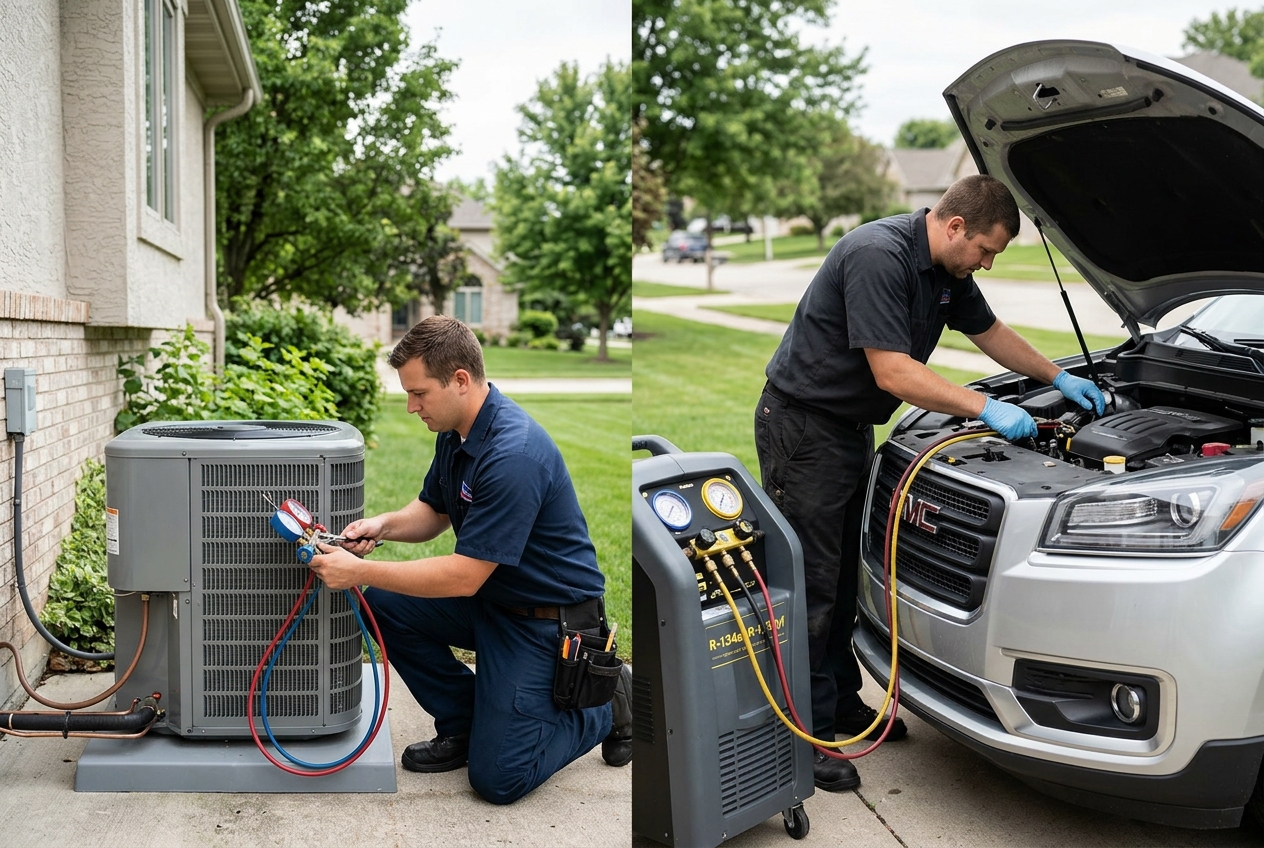
Cost Range: Residential AC repairs typically cost $100 to $3,000, while auto AC repairs range from $150 to $2,000.
Major Repairs: Compressor replacement in a residential AC can be $1,500 to $3,500, and $800 to $2,000 for a car.
Labor Rates: HVAC labor rates are $75 to $200 per hour; auto AC labor varies from $75 to $250 per hour.
Budgeting: Regular maintenance, comparing quotes, and understanding financing options can help manage repair expenses.
AC repair projects for residential systems can range from $100 to $3,000, depending on the complexity of the issue . For common residential AC repairs, the national average is around $300 to $600, with most jobs costing between $150 and $1,500¹. According to a source from 2026, car AC repair costs typically range from $150 to $2,000, depending on the specific problem .
This guide breaks down typical expenses, factors that influence price, and strategies for budgeting and saving on both home and car AC repairs.
Residential AC Repair Costs
Residential AC repair costs vary significantly based on the component that needs fixing or replacement. Minor issues are much less expensive than major system failures.
Minor fixes, such as replacing a capacitor or fixing a clogged drain line, usually cost $100 to $300². Simple repairs generally fall between $150 and $700 . In contrast, major component replacements, such as a failed compressor, can cost $2,800 or more¹. Compressor and coil replacements can even range from $2,500 to $4,000 .
Factors Affecting Residential AC Repair Costs
Several factors can drive up or reduce the cost of residential AC repair. Understanding these helps in managing expectations and budgeting.
Type of Repair and Parts
The specific part needing repair or replacement is the biggest cost driver. Simple electrical components, like capacitors, are inexpensive to fix. Repairs involving refrigerant, coils, or the compressor require more labor, specialized tools, and expensive materials. The deeper the failure is within the AC system, the higher the repair bill¹. High-cost items like compressors or coils significantly increase the price of an AC repair³.
Older HVAC systems might need more expensive or hard-to-source parts, especially if they use outdated refrigerants like R-22². Central air conditioning and ductless mini-splits typically cost more to repair than window or portable AC units due to their complexity⁴. You can learn more about related maintenance in our guide on Ductwork Repair.
Labor Costs
Labor often accounts for 50% to 70% of residential cooling repair invoices. Hourly rates for HVAC labor typically range from $75 to $150 per hour, though some sources cite rates up to $200 per hour⁵, depending on location and technician experience. Many contractors also charge a separate diagnostic fee, usually $75 to $150⁴. This fee may be credited toward the repair if you approve the work. Always ask upfront if the diagnostic fee is waived or credited⁶.
Geographic Location and Timing
AC repair prices vary by geographic location due to differences in living costs, demand for services, and technician availability². Peak summer demand can also increase service costs . Emergency, after-hours, weekend, or holiday calls can add $75 to $250 to the bill or raise standard rates by 1.5 to 2.5 times⁵.
Automotive AC Repair Costs
Automotive AC repair costs also show a wide range, generally starting from minor fixes to major component overhauls.
The national average for general auto AC repair is $350 to $417, with common repairs falling between $100 and $700⁶. A minor repair, such as replacing the refrigerant pressure switch, averages $350 to $400. For a standard AC service, including refrigerant recharge and leak inspection, quotes average between $430 and $521. Major auto AC repairs, such as compressor replacement, typically start around $1,000 and can exceed $2,500⁷.
Factors Affecting Automotive AC Repair Costs
Similar to residential systems, several factors influence the cost of car AC repair.
Component and Vehicle Type
The specific part that needs repair dictates much of the cost. For example, the auto AC compressor part alone can range from $400 to $1,300 . Luxury brands or newer car models might require specialized and more expensive parts, increasing the repair bill³. The type of refrigerant also matters; newer R-1234yf is more expensive than older R-134a .
Labor Rates
Labor for auto AC compressor replacement alone adds $400 to $800 to the cost . Auto AC labor rates vary significantly by region, from $75 to $250 per hour, and also depend on the accessibility of parts within the vehicle⁶.
Repair or Replace? Making the Decision
Deciding whether to repair an AC unit or replace it depends on several factors, including the system's age, the cost of the repair, and its overall condition.
When to Consider Repair
Repairing your AC often makes financial sense when the system is under 10 years old. It is also a good option when repair costs are less than 30% to 40% of the replacement cost. If the issue is isolated, such as a faulty capacitor, fan motor, or thermostat, repair is usually the more economical choice⁴.
Manufacturer warranties often cover key parts, meaning you might only pay for labor if the system is still under warranty². Extended warranties can also significantly reduce out-of-pocket costs for major repairs⁷.
When to Consider Replacement
Consider replacing an older residential AC system if it requires frequent or expensive repairs, particularly when it is approaching the end of its expected service life. Compare the repair estimate with the cost of a comparable new system, considering its age, efficiency, warranty coverage and overall condition. Rules of thumb can help guide the decision but should not determine it alone. Replacing a central air conditioner usually costs $5,000 to $12,000 or more, including installation⁴.
Pros
- + Cost-effective for minor issues: Repairing small problems like a capacitor or thermostat saves money compared to full replacement.
- + Extends lifespan: Timely repairs can add years to a younger, otherwise functional unit.
- + Warranty coverage: Manufacturer or extended warranties can cover parts, reducing out-of-pocket expenses.
Cons
- - Recurring problems: Older units might experience frequent breakdowns, leading to accumulated repair costs.
- - Inefficiency: An older, repaired unit may still be less energy-efficient than a new one, leading to higher energy bills.
- - Outdated refrigerant: Older systems might use R-22 refrigerant, which is more expensive and difficult to source.
Strategies for Managing AC Repair Costs
Proactive maintenance, careful selection of professionals, and exploring financing options can help manage AC repair expenses.
Preventive Maintenance
Regular professional AC tune-ups, ideally annually in the spring, can prevent unexpected breakdowns and improve efficiency. For residential units, clean or change AC filters every one to three months⁸. For vehicles, follow the manufacturer's recommended maintenance schedule and have the AC system inspected if cooling performance declines, unusual noises develop or leaks are suspected. Catching problems early can save you from bigger, more expensive repairs later³.
Smart Consumer Practices
Always request an itemized written estimate that clearly lists parts, labor, refrigerant, and taxes for any AC repair³. Compare quotes from reputable mechanics or shops to ensure you are getting a fair price .
Keep blinds or curtains closed during peak sun hours to save on AC costs. Use fans to supplement AC and raise the thermostat a few degrees. Sealing leaks around windows and doors with weatherstripping or caulk can cut cooling bills by 10-20%. Upgrading to an ENERGY STAR certified air conditioner can improve energy efficiency, although actual savings depend on the efficiency of the existing unit, climate, usage and installation quality. Installing a smart thermostat and programming it to raise the temperature when no one is home can save up to 10% on monthly bills⁸.
Financing Options for AC Repair
Several financing options are available if you need help covering AC repair costs. Unsecured personal loans provide lump sum financing for HVAC repairs, although interest rates, origination fees and prepayment penalties vary by lender. U.S. Bank also provides personal loans for AC repair, typically requiring a minimum credit score of 680 .
Home equity loans (HELs) and home equity lines of credit (HELOCs) are options for homeowners with strong credit and at least 15% equity in their home. For short-term needs, credit cards with 0% introductory APR can be useful, but you must pay off the balance during the interest-free term to avoid high regular interest rates⁹.
Contractor or manufacturer financing often offers promotional rates, such as 0% APR for 60 months. Government-backed programs like FHA Title 1 loans and FHA 203(k) loans⁹ can be used for home improvements, including AC repair or replacement. The Low Income Home Energy Assistance Program (LIHEAP) may provide cooling assistance to eligible low-income households, depending on state programs and available funding. It is an assistance program rather than a loan. Property Assessed Clean Energy (PACE) financing may be available for qualifying energy-efficient HVAC improvements in participating areas. Eligibility, interest rates, fees and repayment terms vary by program. PACE financing is generally repaid through a property tax assessment and can create additional financial obligations for homeowners.
Conclusion
Understanding AC repair costs for both residential and automotive systems helps you make informed decisions. Minor repairs are relatively inexpensive, but major component failures can lead to significant expenses. By considering factors like the type of repair, labor rates, and system age, you can better budget and manage these costs. Proactive maintenance and exploring financing options further empower you to handle unexpected AC repairs effectively.
According to a source from 2026, car AC repair costs typically range from $150 to $2,000, depending on the specific problem . The average for most standard passenger vehicles is between $384 and $445⁵.
Residential AC repair projects can range from $100 to $3,000 . The national average for common residential AC repairs is around $300 to $600, with most jobs costing between $150 and $1,500.
Minor residential AC fixes like capacitor replacements can cost as little as $120 to $250¹. Other common repairs include thermostat replacement ($150 to $450)⁴ and fan motor replacement ($300 to $700).
A minor auto AC repair, such as replacing the refrigerant pressure switch, averages $350 to $400⁷. An AC recharge typically costs $200 to $500.
Consider replacing an older residential AC system if it requires frequent or expensive repairs, particularly when it is approaching the end of its expected service life. Compare the repair estimate with the cost of a comparable new system, considering its age, efficiency, warranty coverage and overall condition. Rules of thumb can help guide the decision but should not determine it alone.
Regular professional AC tune-ups can prevent unexpected breakdowns⁸. Always get an itemized written estimate and compare quotes from multiple reputable contractors or mechanics. Catching problems early can also prevent more expensive repairs later³.
Options include unsecured personal loans, home equity loans (HELs) or lines of credit (HELOCs), and credit cards with 0% introductory APR. Contractor or manufacturer financing may also offer promotional rates. Government programs like FHA Title 1 and FHA 203(k) loans, and LIHEAP for low-income borrowers, are also available⁹.
Will is a Home Improvement Editor with a passion for helping homeowners make confident, well-informed decisions about their homes. He specializes in reviewing and refining content covering home renovations, solar energy, roofing, HVAC, insulation, windows, flooring, plumbing, electrical systems, and other key areas of residential improvement.
With a strong background in research and technical writing, Will is committed to ensuring every article is accurate, accessible, and backed by reliable sources. He carefully reviews content for factual accuracy, clarity, readability, and relevance, helping readers understand complex home improvement topics in straightforward, practical terms. His editorial approach focuses on translating industry information into guidance that homeowners can trust when planning repairs, renovations, or energy-efficient upgrades.
Will has experience evaluating home improvement content against current industry standards, manufacturer guidance, and reputable government and consumer resources. He believes that high-quality editorial standards are essential in helping readers navigate major purchasing decisions, whether they are comparing roofing materials, selecting solar panels, upgrading insulation, or planning a complete home renovation.
As an editor, Will collaborates closely with writers and subject matter experts to ensure content remains comprehensive, unbiased, and up to date. He is particularly interested in emerging trends within the home improvement industry, including sustainable building practices, energy efficiency, smart home technology, and cost-effective renovation strategies that deliver long-term value for homeowners.
Outside of editing, Will enjoys staying informed about developments in residential construction, building products, and consumer technology. His attention to detail and commitment to producing trustworthy content help ensure readers have access to reliable information that empowers them to make informed decisions with confidence.
Sources:
How Much Does AC Repair Cost in 2026? AC Repair Prices by Problem, 2026 (callhomerangers.com)
Air Conditioner Repair Cost (thisoldhouse.com)
Car AC Repair Cost in 2026: Average Prices by Problem, 2026 (myautogms.com)
Ac Repair Cost (modernize.com)
How Much Does It Cost to Repair an AC Unit? (mercedesmike.com)
How Much Does AC Repair Cost for Your Vehicle in 2026?, eric, 2026 (marksair.com)
Cost of Car AC Repair (2026), 2026 (consumeraffairs.com)
Stay Cool and Save: Easy Ways to Cut Your AC Costs, Pheple FCU, 2025 (pheplefcu.org)
HVAC Loans: Compare HVAC Financing Options, Dalia Ramirez, 2026 (nerdwallet.com)