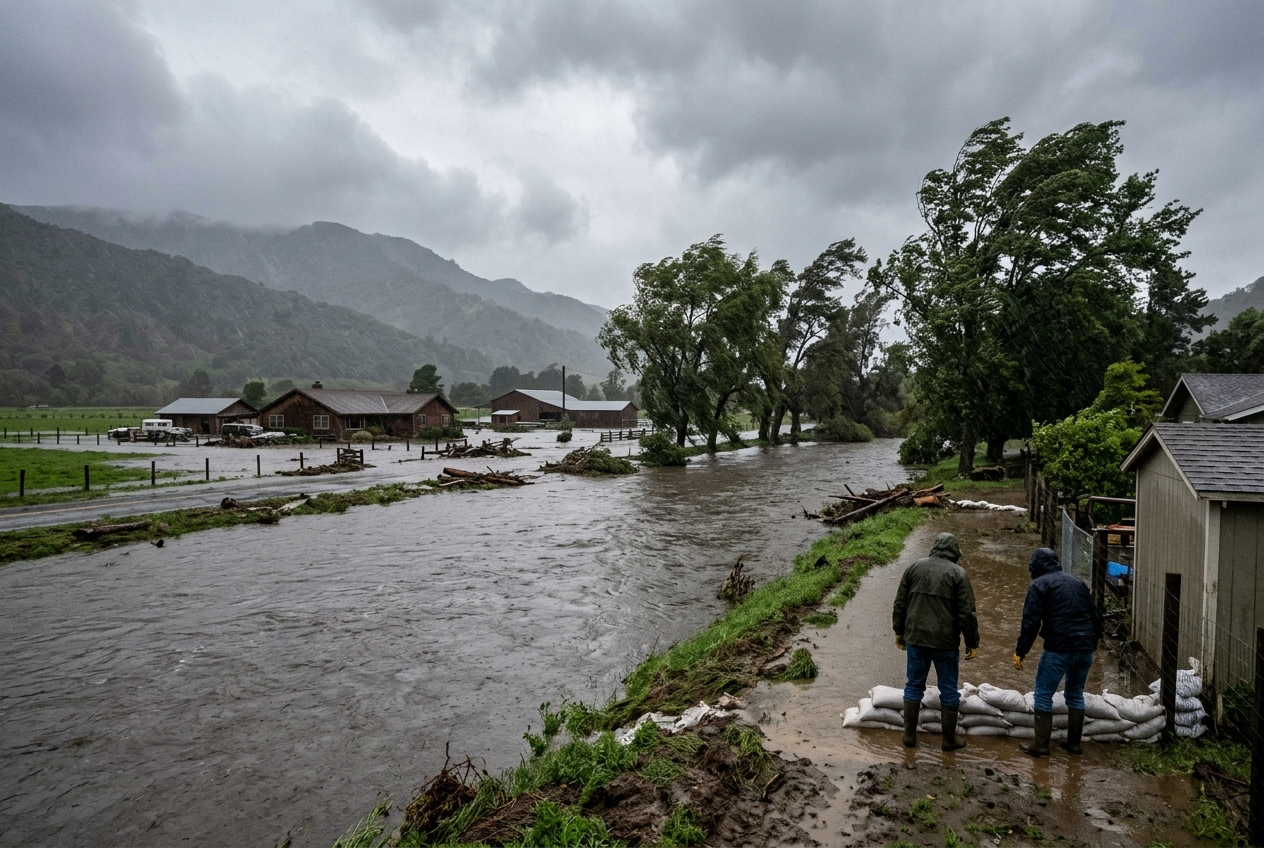
Severe Weather Impact: California is experiencing widespread flooding, heavy snow, and high winds from an atmospheric river and a strong El Niño event, continuing into mid-November 2026.
Property Damage Risks: Coastal infrastructure, urban areas, and recently burned landscapes are vulnerable to inundation, erosion, and debris flows.
Insurance Gaps: Standard homeowners insurance generally does not cover flood damage, leaving many California properties unprotected against rising surface water.
Preparedness: Homeowners should assess property risks, prepare for potential power outages, and review insurance policies for flood coverage gaps.
California is currently under a barrage of severe weather, beginning the past weekend (November 14-16, 2026) and continuing into mid-November. This series of storms, highlighted by a powerful atmospheric river, is prompting warnings for widespread flooding, heavy mountain snow, and gusty winds across most of the state. Reports indicate damage to coastal infrastructure and significant concern for property damage statewide.
An atmospheric river is a long, narrow plume of moisture that can transport substantial amounts of water vapor over thousands of miles. The current system is described as the "most widespread atmospheric river of the season" for California. This active storm pattern correlates with an exceptionally strong El Niño event, which NOAA said on November 12, 2026 is likely to be strong to very strong through January-March 2027. This El Niño has a 60% probability of exceeding the intensity of previous major events and is expected to peak between late 2026 and early 2027.
Flooding Risks and Regional Outlook
Widespread flooding is a major concern across California. Heavy downpours arrived across the Bay Area and Central Coast early Wednesday morning (November 18, 2026). The flood threat extends to Los Angeles, San Diego, and surrounding mountain areas from late Wednesday night into Thursday morning.
The Bay Area and Central Coast are under a Level 2 of 4 risk for flooding rain on Wednesday, November 18. Southern California, including Los Angeles and San Diego, faces a Level 2 of 4 risk on Thursday, November 19. Urban areas are particularly susceptible to flooding, and rockslides pose a risk on canyon roads. Recently burned areas are particularly prone to flooding and debris flows due to reduced water absorption capabilities.
Expected rainfall totals vary across regions:
Bay Area and Central Coast: 2 to 3 inches, with 3 to 5 inches possible in coastal mountain ranges.
Southern California: 1 to 3 inches, with 3 to 5 inches possible on some mountain slopes.
Local authorities in cities like Huntington Beach, Long Beach, and Seal Beach are distributing free sandbags.
Wind Damage and Power Outages
Gusty winds are expected across most of California. For Wednesday and Thursday (November 18-19), gusts of 30 to 45 mph are possible in parts of the Bay Area and interior Northern California, which could lead to downed trees and scattered power outages.
Southern California faces similar risks, with peak wind gusts of 30 to 50 mph (40 to 60 mph in mountains and foothills). This, combined with rain-loosened soils, increases the risk of downed trees and power outages.
Before the storms intensify, take photos or videos of your home's exterior and interior. This documentation can be crucial for insurance claims if damage occurs.
Heavy Mountain Snow
Heavy mountain snow is forecast, with snow levels potentially dropping as low as 4,000 feet. Mountain locations above 5,000 feet are likely to see 1 to 2 feet of snow through Thursday night (November 19), with some areas possibly receiving 3 feet or more.
The Sierra Nevada is expected to receive 1 to 2 feet of snow above 5,000 feet, with as much as 3 feet on the highest peaks. A winter storm warning is in effect for the Sierra Nevada from Tuesday night (November 17) until Friday morning (November 20).
Coastal Impact and Infrastructure Damage
The Pacific Coast has already experienced massive waves, with some reaching above 50 feet in San Mateo County, south of San Francisco, over the past weekend (November 14-16). This wave activity damaged Monterey Bay's historic Capitola Wharf.
High surf advisories are in effect for west-facing beaches in Los Angeles and Ventura counties, as well as coastal areas of Orange and San Diego counties. Large waves are expected through at least Tuesday and possibly Thursday (November 17-19)³. Higher-than-normal tides were attributed to Kelvin waves produced by the strengthening El Niño.⁴
Low-lying coastal infrastructure, such as seawalls, is at risk of inundation. There are also concerns for beach erosion and shallow flooding of normally dry beaches and walkways⁵. The city of Pacifica saw waves break over its seawall, pushing water across parking lots, sidewalks, and streets, and a concrete plate on the seawall near Salada Avenue lifted and buckled.⁶ Elevated coastal water levels due to El Niño and sea-level rise can compound flooding during high tides and strong winds.
Waves generated by a tropical storm in recent weeks also caused damage in Long Beach, destroying sections of the waterfront, flooding a residential neighborhood, and damaging homes⁷. News reports indicate damage to coastal infrastructure, including the Capitola Wharf.¹ A UC Davis study indicates that in a worst-case scenario, combining sea-level rise and El Niño-driven storm surge, several major highways and airports in the Bay Area could be submerged.
Homeowner Insurance and Economic Impact
California homeowners face heightened risks of flooding, landslides, and storm damage due to the strong El Niño. Standard homeowners and renters insurance policies generally do not cover damage caused by rising surface water, overflowing rivers, or water entering a building from the surrounding ground. The California Department of Insurance warns that consumers often discover this exclusion only after a flood.
Only 1.4% of residential properties in California carry flood insurance.⁸ The hypothetical "ARkStorm" scenario estimates approximately $725 billion in combined property damage and business-interruption losses, potentially requiring 1.5 million evacuations.⁹ While an ARkStorm is not forecast this winter, the combination of a strong El Niño, atmospheric river activity, and rising sea levels increases California's exposure to severe flooding.
Pros
- + Strong El Niño brings significant rainfall, potentially alleviating drought conditions.
- + Heavy mountain snow can replenish vital snowpack for water supply.
Cons
- - High risk of widespread flooding in urban and low-lying areas.
- - Increased potential for property damage from winds, waves, and debris flows.
- - Many homeowners lack adequate flood insurance coverage.
Insurance specialists recommend documenting a complete home inventory, documenting roof conditions, and checking policy limits before storms arrive². Understanding your policy's coverage and limitations regarding flood and wind damage is crucial.
Homeowners should prioritize preparedness in the face of these ongoing storms. Secure outdoor items, clear gutters, and create an emergency plan. Staying informed about local weather advisories and evacuation orders is essential for safety.
Deana is a Home Improvement Editor with a passion for helping homeowners navigate renovation, repair, and remodelling with confidence. Specializing in roofing, kitchen and bath remodelling, and outdoor living spaces, she combines industry knowledge with a genuine commitment to making complex home projects feel approachable for readers at every stage of their journey.
Her path into home improvement media began after several years working alongside licensed contractors in project coordination, where she gained firsthand exposure to the realities of home renovation - from permitting delays to material sourcing challenges. This hands-on experience gave her a practical, ground-level understanding of what homeowners actually need to know before hiring a contractor, choosing materials, or starting a project - insight that now shapes every piece of content she creates.
As an editor, Deana oversees content covering product reviews, cost guides, seasonal maintenance tips, and contractor vetting advice, working closely with writers and industry experts to ensure accuracy and relevance. She has a particular interest in emerging trends like smart home technology and energy-efficient upgrades, and enjoys translating technical information into clear, actionable guidance for homeowners.
Beyond editorial oversight, Deana stays closely connected to the pulse of the home improvement industry - tracking shifts in consumer preferences, pricing trends, and the challenges homeowners face when navigating renovation projects, from budgeting to finding trustworthy professionals.
When not editing, Deana enjoys visiting local open houses for design inspiration and tackling small DIY projects around her own home. Based in Adelaide, Australia, she believes a well-maintained, thoughtfully upgraded home is one of the most meaningful investments people can make in their day-to-day quality of life.
Sources:
Atmospheric River Storm California Rain Snow Climate (cnn.com)
El Niño 2026: California homeowners face rising flood insurance risks, 2026 (beinsure.com)
SoCal’s first atmospheric river storm of the season arrives this week: Here’s what it will bring, 2026 (latimes.com)
California Braces for Floods as Atmospheric River Threatens, Brian K. Sullivan, 2026 (insurancejournal.com)
California Steels Storms Could Trigger Massive Waves Flooding (afp.com)
Huge waves pummel California coast during strong El Niño, flooding streets and closing piers from Pacifica to San Diego, The Watchers Staff, 2026 (watchers.news)
وكالة أنباء الإمارات (wam.ae)
El Nino Is Testing Californias Coastal Homes And Their Insurance (inman.com)
How ARkStorm Could Threaten California This Winter (newsweek.com)