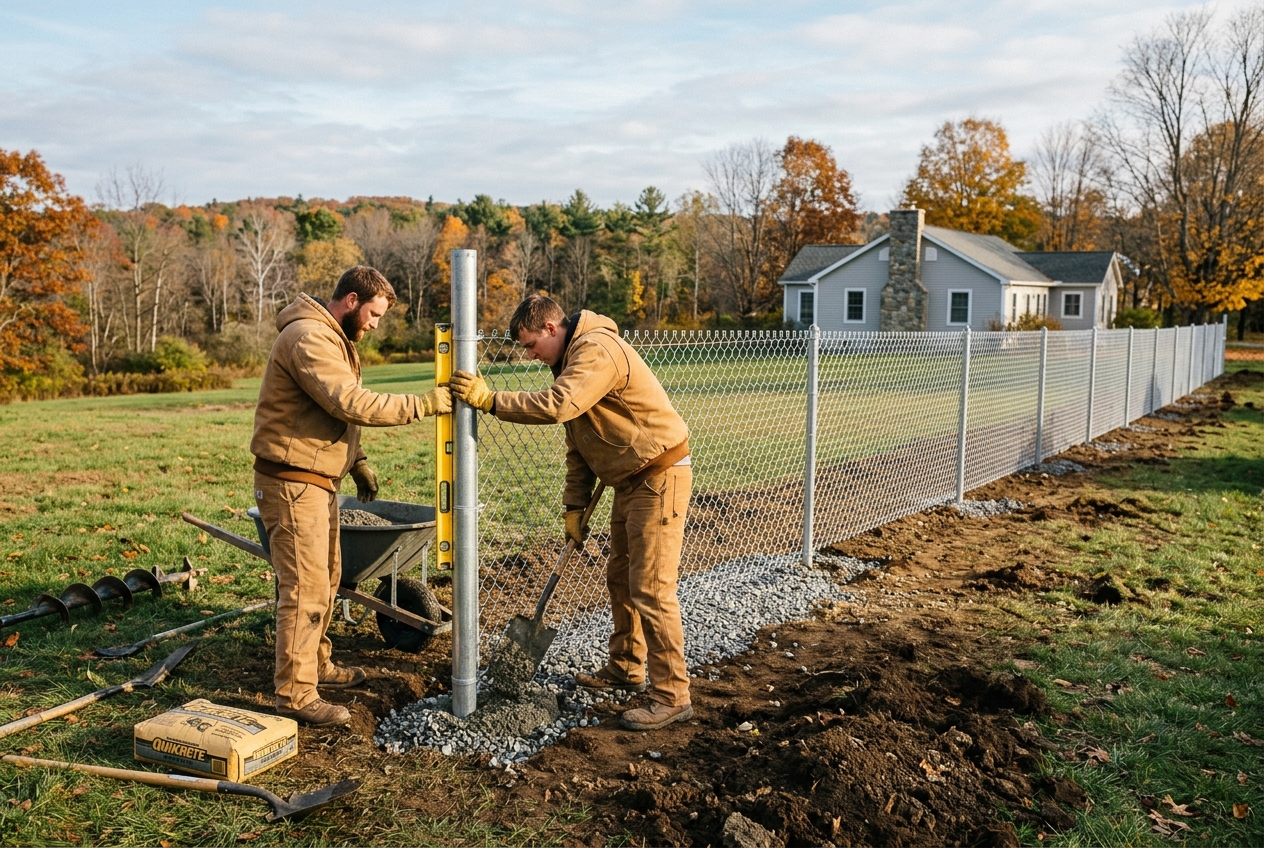
Deeper Posts: Installing fence posts below the local frost line is crucial for preventing frost heave.
Proper Installation Matters: Proper post depth, drainage, soil conditions, and installation method are key factors in reducing frost-heave movement.
Concrete & Sleeves: Concrete footers and frost sleeves add significant protection against upward pressure from freezing soil.
'Frost fence' is a term commonly used in parts of Canada, particularly Quebec, for chain-link fencing. In the US, this type of fencing is generally simply called chain-link fencing. These fences are known for their strength, flexibility, and longevity, making them a practical choice for various properties. Chain-link fences are typically made from woven steel wire with a galvanized or PVC-coated finish². This makes them suitable for challenging weather conditions¹.
The primary challenge for fences in cold climates is frost heave. This occurs when water in the soil freezes, expands, and pushes fence posts upwards³. This movement can destabilize the fence and cause significant damage over time. Effective frost heave prevention is key to a durable chain link fence.
Frost Heave and Post Depth
Frost heave directly impacts the stability and longevity of any fence in colder regions. When soil moisture freezes, it forms ice lenses that expand and lift anything embedded in the ground, including fence posts³. This upward pressure can misalign fence lines and loosen posts.
To combat frost heave, fence posts must extend below the local frost line. Post depth should be based on the local frost depth and applicable building requirements, which vary substantially by location. Colder regions with deeper frost lines will generally have higher installation costs due to the need for deeper posts and more robust frost-protection measures³.
Local Frost Line and Regulations
Before any installation begins, homeowners must determine their local frost line. This information is available from local building code offices³. Permit requirements and fees vary by municipality, so homeowners should check with their local building or planning department before installation.
These permits often include specific regulations about fence post depth to account for local frost lines. Understanding these requirements prevents penalties and ensures the fence meets local standards for durability³.
Post Materials: Durability Against Frost Heave
Post material affects a fence's strength, durability, and resistance to moisture and corrosion, while frost-heave resistance depends primarily on soil conditions, drainage, post depth, and installation method. Different materials offer varying degrees of strength, moisture absorption, and thermal properties. The initial material cost can be higher for more durable options, but this often translates into lower maintenance and repair expenses over its lifespan.
Steel and Galvanized Metal Posts
Steel and galvanized posts offer high structural strength and corrosion resistance, making them a common choice for chain-link fences in cold climates³. Their inherent strength helps them resist bending or warping from upward soil pressure.
Galvanized coatings also provide excellent resistance to rust and corrosion in harsh weather². This ensures the posts remain structurally sound even in wet, freezing conditions.
Pros
- + High structural strength
- + High resistance to rust and corrosion
- + Long lifespan in harsh conditions
Cons
- - Higher material cost than wood
- - Can be more challenging to install
Composite and Plastic Posts
Composite or plastic posts absorb less moisture than wood and can offer good resistance to moisture-related deterioration³.
While potentially higher in upfront cost, their durability and low maintenance requirements can make them a cost-effective choice in the long run.
Wood Posts (Pressure-Treated)
Pressure-treated wood performs better than non-treated wood in cold, wet conditions³. However, wood remains more susceptible to moisture-related deterioration than metal or composite materials, particularly in cold, wet conditions.
Installation Techniques for Frost Heave Prevention
Proper installation is as crucial as material selection for a frost-resistant fence. The goal is to create a foundation that resists the upward force of freezing soil. This involves specific digging and securing methods that go beyond standard fence installation.
Deeper Post Holes
Digging post holes deep enough to extend below the local frost line is the most fundamental step. The deeper the hole, the more labor-intensive the process, which directly increases installation costs³.
Digging post holes with a wider base, known as bell-shaped holes, creates a stronger anchor against upward frost heave pressure⁴. This technique is more labor-intensive but significantly improves stability.
Securing Posts: Concrete vs. Gravel
Securing posts properly is essential. Securing posts with concrete or gravel footers is recommended, with concrete footers specifically noted to offset frost heave pressure. While concrete is a good heat conductor and susceptible to ice lens formation, it is still recommended when combined with proper techniques. These techniques include using bell-shaped holes and bringing the concrete close to ground level⁴.
Gravel and sandy soils are less prone to frost heave compared to certain clay soils⁴. In these less susceptible soils, a well-compacted gravel footer might suffice, but concrete offers superior protection in high-risk areas.
Frost Sleeves
Frost sleeves are an additional layer of protection that can be added around the base of fence posts. These sleeves minimize frost heave by creating a barrier between the post and the expanding soil. They increase material costs but offer valuable extra defense against upward movement³.
Frost sleeves are particularly beneficial in areas with heavy clay soils or very deep frost lines, where heave pressure is more intense. They are often used in conjunction with concrete footers for maximum protection.
Overall Recommendation
For homeowners in cold US climates seeking a durable chain link fence, prioritizing frost heave prevention is critical. The long-term stability and cost savings from avoiding repairs outweigh the increased upfront investment in proper materials and installation. A standard chain link fence installation costs about $2,000 to $4,500 for 200 linear feet of 4-foot tall fencing.
For chain-link fencing in cold climates, steel or galvanized metal posts offer high structural strength and durability³. However, resistance to frost-heave movement depends primarily on appropriate post depth, drainage, soil conditions, and installation.
Installation should always involve digging post holes below the local frost line. Securing these posts with concrete footers, ideally in bell-shaped holes, provides the strongest foundation against upward pressure⁴. Adding frost sleeves offers an extra layer of protection³.
Consulting local building codes and obtaining any necessary permits is a crucial first step³. This ensures compliance with local regulations on fence height, property line setbacks, and material regulations. For more specific information on chain link fence costs, refer to our detailed guide.
A frost fence is a term commonly used for chain link fences, especially in regions with cold winters, because they are known for their strength and longevity in harsh conditions¹.
Frost heave occurs when freezing water in the soil expands and pushes fence posts upwards. This can destabilize the fence, causing posts to shift or lean and damaging the overall structure.
Fence posts must be installed below the local frost line to prevent frost heave. Post depth should be based on the local frost depth and applicable building requirements, which vary substantially by location.
Steel and galvanized metal posts are most resistant to frost heave due to their strength. Composite or plastic posts are also excellent as they absorb less moisture.
Yes, concrete footers are recommended for securing posts and offsetting frost heave pressure, especially when combined with techniques like bell-shaped holes⁴.
Permit requirements and fees vary by municipality, so homeowners should check with their local building or planning department before installation.
Frost sleeves are protective barriers placed around the base of fence posts. They minimize frost heave by preventing direct contact between the post and the expanding frozen soil, adding an extra layer of protection³.
Will is a Home Improvement Editor with a passion for helping homeowners make confident, well-informed decisions about their homes. He specializes in reviewing and refining content covering home renovations, solar energy, roofing, HVAC, insulation, windows, flooring, plumbing, electrical systems, and other key areas of residential improvement.
With a strong background in research and technical writing, Will is committed to ensuring every article is accurate, accessible, and backed by reliable sources. He carefully reviews content for factual accuracy, clarity, readability, and relevance, helping readers understand complex home improvement topics in straightforward, practical terms. His editorial approach focuses on translating industry information into guidance that homeowners can trust when planning repairs, renovations, or energy-efficient upgrades.
Will has experience evaluating home improvement content against current industry standards, manufacturer guidance, and reputable government and consumer resources. He believes that high-quality editorial standards are essential in helping readers navigate major purchasing decisions, whether they are comparing roofing materials, selecting solar panels, upgrading insulation, or planning a complete home renovation.
As an editor, Will collaborates closely with writers and subject matter experts to ensure content remains comprehensive, unbiased, and up to date. He is particularly interested in emerging trends within the home improvement industry, including sustainable building practices, energy efficiency, smart home technology, and cost-effective renovation strategies that deliver long-term value for homeowners.
Outside of editing, Will enjoys staying informed about developments in residential construction, building products, and consumer technology. His attention to detail and commitment to producing trustworthy content help ensure readers have access to reliable information that empowers them to make informed decisions with confidence.
Sources:
Chain link fences (FROST) | Clôtures Ko-Pin, 2023 (ko-pin.com)
Chain Link Fences (Frost), 2020 (cloturesalma.com)
The Frost Line and Your Fence Post, Joe Morrell, 2022 (louispage.com)
"Frost" chain link fences if Clôtures directes (cloturesdirectes.ca)