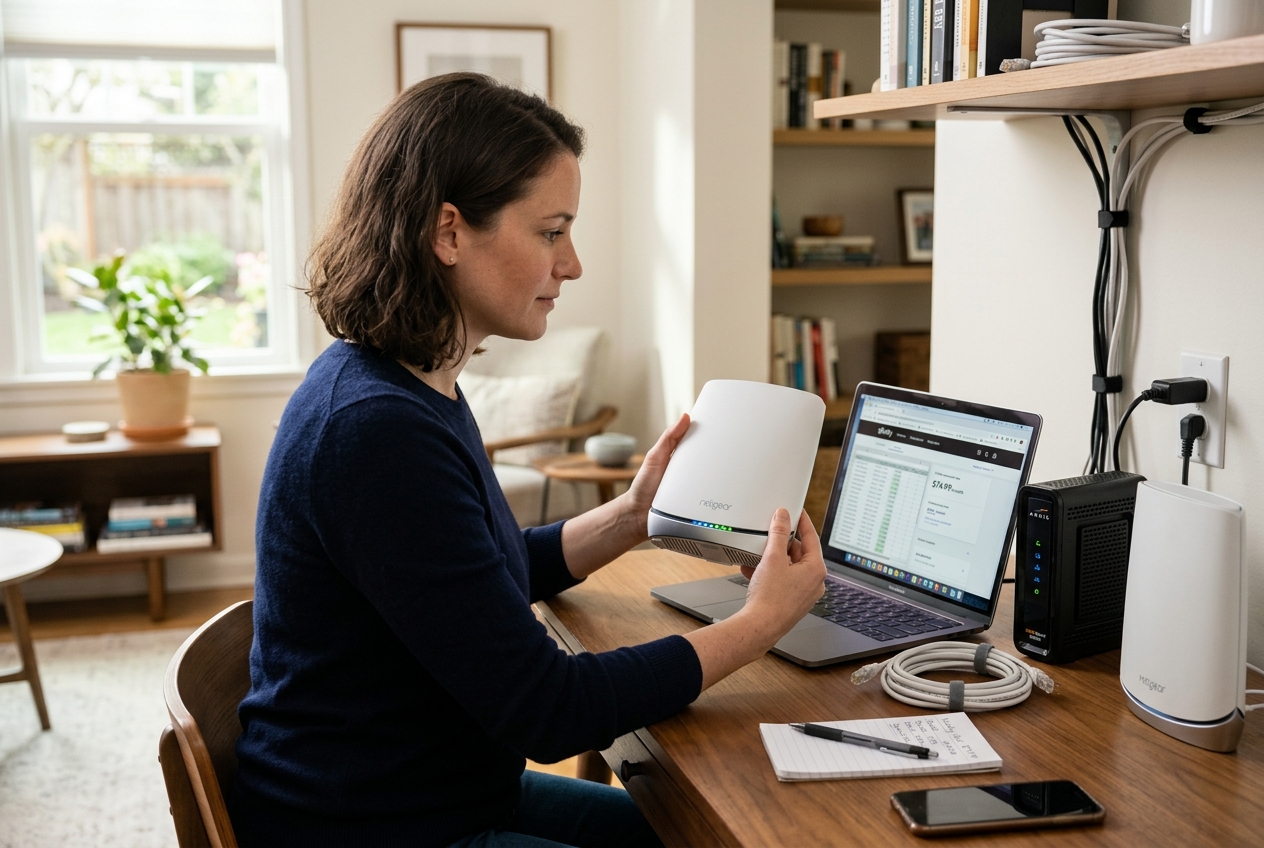
Average Monthly Cost: US households typically pay $75 to $81 per month for home internet service¹.
Variable Expenses: Costs vary significantly based on internet type, speed, location, and promotional offers.
Hidden Fees: Watch for equipment rental, installation, data overage, and early termination fees that increase the total network cost.
Cost-Saving Strategies: Consider buying your own equipment, opting for self-installation, or negotiating rates after promotional periods.
Establishing and maintaining a home internet and Wi-Fi network in the US involves both recurring monthly fees and one-time charges. Most households pay between $60 and $90 a month for internet service. However, the overall network cost can range from $40 to over $150 per month, depending on the service type, speed, equipment, and any additional fees.
The national average for a reliable broadband connection is approximately $75 per month, with costs ranging from $40 to $100. Other 2026 analyses report an average monthly internet cost of around $76 to $81¹. BroadbandNow's 2026 research indicates the average cost of home internet is $75 per month, though high-speed fiber or rural satellite packages often exceed $100 per month².
Internet Service Plan Costs
The largest component of your home network cost is typically the monthly internet service plan. Prices vary significantly based on the type of connection and desired speed. Different internet technologies offer distinct price points and performance characteristics.
Fiber Internet Costs
Fiber internet delivers high speeds, often symmetrical (upload speeds match download speeds), and typically ranges from $65 to $100 per month. The average listed price for Fiber Internet is $86 per month³.
Entry-level fiber plans, offering speeds between 100-300 Mbps, generally start around $30-$50 per month. Gigabit fiber (1,000 Mbps) usually costs $60-$90 per month. For those needing even higher performance, multi-gig fiber plans (2 Gbps or higher) generally range from $100 to $150+ per month⁴. Many fiber providers, such as AT&T Fiber, Verizon Fios, and Google Fiber, often include equipment and standard installation at no extra cost³.
Cable Internet Costs
Cable internet is widely available, covering over 80% of US households. Monthly costs typically range from $50 to $80 per month. The average listed price for Cable Internet is $67 per month³.
Promotional pricing for cable internet often starts lower, around $20-$40 per month for speeds like 100-300 Mbps. However, these prices can jump to $60-$80 after the introductory period, which usually lasts 12-24 months³.
Satellite Internet Costs
Satellite internet is generally the most expensive major home internet option, typically costing $110 to $120 per month³. This service is often used in rural areas where other options are unavailable.
Starlink residential plans typically cost around $90-$120 per month. Beyond the monthly fee, Starlink requires an initial hardware purchase of around $349-$499 for the Standard Kit, which includes the satellite dish, Gen 3 Wi-Fi router, cables, and mounting base. A portable Starlink Mini costs around $249-$399, while high-performance Starlink dishes can exceed $2,500⁵. Hughesnet may have equipment rental fees of $9.99-$19.99 per month, plus a $99 lease setup fee.
Fixed Wireless Internet Costs
Fixed wireless internet typically ranges from $40 to $50 per month. The average listed price for this service is $45 per month³.
Providers like T-Mobile 5G Home Internet generally charge $50-$70 a month for their plans. Eligible mobile customers might pay $35-$55 per month. These plans often include equipment, installation, and taxes, without requiring contracts or imposing data caps.
DSL Internet Costs
DSL internet is often a cheaper option, typically ranging from $30 to $60 per month. DSL plans can start at $35-$55 per month, offering speeds between 10 and 100 Mbps. For example, AT&T DSL plans start at $60 per month, though their fiber plans begin at $35 per month³.
One-Time and Recurring Fees
Beyond the core monthly internet plan, several other fees can impact your total home network cost.
Installation Fees
Installation fees usually range from $100 to $200. However, satellite installations can cost $300-$500. Professional installation can be free with certain promotions, or it can cost up to $100. Choosing self-installation, where available, can help avoid these fees. For instance, Optimum offers free self-installation, while their professional installation costs up to $100. Verizon Fios charges a $99 installation fee⁴.
For those looking to hardwire their home, installing Ethernet ports also adds to the cost. Professional Ethernet installation for a home network typically costs between $400 and $3,500 for the entire project, with a per-port cost ranging from $100 to over $500 depending on complexity. You can find more details on these expenses in our guide to a Hardwired Computer Network.
Equipment Costs and Rental Fees
Equipment rental fees can range from $5 to $15 per month, potentially adding up to $30 to your monthly bill. Seven of the top 12 internet providers charge an equipment fee, ranging from $10.00 to $19.99 per month⁴.
Purchasing your own compatible modem and router, which typically costs $100-$200 total, can pay for itself within 8-15 months. Some providers, including AT&T Fiber, Verizon Fios, T-Mobile, Google Fiber, Frontier Fiber, and Optimum, often include equipment at no extra cost⁴.
Consider purchasing your own modem and router if your provider charges a monthly rental fee. This one-time cost can save you money over time.
For Wi-Fi setup, the basic home networking installation, which includes locating and setting up a wireless router, is estimated at $265-$644 per access point. If you are interested in the costs specifically associated with setting up wireless networks, our Wireless Computer Network guide offers further information.
Data Overage Charges
Some providers, such as Xfinity and Cox, impose monthly data caps, often around 1.2 TB or 1.25 TB. Exceeding these limits can result in data overage charges of $10 per 50 GB over the cap, up to a maximum of $100 per month⁴.
Providers like Spectrum, AT&T Fiber, Verizon Fios, T-Mobile, Google Fiber, Frontier Fiber, and Optimum typically do not have data caps⁴.
Early Termination Fees (ETFs)
If you cancel your service before a contract expires, early termination fees can range from $50 to $400. Some providers, including Verizon Fios and Optimum, offer no-contract plans, which means no ETFs⁴.
Other Fees
Several other minor fees can add to your total network cost:
Regulatory and Broadcast Fees: These can add $3-$15 per month.
Annual Price Increases: Providers may implement annual price increases of 3-8% per year.
Taxes and Surcharges: These often inflate the final bill.
Late Payment Fees: These can be up to $9.99 or 1.5% of the unpaid balance⁴.
Factors Influencing Home Network Cost
The overall cost of your home internet and Wi-Fi network is shaped by several key factors. Understanding these can help you make more informed decisions.
Location
Internet costs vary significantly by state. According to 2026 data, prices range from $65.43 in New Jersey to $109.88 in Alaska³. This regional variation reflects the availability of infrastructure and competition among providers.
Promotional Offers vs. Standard Rates
Many internet providers offer introductory promotional rates that are significantly lower than their standard prices. While these can be attractive initially, the advertised price often increases after the promotional period ends, sometimes by 40-65%⁴. This increase is due to higher standard rates and added fees.
Speed Requirements
Faster internet speeds generally come with higher monthly costs. Consider your household's actual usage. Basic browsing and email might only require 50-100 Mbps, while heavy streaming, online gaming, and multiple users need 300 Mbps or more, potentially even gigabit or multi-gig speeds.
Network Complexity
For most homes, a single wireless router provided by the internet service provider is sufficient. However, for larger homes, or those with many connected devices or specialized needs, additional equipment might be necessary. This could include Wi-Fi mesh systems, range extenders, or a hardwired Ethernet network. Expanding or upgrading an existing network, such as adding more Ethernet ports or upgrading cabling, can cost $300-$1,000.
Components for a robust home network include:
RJ45 Keystone Jacks: $3-$7 each
Faceplates: $1-$3 per port
Patch Panels: $50-$300, depending on port count
Managed Network Switches: $100-$800+
Cable Termination: $15-$25 per drop (often included in per-drop pricing)
Pros
- + Promotional rates offer initial savings
- + Fiber internet provides superior speed and reliability
- + Self-installation avoids setup fees
Cons
- - Prices often increase after promotional periods
- - Satellite internet is expensive with high upfront hardware costs
- - Equipment rental fees add to monthly expenses
Strategies for Managing Your Home Network Cost
There are several ways to reduce or manage the overall cost of your home internet and Wi-Fi network.
Bundle Services
Many providers offer discounts if you bundle internet service with TV, phone, or mobile plans. Evaluate if a bundle genuinely saves you money compared to separate services. Ensure you need all components of the bundle to justify the cost.
Negotiate Your Bill
When your promotional period ends and your bill increases, contact your provider. Often, they will offer new promotions or loyalty discounts to retain you as a customer. Be prepared to switch providers if you do not get a satisfactory offer.
Buy Your Own Equipment
As mentioned, purchasing your own modem and router can eliminate monthly rental fees. This is a one-time investment that can lead to significant savings over time, especially with higher rental fees. Ensure any equipment you buy is compatible with your internet service provider.
Choose the Right Speed
Avoid paying for speeds you do not need. Assess your household's internet usage patterns. If you primarily browse and stream in standard definition, lower-tier plans may be sufficient. Upgrading to gigabit speeds might be unnecessary for many users.
Monitor Data Usage
If your provider has data caps, monitor your usage to avoid overage fees. Many providers offer tools to track data consumption. Consider switching to a provider with no data caps if your usage consistently approaches or exceeds limits.
Look for No-Contract Options
Providers offering no-contract plans can save you from early termination fees if you need to switch or cancel service. This flexibility can be valuable, especially if you anticipate moving or changing providers frequently.
By understanding the various components of home network cost and actively seeking ways to manage them, you can ensure you are getting the best value for your internet and Wi-Fi services.
The average monthly cost for home internet in the US is approximately $75 to $81 per month in 2026¹. Prices often range from $40 to $100, but can exceed $100 for high-speed fiber or rural satellite packages².
Key factors include the type of internet service (fiber, cable, satellite, fixed wireless, DSL), the speed of your plan, your geographic location, whether you rent or own equipment, installation fees, and any additional charges like data overages or regulatory fees.
Professional installation fees usually range from $100 to $200. Satellite installations can be higher, costing $300 to $500. Some providers offer free installation, especially with promotions, or allow free self-installation⁴.
Yes, purchasing your own compatible modem and router, which typically costs $100-$200 total, can pay for itself within 8-15 months by eliminating monthly equipment rental fees. Many providers charge $5-$15 per month for equipment rental⁴.
No, not all providers have data caps. While some, like Xfinity and Cox, impose limits (e.g., 1.2 TB), providers such as Spectrum, AT&T Fiber, Verizon Fios, T-Mobile, Google Fiber, Frontier Fiber, and Optimum generally offer plans without data caps⁴.
Fiber internet typically costs $65-$100 per month, with an average listed price of $86 per month. Cable internet generally ranges from $50-$80 per month, with an average listed price of $67 per month³.
Professional Ethernet installation for a home network typically costs between $400 and $3,500 for the entire project. Per-port costs can range from $100 for a single port to over $500 for more complex installations, and large, multi-room setups can exceed $5,000.
Early termination fees are charges incurred if you cancel your internet service before your contract term ends, typically ranging from $50-$400. You can avoid them by choosing providers that offer no-contract plans, such as Verizon Fios and Optimum⁴.
Deana is a Home Improvement Editor with a passion for helping homeowners navigate renovation, repair, and remodelling with confidence. Specializing in roofing, kitchen and bath remodelling, and outdoor living spaces, she combines industry knowledge with a genuine commitment to making complex home projects feel approachable for readers at every stage of their journey.
Her path into home improvement media began after several years working alongside licensed contractors in project coordination, where she gained firsthand exposure to the realities of home renovation - from permitting delays to material sourcing challenges. This hands-on experience gave her a practical, ground-level understanding of what homeowners actually need to know before hiring a contractor, choosing materials, or starting a project - insight that now shapes every piece of content she creates.
As an editor, Deana oversees content covering product reviews, cost guides, seasonal maintenance tips, and contractor vetting advice, working closely with writers and industry experts to ensure accuracy and relevance. She has a particular interest in emerging trends like smart home technology and energy-efficient upgrades, and enjoys translating technical information into clear, actionable guidance for homeowners.
Beyond editorial oversight, Deana stays closely connected to the pulse of the home improvement industry - tracking shifts in consumer preferences, pricing trends, and the challenges homeowners face when navigating renovation projects, from budgeting to finding trustworthy professionals.
When not editing, Deana enjoys visiting local open houses for design inspiration and tackling small DIY projects around her own home. Based in Adelaide, Australia, she believes a well-maintained, thoughtfully upgraded home is one of the most meaningful investments people can make in their day-to-day quality of life.
Sources:
Average Internet Bill Per Month: What to Expect and How to Lower It, PocketGuard, 2026 (pocketguard.com)
Home Internet Cost: Average Monthly Prices in 2026 (broadbandnow.com)
Fiber Internet vs Cable vs DSL: What’s Best for Your Home in 2026, CISP (cheapinternetserviceprovider-jna.com)
How Much Does Multi-Gig Fiber Internet Cost in 2026?, 2026 (broadbandsearch.net)
Here's How Much Starlink Costs in 2026 (and How to Decide If It's Wort (notyouraverageshop.com)