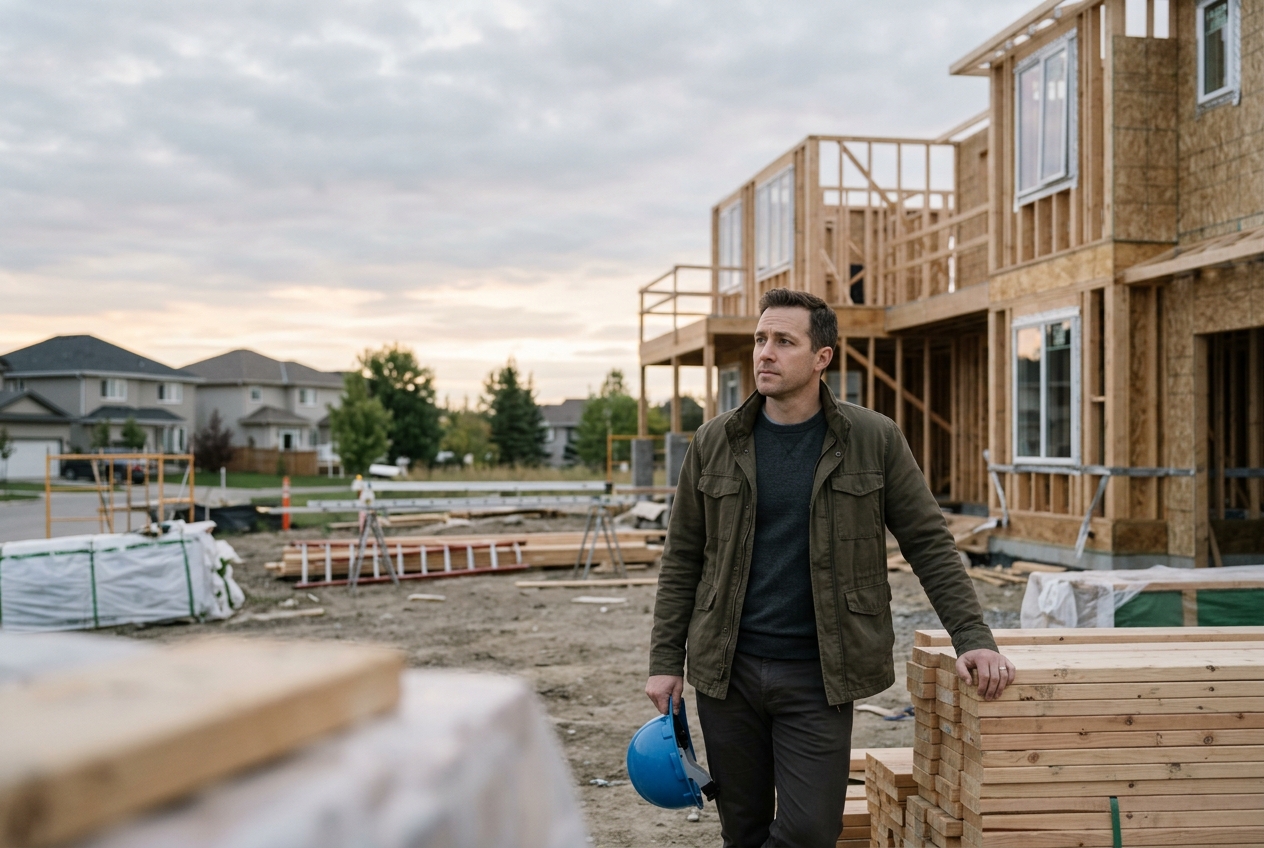
Market slowdown: US homebuilder sentiment reached a 14-year low in October 2026, indicating a significant slowdown in new home sales and increased cancellation rates.
Mortgage rate impact: Average 30-year fixed mortgage rates climbed to 7.4% in October 2026, making home purchases less affordable and causing buyers to delay decisions.
Buyer leverage: Increased cancellation rates and an imbalance of sellers over buyers mean buyers have more negotiation power, particularly in some competitive markets.
Seller challenges: Homeowners locked into lower rates are reluctant to sell, contributing to tight supply, while active sellers face reduced demand and price cuts from builders.
Price outlook: Despite soft demand, home prices remain elevated due to limited supply, with forecasts expecting flat prices in 2026 and modest growth in 2027.
US homebuilder sentiment dropped to its lowest point since June 2012 in October 2026, according to the National Association of Home Builders (NAHB)/Wells Fargo Housing Market Index (HMI)¹. This significant decline, reaching a reading of 29, reflects a market where more builders view conditions as poor rather than good. The downturn is largely influenced by surging mortgage rates, which averaged 7.40% for a 30-year fixed loan as of October 15, 2026.
This cooling trend in the housing market suggests that prospective buyers are increasingly holding off on new purchases. The confluence of high borrowing costs, elevated construction expenses, and weaker consumer confidence is driving this hesitancy². For homeowners, this shift in market dynamics has several implications, from property values to selling conditions.
The Impact of High Mortgage Rates
Mortgage rates are a primary factor influencing homebuyer behavior. The average 30-year fixed mortgage rate hit 7.40% in mid-October 2026, marking the highest level in three years. This increase directly impacts affordability, pushing many potential buyers out of the market.
When mortgage rates rise from 6% to 7%, nearly 6 million fewer Americans can afford the monthly payment on a median-priced home with a 10% down payment. The typical monthly payment on a median-priced home is projected to reach 40% of the average after-tax income in October 2026³. This financial strain causes prospective buyers to delay purchases, even as home price growth slows¹.
Declining Sales and Increased Cancellations
The elevated mortgage rates are directly correlated with a slowdown in new home sales and an increase in buyer cancellations. Current sales conditions for newly built single-family homes reached a 14-year low in October 2026, falling to 33 on the NAHB/Wells Fargo HMI. Sales expectations for the next six months also dropped, hitting their lowest point since November 2022².
Buyer traffic has fallen to its lowest level since April 2012, excluding April 2020⁴. Seasonally adjusted new home sales decreased by 10.5% in July 2026 compared to June 2026⁵. This reflects a broad market slowdown, with Capital Economics projecting 2026 to be the worst year for home sales since 2011¹.
A significant trend is the rise in home purchase cancellations. In July 2026, 14% of US home-sale agreements fell out of contract, the highest seasonally adjusted cancellation rate since November 2023⁶. By September 2026, nearly 1 in 7 (14.5%) US home purchase agreements collapsed before closing. This increase is particularly evident in Sun Belt metros, where cancellation rates approached 20%⁷.
Implications for Current Homeowners
The current market environment creates a complex situation for existing homeowners. Many homeowners are locked into lower mortgage rates secured during the pandemic era. Over 95% of Americans with mortgages have interest rates below those currently available. A substantial 65% are paying rates at least two percentage points lower than current rates⁸.
Homeowners with low mortgage rates are reluctant to sell, creating a supply shortage that keeps home prices elevated despite cooling demand.
This "lock-in effect" means homeowners are reluctant to sell because they cannot transfer those favorable rates to a new property. This unwillingness to sell exacerbates the tight supply in the housing market, contributing to elevated home prices even with softer demand⁹. While this maintains property values for existing homeowners, it also limits their options if they wish to move.
Home Prices and Equity
Despite the slowdown in sales and rising cancellation rates, home prices have remained elevated due to the persistent tight supply. As of September 2026, the median home value in the US was $366,157, a 1.2% increase year-over-year. While home price growth is moderating, equity remains in homes.
J.P. Morgan Global Research expects home prices to remain flat in 2026 and then increase by 3% in 2027⁹. Zillow's April 2026 forecast also anticipated a slight rise in home values by 0.3% by December 2026. This stabilization means fewer homeowners are likely to see their home values fall below what they paid.
Challenges for Sellers
For homeowners considering selling, the market presents challenges. Reduced buyer demand and increased cancellation rates make it a more difficult environment¹. Buyers currently have more options and leverage in negotiations due to the imbalance between buyers and sellers, which saw significantly more sellers than buyers in July 2026. This leverage makes it easier for buyers to walk away from deals over issues like inspections or appraisals⁶.
Builders are responding to these market conditions by cutting prices and offering incentives. In October 2026, 43% of builders cut prices, the highest share seen between 2020 and 2026. The average price cut by builders remained at 6% for the seventh consecutive month, and 65% of builders reported using sales incentives². This competitive pressure from new construction can affect resale values for existing homes.
Pros
- + Existing home equity is largely preserved due to tight supply.
- + Stabilizing prices mean less risk of home values falling below purchase price.
Cons
- - Selling homes is more challenging due to reduced buyer demand and increased cancellations.
- - Reluctance to sell due to low locked-in mortgage rates limits moving options.
The Outlook for the Housing Market
The US housing market is currently described as "frozen," with home sales suppressed for years, worsening in recent months. Pending home sales dropped to a 14-year low in September 2026, excluding the pandemic slowdown¹. This represents a 7.3% month-over-month decrease and an 11.3% year-over-year decrease in pending home sales across all US regions.
Weakened consumer confidence, high mortgage rates, and elevated construction costs are keeping more buyers on the sidelines². Many potential buyers are choosing to wait despite some slowing home price growth and modestly rising inventory⁵.
The immediate market outlook suggests continued challenges due to high rates and affordability issues⁹. Some forecasts, however, project a more balanced market by 2027, with modest price growth and the possibility of lower mortgage rates. For homeowners, understanding these trends is essential for making informed decisions about selling, refinancing, or undertaking home improvement projects. The high mortgage rates also make refinancing less attractive for many who previously secured lower rates⁸.
The market's dynamics underline a period of adjustment. While the "lock-in effect" supports existing home values, it also contributes to a sluggish transaction environment. Homeowners must weigh their options carefully in this landscape of elevated rates, cautious buyers, and builders keen to incentivise sales.
Homebuilder sentiment dropped primarily due to rising mortgage rates, high construction costs, increasing energy and material costs, and weaker consumer confidence. These factors make new homes less affordable and reduce buyer demand.
As of mid-October 2026, the average 30-year fixed mortgage rate was 7.40%. This rate marks the highest level in three years.
High mortgage rates significantly reduce buyer affordability, causing prospective buyers to delay purchases. This leads to lower sales of new and existing homes and an increase in home purchase cancellation rates.
While home price growth is moderating, prices generally remain elevated due to tight supply. Forecasts suggest prices will remain flat in 2026 and see modest growth in 2027.
The "lock-in effect" refers to homeowners with existing low mortgage rates being unwilling to sell their homes because they cannot transfer those favorable rates to a new property. This reduces housing supply and helps keep prices elevated.
Selling a home is currently challenging due to reduced buyer demand and increased cancellation rates¹. Buyers have more leverage in negotiations⁶, and builders are cutting prices and offering incentives, creating a competitive market.
For new home buyers, the drop in builder sentiment means builders are more likely to offer price cuts and sales incentives to attract buyers². However, high mortgage rates continue to impact affordability, even with these incentives.
Some forecasts project a more balanced market with modest price growth and the possibility of lower mortgage rates by 2027. However, the immediate outlook is one of continued challenges due to high rates and affordability issues⁹.
Deana is a Home Improvement Editor with a passion for helping homeowners navigate renovation, repair, and remodelling with confidence. Specializing in roofing, kitchen and bath remodelling, and outdoor living spaces, she combines industry knowledge with a genuine commitment to making complex home projects feel approachable for readers at every stage of their journey.
Her path into home improvement media began after several years working alongside licensed contractors in project coordination, where she gained firsthand exposure to the realities of home renovation - from permitting delays to material sourcing challenges. This hands-on experience gave her a practical, ground-level understanding of what homeowners actually need to know before hiring a contractor, choosing materials, or starting a project - insight that now shapes every piece of content she creates.
As an editor, Deana oversees content covering product reviews, cost guides, seasonal maintenance tips, and contractor vetting advice, working closely with writers and industry experts to ensure accuracy and relevance. She has a particular interest in emerging trends like smart home technology and energy-efficient upgrades, and enjoys translating technical information into clear, actionable guidance for homeowners.
Beyond editorial oversight, Deana stays closely connected to the pulse of the home improvement industry - tracking shifts in consumer preferences, pricing trends, and the challenges homeowners face when navigating renovation projects, from budgeting to finding trustworthy professionals.
When not editing, Deana enjoys visiting local open houses for design inspiration and tackling small DIY projects around her own home. Based in Adelaide, Australia, she believes a well-maintained, thoughtfully upgraded home is one of the most meaningful investments people can make in their day-to-day quality of life.
Sources:
A major housing market indicator just flashed its most negative reading in 14 years, Jennifer Sor, 2026 (businessinsider.com)
US Homebuilder Sentiment Lowest Since 2012, 2026 (tradingeconomics.com)
Americans Are Struggling to Buy Homes amid Rising Costs - Other Media news, Tasnim News Agency, 2026 (tasnimnews.ir)
Builder Sentiment Falls on Rising Rates, 2026 (nahb.org)
Housing Market Predictions (forbes.com)
U.S. Home Deals Are Falling Apart at the Highest Rate in Nearly Three Years as Buyers Gain Leverage, Krish Dhokia, 2026 (thisnewsroom.com)
Nearly 1 in 7 US home deals are collapsing as higher rates rattle buyers, Kim LaCapria, 2026 (thecooldown.com)
Goldman Sachs Sees Another Bad Year for Housing. Even Homeowners Can't Afford to Move., 2026 (thewealthadvisor.com)
US Housing Market Outlook (jpmorgan.com)