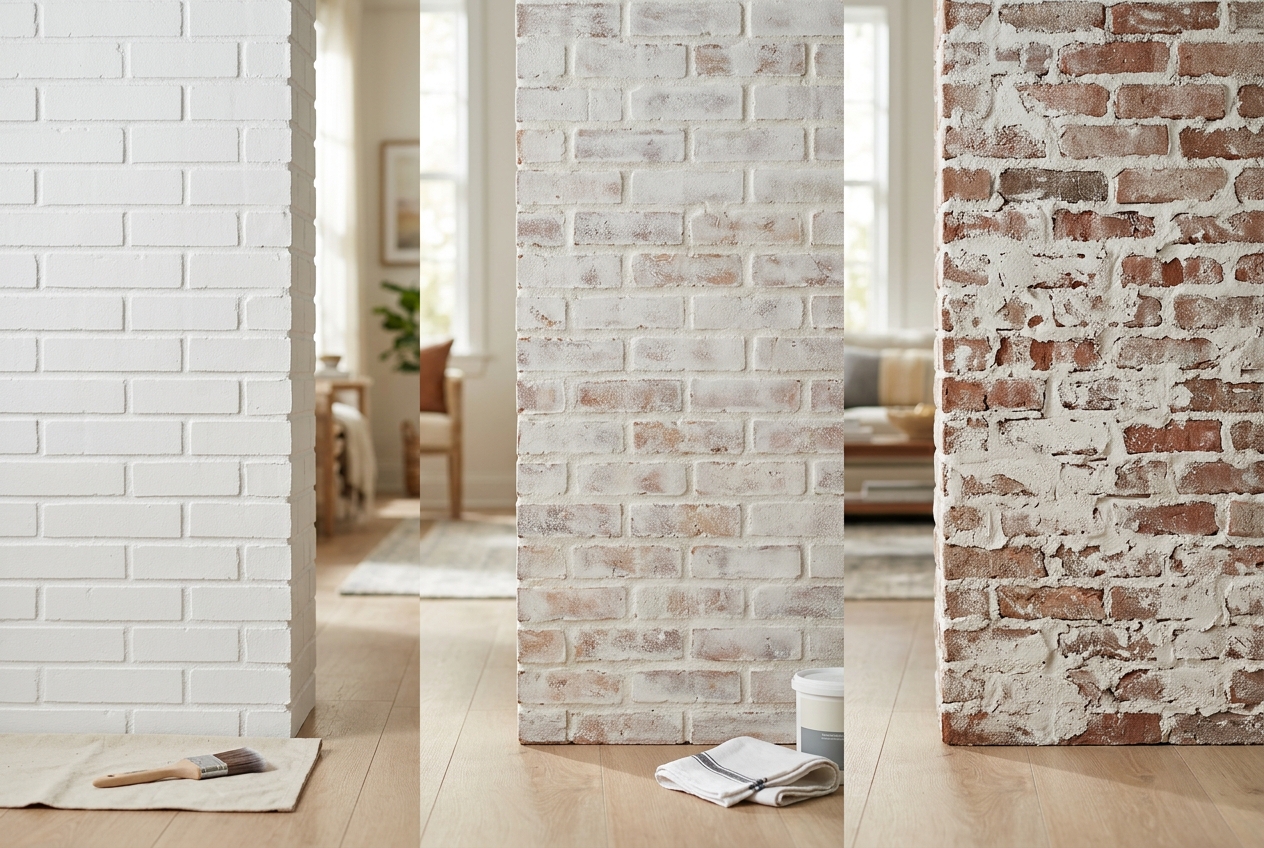
Standard paint risk: Acrylic paints trap moisture in brick, which can lead to cracking and spalling, especially on older homes.
Limewash benefits: Limewash is highly breathable, prevents moisture issues, and can be removed within days of application.
German smear permanence: German smear offers a textured, permanent finish that is effectively impossible to remove without damaging the brick.
Homeowners often consider various finishes to update their brick exteriors, from painting to limewashing and German smear. However, the choice involves more than just aesthetics. Understanding how each finish interacts with brick, particularly concerning moisture and long-term durability, is critical. Some methods carry risks of permanent damage to your home’s masonry.
This comparison focuses on the "point of no return" for each option and its potential impact on brick integrity. It highlights which finishes allow brick to breathe naturally and which can trap moisture, leading to costly problems.
Standard Paint on Brick
Using standard acrylic or latex exterior paints on brick involves significant risks, primarily related to moisture management. Brick is a porous material designed to absorb and release moisture naturally¹. Traditional paints, however, create a continuous polymer film that seals the brick surface, preventing this natural breathability².
Water trapped behind standard paint can lead to problems like blistering, bubbling, and peeling. This moisture can also be pushed deeper into the wall, potentially causing mold, mildew, and efflorescence. In colder climates, trapped water expands by about 9% when it freezes¹. This expansion creates pressure within the brick, leading to the outer layer cracking, flaking, or "spalling". Spalling is permanent damage to the brick itself². This issue is particularly concerning for older properties with solid walls that rely on breathability for structural health³.
The Point of No Return for Standard Paint
Once standard paint is applied to brick, returning to a bare brick surface without causing damage is very difficult, often impossible. Removing this paint typically requires abrasive methods like sandblasting or harsh chemicals such as muriatic acid¹. These removal processes can further harm the masonry, adding to the initial damage caused by moisture entrapment. The cost to strip previously painted brick can add $4,000 to $8,000 to a project, sometimes exceeding the cost of the new finish⁴.
While initial material costs for standard acrylic paint are generally lower, especially for DIY projects, homeowners must factor in future maintenance. Repainting is typically required every 5-10 years². More importantly, the potential future costs for moisture damage repair from standard acrylic paint can be high¹.
Breathable Masonry Paint: A Safer Alternative
Not all paints pose the same risk. Masonry paints, specifically mineral-based or silicate paints, are engineered to be highly breathable and permeable⁵. These paints feature a microcrystalline structure or form a chemical bond with the masonry. This allows moisture vapor to escape while still protecting the brick from precipitation³.
Using breathable masonry paints significantly reduces the risk of moisture-related issues like mold, mildew, and structural damage. They are also formulated for durability, offering better resistance to wear, tear, peeling, or flaking compared to traditional paints³. While typically more expensive than standard acrylic masonry paint¹, the long-term protection they offer can outweigh the upfront cost.
Limewash on Brick
Limewash offers a natural, eco-friendly finish for brick. It consists of crushed limestone that is burned, slaked with water, and sometimes mixed with natural pigments. Unlike paint, limewash penetrates the brick's surface and chemically bonds with the calcium in the mortar and brick through a process called carbonation, effectively turning back into limestone².
A key advantage of limewash is its high breathability. It allows moisture to freely enter and exit the brick, preventing entrapment and the risk of spalling. For example, Romabio Classico Limewash tests at 35 to 45 perms for breathability². This breathability makes it a safer option for masonry, especially for older homes.
Limewash creates a soft, chalky, matte, and often translucent or mottled finish². This allows the brick's natural texture and some color variations to show through, developing a natural patina over time. It suits traditional, modern, farmhouse, vintage, European, and rustic aesthetics, and can give new bricks a vintage look⁶.
Reversibility and Lifespan of Limewash
Limewash is notably reversible, especially shortly after application. It can usually be washed off within the first 1 to 4 days with a damp sponge or wet brush, particularly while it's still slightly damp. After it fully dries (12-24 hours) and cures (3-5 days for proper curing), removal becomes more challenging but is still possible with pressure washing or a vinegar solution and a stiff brush. Full carbonation can take up to 20-25 days².
The durability of limewash varies, often lasting 5 to 15 years. Some sources suggest a refresh coat every 5-7 years, especially in sun-exposed areas. Others claim it can last 15-20 years or even 30 years or more in ideal climates. Lifespan depends on surface preparation, the number of coats, and exposure to weather⁷. Professional limewash costs range from $2,000 to $12,000, or $2 to $5 per square foot installed. DIY materials can be around $90-$110 per gallon².
Limewash vs. Whitewash
The term "whitewash" is often used broadly. It can refer to true limewash or a diluted mixture of latex paint and water². For clarity, diluted paint whitewash is typically a 50/50 mix of paint and water⁵.
The key difference is how they interact with the brick. True limewash penetrates the brick, while whitewash (diluted paint) sits on top, similar to traditional paint. While some sources claim diluted paint whitewash is breathable and penetrates the brick⁵, others suggest it behaves more like paint, reducing breathability and drying potential⁸. True limewash is definitively breathable due to its mineral composition².
Whitewashing with diluted paint is considered more permanent than limewash. Once absorbed, its complete removal can be difficult. It offers a translucent finish, muting the brick's natural color while preserving some variations⁵. It also provides a smoother, typically classic white finish than limewash. Whitewash can be applied to previously painted brick and can last for years, with claims of 10-30 years in certain climates⁸.
Pros
- + Highly breathable, preventing moisture entrapment and spalling
- + Can be removed within days of application
- + Creates a natural, soft, matte, and translucent finish that ages well
Cons
- - Durability varies, potentially requiring refresh coats every 5-7 years
- - Professional application can be costly, comparable to German smear²
- - Materials are generally more expensive than German smear materials
German Smear on Brick
German smear, also known as mortar wash, involves spreading a thin layer of wet mortar over existing brick with a trowel, then partially wiping it back before it cures. This technique creates a thick, dimensional, and textured surface, where some brick remains visible⁹. It mimics the look of old European cottages and manors, giving new brick character⁶.
This finish is incredibly durable and permanent. Once the mortar cures, German smear adheres completely to the brick and is effectively impossible to remove without causing serious damage to the underlying brick. Removal attempts often involve acid-based stripping, grinding, or muriatic acid, which are difficult and can lead to further harm⁹. This makes it a significant, irreversible commitment.
The breathability of German smear is lower in areas fully covered by mortar. However, some sources describe it as more compatible with natural drying than conventional paint because the mortar becomes part of the finish. It's designed to be a lasting mortar finish without routine recoating, potentially lasting as long as the brick itself⁹.
German smear creates a heavy, rustic, farmhouse, old-world, or antique look with expressive texture and irregular movement. It softens the straight lines of traditional brick and is typically available in white or gray, though color additives can be used. It suits various styles, including German cottage, European countryside, and modern farmhouse⁶. German smear can only be applied to bare, clean, unpainted brick surfaces⁹.
Professional installation costs for German smear can range from $1,500 to $12,000, or $4 to $10+ per square foot installed. DIY materials can be as low as $30 for 1,000 sq ft, though it is very labor-intensive. While materials are often cited as slightly less expensive than limewash materials, professional installation can be comparable to or even higher due to the labor involved².
Comparison: Point of No Return and Damage Risk
When considering these brick finishes, the most critical factors are the risk of damage to your home and the permanence of the application.
Winner: Limewash for Reversibility and Breathability
Limewash is the clear winner if you prioritize reversibility and brick breathability. Its mineral composition ensures moisture can pass freely, significantly reducing the risk of spalling and other moisture-related damage. The ability to wash it off within a few days provides a crucial safety net for homeowners².
Standard acrylic paint on brick is the riskiest option. It seals the brick, trapping moisture that can freeze, expand, and permanently damage the masonry². Once applied, removing it without further harming the brick is extremely difficult¹. Breathable masonry paints offer a safer painted alternative, allowing the brick to breathe⁵. For more on removing old paint, see our guide on Lead Paint Removal.
German smear is a permanent finish. Once the mortar cures, it becomes part of the brick, and attempts to remove it will likely damage the underlying brick⁹. While it may offer some breathability benefits over standard paint by becoming part of the masonry, it offers no easy way back to bare brick. This is a critical consideration for homeowners seeking flexibility or those with historic properties.
Overall Recommendation
For most homeowners looking to refresh their brick exterior safely and with an option for future changes, limewash is the recommended choice. It provides a beautiful, breathable finish that protects your brick from moisture damage and offers a window for reconsideration and removal.
If you are committed to a permanent, textured, old-world aesthetic and are certain you will never want to return to bare brick, German smear is a viable option. However, understand its irreversible nature.
Avoid standard acrylic or latex paints on brick, especially for older homes, due to the high risk of moisture entrapment and permanent damage. If a painted look is desired, opt for high-quality, breathable masonry paints specifically designed for brick.
Painting brick with standard acrylic or latex exterior paints is generally not a good idea. These paints can trap moisture within the brick, leading to issues like blistering, peeling, mold, and even permanent damage like spalling, especially in colder climates.
Limewash is considered the safest coating for old brick. It is highly breathable, allowing the brick to absorb and release moisture naturally, which prevents moisture entrapment and spalling. This is crucial for older properties that rely on the masonry's natural breathability³.
No, limewash does not damage brick. Instead, it penetrates the brick surface and chemically bonds with it, becoming part of the masonry. It is highly breathable, protecting the brick from moisture-related issues like spalling.
Yes, German smear is a permanent treatment. Once the mortar cures, it adheres completely to the brick and is effectively impossible to remove without seriously damaging the underlying brick.
Limewash durability varies, often lasting 5 to 15 years⁷. Some sources suggest a refresh coat every 5-7 years, particularly on sun-exposed areas, while others claim it can last 15-20 years or more in ideal climates.
No, removing German smear from brick is effectively impossible without causing serious damage to the underlying brick once the mortar has cured. Removal attempts typically involve abrasive or chemical methods that can further harm the masonry⁹.
Whitewashing brick with diluted paint is generally considered a more permanent solution than limewash. Once the diluted paint is absorbed, complete removal can be difficult⁵. True limewash, however, can be washed off within a few days of application².
Deana is a Home Improvement Editor with a passion for helping homeowners navigate renovation, repair, and remodelling with confidence. Specializing in roofing, kitchen and bath remodelling, and outdoor living spaces, she combines industry knowledge with a genuine commitment to making complex home projects feel approachable for readers at every stage of their journey.
Her path into home improvement media began after several years working alongside licensed contractors in project coordination, where she gained firsthand exposure to the realities of home renovation - from permitting delays to material sourcing challenges. This hands-on experience gave her a practical, ground-level understanding of what homeowners actually need to know before hiring a contractor, choosing materials, or starting a project - insight that now shapes every piece of content she creates.
As an editor, Deana oversees content covering product reviews, cost guides, seasonal maintenance tips, and contractor vetting advice, working closely with writers and industry experts to ensure accuracy and relevance. She has a particular interest in emerging trends like smart home technology and energy-efficient upgrades, and enjoys translating technical information into clear, actionable guidance for homeowners.
Beyond editorial oversight, Deana stays closely connected to the pulse of the home improvement industry - tracking shifts in consumer preferences, pricing trends, and the challenges homeowners face when navigating renovation projects, from budgeting to finding trustworthy professionals.
When not editing, Deana enjoys visiting local open houses for design inspiration and tackling small DIY projects around her own home. Based in Adelaide, Australia, she believes a well-maintained, thoughtfully upgraded home is one of the most meaningful investments people can make in their day-to-day quality of life.
Sources:
Why You Should Never Paint Brick: The Hidden Costs, Damage Risks, and Myths Explained, brickmakeover, 2025 (brickmakeover.co.uk)
Lime Wash Brick: Complete Technique Guide 2026 (Limewash, German Smear, White Wash), 2026 (facadecolorizer.com)
The benefits of using our breathable Masonry Paint (earthbornpaints.co.uk)
German Schmear vs Limewash Denver Brick Finish Guide 2026 (daecopainting.com)
White Brick: Paint vs. Whitewash (shop.oldmillbuildingproducts.com)
8 German Smear Brick Homes for Inspiration, Kara, 2024 (brickandbatten.com)
How Long Does Limewash Last? Durability and Touch-Up Tips, CN Weer, 2025 (limewash.com)
Brick Home Makeover Limewash Vs Whitewash (premierpainting.com.au)
All You Need to Know About German Smear, Glenda Taylor, Bob Vila, 2020 (bobvila.com)