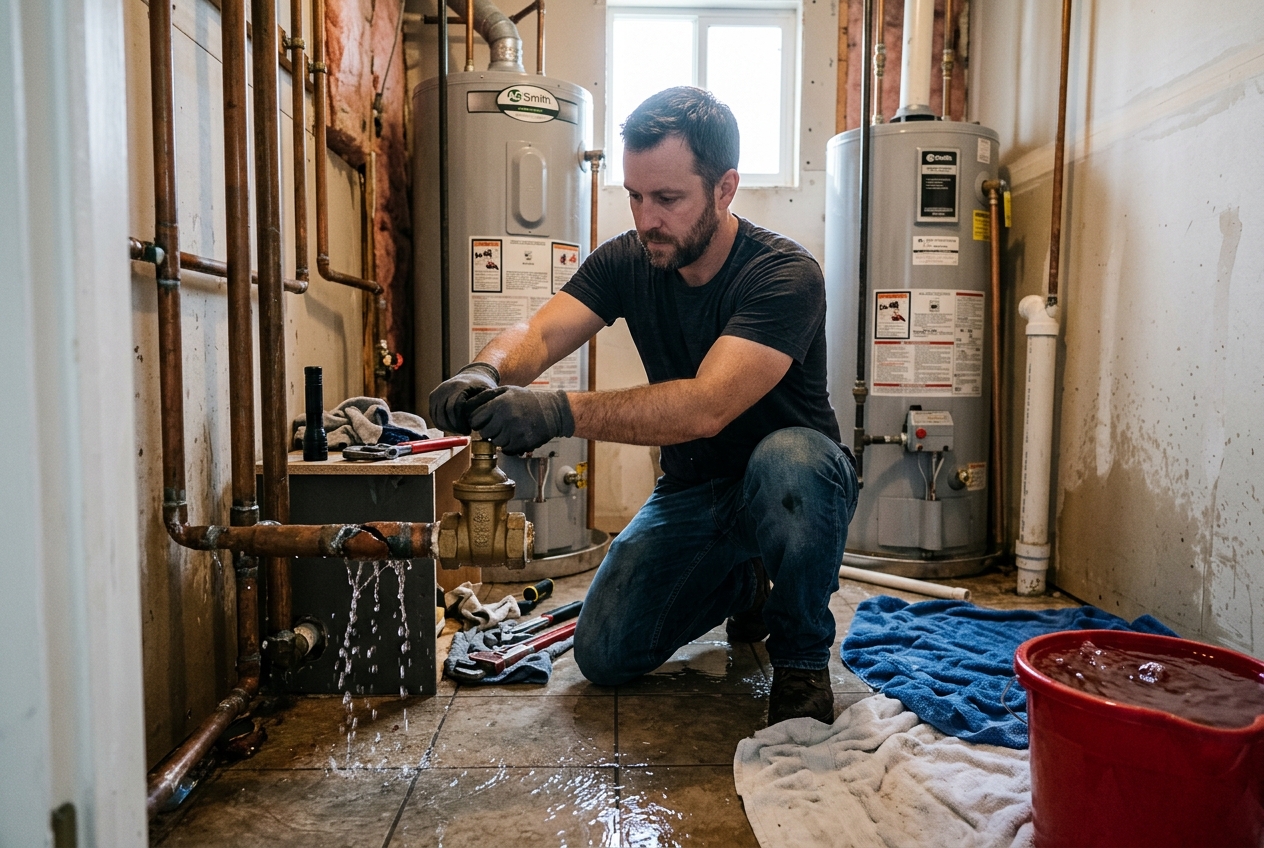
Act quickly: Shut off your main water supply immediately to prevent extensive damage from leaks or burst pipes.
Protect yourself: Disconnect power in flooded areas to avoid electrocution, and never touch electrical devices with wet hands.
Document damage: Take photos and videos before cleanup for potential insurance claims.
Clear access: Ensure the plumber has a clear path to the problem area and be ready to explain the situation.
Understand costs: Expect higher hourly rates and potential service fees for emergency, after-hours plumbing services.
A plumbing emergency requires quick action. These issues, such as burst pipes or severe leaks, can escalate rapidly and lead to higher repair costs if not addressed promptly¹. Knowing what to do before an emergency plumber arrives can significantly reduce damage and prepare your home for efficient service.
Common plumbing emergencies include burst pipes, severe leaks, overflowing toilets (if a plunger doesn't work), sewage backups, complete loss of water, and water heater failures or leaks². Gas leaks are a different type of emergency; if you suspect one, evacuate your home immediately and call your gas provider or 911 before contacting a plumber³.
Immediate Steps to Take
Your first response to a plumbing emergency is critical. Taking immediate actions can prevent further damage and make the plumber's job easier and faster.
Shut Off the Water Supply
Shutting off the main water supply is the most crucial step to prevent extensive water damage from burst pipes or severe leaks². This action stops the flow of water into your home, containing the problem.
The main shut-off valve is typically located where the main water line enters your house. Common locations include the basement, crawl space, garage, utility room, or outside near the water meter or the home's foundation. To operate most main shut-off valves, turn them clockwise until they stop; for ball valves, a quarter turn (90 degrees) is usually sufficient².
Familiarize yourself and other adults in your household with the main water shut-off valve's location and operation before an emergency occurs. Old valves can seize, so test it periodically.
For isolated issues, such as an overflowing toilet or a leaky sink, you can turn off the smaller shut-off valve located underneath or behind the fixture. This stops the water flow to that specific problem area without affecting the water supply to the rest of your house².
Turn Off Your Water Heater
If your emergency involves major leaks or burst pipes with hot water, turn off your water heater². This prevents the unit from overheating once the water supply is cut off.
For electric water heaters, switch off the power at the circuit breaker labeled for the water heater. If you have a gas water heater, turn the gas control valve to the "PILOT" or "OFF" position².
Disconnect Electricity in Affected Areas
If water is pooling near electrical outlets, appliances, or power cords, turn off the electricity to that area or your entire house at the main breaker panel. This action helps prevent electrocution or electrical fires¹. Always avoid touching electrical devices with wet hands⁴.
Contain and Drain Water
Once the water supply and relevant power are off, focus on containing the existing water. Use buckets, towels, mops, or a wet-dry vacuum to collect and absorb leaking or overflowing water². This prevents water from spreading further and causing more damage.
Elevate furniture and belongings away from standing water². After shutting off the main water supply, open the lowest faucets in your home to drain any residual water and relieve pressure in the pipes⁴.
Document the Damage
Before you start significant cleanup, take photos and videos of the problem, affected areas, and any damaged belongings². This documentation can be crucial for potential insurance claims. Homeowner's insurance may cover some emergency situations like burst pipes, but homeowners should weigh out-of-pocket expenses against their deductible and future insurance costs⁵.
Avoid Using Drains (If Applicable)
If you suspect a sewer backup or severe clog, do not use sinks, toilets, or drains. This can worsen the problem by pushing more waste into the already obstructed system⁶.
Improve Airflow
If it is safe to do so, open windows and use fans or portable heaters to increase airflow. Accelerating drying can help reduce the risk of mold growth⁴.
Preparing for the Plumber's Arrival
Once immediate damage control is underway, prepare your home for the emergency plumber. This helps them work quickly and efficiently.
Clear the Area
Remove obstacles or belongings from the vicinity of the emergency to allow the plumber easy access⁷. Ensure there's a clear, unobstructed path from your home's entrance to the emergency location. Move any valuable items or anything that could be damaged out of the immediate work area. Keep children and pets away from the emergency area for their safety and to allow the plumber to work without distraction².
Gather Information
Be prepared to explain the situation to the plumber. This includes when the problem started, what you observed, and any actions you have already taken². Knowing where your main water shut-off valve and individual fixture valves are located is also helpful⁷.
Understand Emergency Service Logistics
Emergency plumbers typically offer 24/7 service and aim for a rapid response, often within a few hours. Response times can vary by market, from 1-2 hours in urban areas to over 4 hours in rural locations².
Expect licensed and insured professionals. It is advisable to verify their state or county license in the US².
What Happens When the Plumber Arrives
When the emergency plumber arrives, they will follow a structured process to diagnose and resolve the issue.
Assessment and Diagnosis
The plumber will first assess the situation, diagnose the cause of the problem, and explain their findings³. They should provide a detailed explanation of the proposed solution and an estimate for repairs before commencing significant work. You must authorize any major repairs⁸.
In some urgent situations, a plumber might perform a temporary fix to stop immediate damage. They will then discuss a plan for a more permanent repair if necessary³. All emergency repairs must adhere to the same licensing, material, and inspection standards as non-emergency work. Plumbers typically file permit applications for emergency work within 24 to 72 hours after it has started⁹.
Post-Repair Steps
While fixing the issue is the primary goal, many plumbers will help with basic cleanup of the work area. They may also offer advice on preventing future emergencies or recommend further inspections or maintenance⁸.
For information on broader plumbing costs, you can refer to our article on Plumbing costs. For general home disaster preparedness, consider reading about Smart Home, Safe Home: How Technology Boosts Your Disaster Preparedness.
Understanding Emergency Plumber Costs
Emergency plumbing services come at a higher cost due to the urgency and after-hours nature of the work.
Hourly Rates and Service Fees
The national average cost for an emergency plumber is around $170 per hour. Hourly rates for emergency plumbers typically range from $100 to $500 per hour. After-hours, weekend, or holiday rates can increase significantly, by 50% to 100%. This can lead to rates ranging from $300 to $600 per hour or more¹. According to 2026 data, standard plumber hourly rates are $75-$150/hour, with master plumbers at $100-$200/hour, with emergency rates as a 1.5x to 2x multiplier.
Many companies also charge a separate after-hours or emergency service call fee, typically ranging from $100-$250, in addition to hourly rates. A straightforward emergency repair during standard hours might cost around $300-$400¹. The national average cost for emergency plumbing services is $215-$655, with many homeowners paying around $377⁵.
Factors Affecting Cost
Costs vary significantly based on the type of repair, severity, location, and parts needed¹.
Other factors affecting the total cost include the time of day or urgency (after-hours, weekend, holiday calls are more expensive), location (urban areas often have higher labor costs), and complexity of repair¹. Homeowners should budget for potential additional costs like drywall repair, water damage restoration, or pipe replacement.
What is a Plumbing Emergency?
A plumbing emergency is any sudden problem that requires immediate professional attention. It aims to prevent further damage, health hazards, or significant disruption to your home. These issues demand urgent action because delays can quickly escalate, leading to more extensive and costly repairs¹.
Common examples of plumbing emergencies include:
Burst pipes: These can release large volumes of water quickly, causing extensive damage.
Severe leaks: Persistent or rapidly dripping leaks that cannot be contained can cause structural damage and mold growth.
Overflowing toilets: If a plunger does not resolve the issue, an overflowing toilet indicates a deeper clog or drain problem.
Sewage backups: This is a significant health hazard, bringing wastewater into your home.
Complete loss of water: This indicates a major issue with your main water supply line or pressure system.
Water heater failures or leaks: A leaking water heater can cause flooding, and a complete failure means no hot water².
Unusual pipe noises: Loud banging, whistling, or gurgling, especially with water loss or low pressure, can indicate high pressure, airlocks, or broken valves⁶.
Emergency plumbers typically aim for a rapid response, often within a few hours. Response times can vary; in urban areas, it might be 1-2 hours, while in rural areas, it could be over 4 hours.
Yes, if your major leak or burst pipe involves hot water, turn off your water heater. For electric heaters, shut off the breaker; for gas heaters, turn the gas control to "PILOT" or "OFF".
If water is pooling near electrical outlets, appliances, or power cords, turn off the electricity to that area or your entire house at the main breaker panel. This helps prevent electrocution or electrical fires.
While fixing the plumbing issue is their primary task, many plumbers will assist with basic cleanup of the work area⁸. However, extensive water damage restoration often requires a separate specialized service.
The national average cost for an emergency plumber is around $170 per hour. Hourly rates can range from $100 to $500, with after-hours or holiday rates potentially increasing to $300-$600 per hour or more¹.
Emergency repairs must adhere to the same licensing and material standards as non-emergency work. Plumbers typically file any necessary permit applications within 24 to 72 hours after commencing emergency work⁹.
Be ready to explain when the problem started, what you observed, and any actions you have already taken, such as shutting off the water². Also, let them know where your main water shut-off valve is located⁷.
Homeowner's insurance may cover some emergency situations like burst pipes. It is advisable to weigh out-of-pocket expenses against your deductible and potential future insurance costs⁵.
Deana is a Home Improvement Editor with a passion for helping homeowners navigate renovation, repair, and remodelling with confidence. Specializing in roofing, kitchen and bath remodelling, and outdoor living spaces, she combines industry knowledge with a genuine commitment to making complex home projects feel approachable for readers at every stage of their journey.
Her path into home improvement media began after several years working alongside licensed contractors in project coordination, where she gained firsthand exposure to the realities of home renovation - from permitting delays to material sourcing challenges. This hands-on experience gave her a practical, ground-level understanding of what homeowners actually need to know before hiring a contractor, choosing materials, or starting a project - insight that now shapes every piece of content she creates.
As an editor, Deana oversees content covering product reviews, cost guides, seasonal maintenance tips, and contractor vetting advice, working closely with writers and industry experts to ensure accuracy and relevance. She has a particular interest in emerging trends like smart home technology and energy-efficient upgrades, and enjoys translating technical information into clear, actionable guidance for homeowners.
Beyond editorial oversight, Deana stays closely connected to the pulse of the home improvement industry - tracking shifts in consumer preferences, pricing trends, and the challenges homeowners face when navigating renovation projects, from budgeting to finding trustworthy professionals.
When not editing, Deana enjoys visiting local open houses for design inspiration and tackling small DIY projects around her own home. Based in Adelaide, Australia, she believes a well-maintained, thoughtfully upgraded home is one of the most meaningful investments people can make in their day-to-day quality of life.
Sources:
Emergency Cost (modernize.com)
Emergency Plumbing: 7 Steps Before the Plumber Arrives, 2026 (callelement.com)
Emergency Plumbing When To Call (plumbnh2o.com)
Plumbing Emergency 5 Things To Do While Waiting For Plumber To Arrive (tkandsonsplumbing.com)
Emergency Plumber Cost (thumbtack.com)
9 Signs It's Time To Call An Emergency Plumber For Repair In Denver, CO, 2026 (plumbprosinc.com)
Plumbing Emergency Guide for Homeowners, Jeff O'Hara, 2026 (nicksplumbing.com)
What to Expect From a Plumbing Service Call, Flow Plumbing, 2023 (flowplumbing.com)
Emergency Plumbing Repair: When to Call and What to Expect (expertplumbingrepair.com)