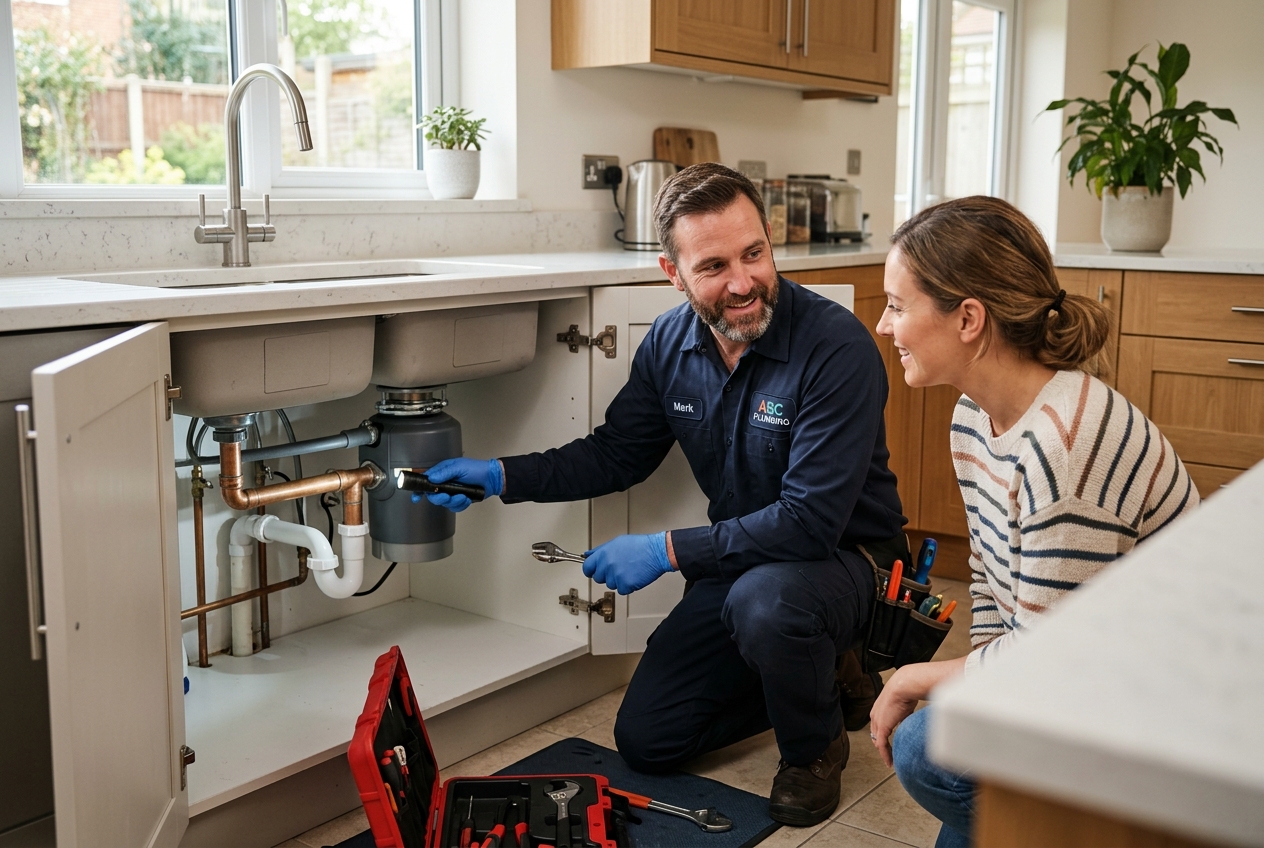
Verify Credentials: Always check for a valid state license and proper insurance before hiring any plumber.
Emergency Preparedness: For urgent issues, confirm the plumber offers 24/7 service and understand emergency surcharges.
Transparent Pricing: Insist on clear, flat-rate pricing or a detailed estimate after an on-site inspection, avoiding vague quotes.
Navigating plumbing issues, whether a dripping faucet or a burst pipe, requires finding a reliable professional quickly. This guide focuses on how to vet local plumbers for both urgent and routine needs, understand their pricing structures, and ensure the quality of their service. Knowing what to look for can save you time, money, and stress.
Plumbers provide a wide array of services including routine maintenance, emergency repairs, and remodeling projects. Some plumbing companies focus on either maintenance/repairs or larger remodeling jobs¹.
Responding to Plumbing Emergencies
True plumbing emergencies requiring immediate attention include burst or spraying pipes and sewage backing up into drains, due to the risk of rapid water damage and mold². Acting quickly can mitigate damage.
Before a plumber arrives for an isolated issue, homeowners should shut off the valve behind the specific fixture². During a water emergency, homeowners should move valuables away from affected areas and use absorbents to deal with standing water. Crucially, never touch electrical outlets, appliances, or switches with wet hands in a water emergency³.
Emergency Plumber Costs and Surcharges
Emergency plumbing services typically cost 1.5x to 3x more than standard rates. This reflects the immediate availability and after-hours work. Average hourly rates for emergency plumbers range from $100 to $500, with some reaching $600 per hour for holiday or after-hours calls⁵. Other national ranges reported for emergency plumbers are $150-$500 per hour and $100-$350 per hour⁴.
An emergency after-hours trip fee or surcharge typically ranges from $100-$300 or $150-$250. A typical emergency invoice might include an after-hours trip fee ($100-$300) and hourly labor ($200-$400 per hour for night/weekend)⁴. The national average cost for an emergency plumber in 2026 is approximately $170 per hour, with most homeowners paying between $100 and $500 per hour⁵. Thumbtack data indicates a national average total cost of $377 for emergency plumbing services, with a range of $215-$655 .
Common emergency repairs like drain unclogging can have flat rates, ranging from $300-$800, and up to $1,600 for severe clogs requiring hydro-jetting . Additional costs for emergency situations may include drywall repairs, water damage restoration, or pipe replacement⁵.
Vetting a Plumber Near Me
Finding a reliable local plumber involves more than just a quick search. It requires careful verification of credentials and transparent communication. This applies to both urgent and routine plumbing needs.
License and Insurance
It is crucial to verify that a plumber or plumbing company holds a valid state license and is properly insured⁶. Plumbing licensing in the US is regulated at state, county, or municipal levels, not federally⁷. Most US states (45 out of 51 jurisdictions) mandate a statewide plumber license . This ensures they meet professional standards.
Master plumbers generally have the most extensive technical training and experience⁶. Becoming a master plumber typically requires an additional 1-3 years of experience beyond journeyman status and a more difficult exam⁷. To obtain permits for plumbing work, a contractor must possess the necessary license classification for that jurisdiction .
For emergency calls, ensure the plumber offers 24/7 service¹. Confirm this availability before they dispatch.
Reputation and Communication
Check online reviews and complaints. Consumers should be cautious of plumbers with numerous negative reviews or complaints¹. A reliable plumber is expected to clearly explain problems and solutions, and respect time by arriving promptly. Inquire about provided work warranties from the plumber⁶. You can also ask trusted family and friends for referrals.
Understanding Plumbing Costs and Pricing
Plumbing repair costs vary significantly. Plumbing repair costs are influenced by the type and scope of the repair, complexity, plumber's expertise, location, and whether it's an after-hours emergency⁴.
Flat-rate pricing is gaining popularity as it offers a fixed price regardless of the time taken for repair. This provides predictability. Be wary of vague pricing, unusually low rates without explanation, or firm quotes over the phone without an inspection¹. Some plumbing companies may waive or apply the service call fee if the repair is approved⁴.
For standard appointments, average hourly rates typically range from $75 to $150. Master plumbers command higher rates, often between $100 and $200 per hour, clustering around $135 per hour. Service call fees for standard appointments are generally $75 to $150⁴.
Routine Plumbing Needs and Costs
Not all plumbing issues are emergencies. Many fall into routine maintenance or minor repairs. Understanding these costs helps you plan and budget. You can find detailed information on overall plumbing costs in our guide: Plumbing.
Types of Repairs and Associated Costs
Minor repairs: Minor repairs, such as fixing a leaky faucet or unclogging a drain, typically cost $100 to $300.
Moderate repairs: Moderate repairs, like addressing moderate leaks or replacing a small pipe section, cost $300 to $800.
Major repairs: Major repairs, such as burst pipes or extensive sewer line repairs, can range from $1,000 to over $4,000⁸.
Whole-house repiping: This larger project can cost from $4,000 to over $20,000⁴. Factors like house size, number of bathrooms, accessibility, and materials influence this cost.
Plumbing Permits
For major plumbing work (e.g., new lines, fixtures, water heaters, pipe replacement, sewer/gas line work), a plumbing permit is often required by local building departments. Plumbing permit fees vary by location and project scope, generally ranging from $25 to $500, and $100-$400 for some major projects⁹.
Permits ensure that work adheres to local building codes (like the International Plumbing Code or Uniform Plumbing Code) and safety standards. Failure to obtain a required permit can lead to failed inspections, project delays, legal penalties, and potential public health and safety risks . The permit process involves application, fee payment, and inspections at key stages (e.g., rough-in, gas pressure test, final)⁹.
Pros
- + Ensures work meets local building codes and safety standards
- + Prevents legal penalties and project delays
- + Confirms contractor has necessary license classification
Cons
- - Adds to project cost, typically $25-$500
- - Requires application and inspection process⁹
- - Can delay project start if not planned properly
Preventative Maintenance
Preventative maintenance, including regular inspections, leak detection, drain care, annual water heater flushing, pipe insulation, and fixture maintenance, can prevent costly emergencies . Richard Trethewey of This Old House emphasizes that understanding one's plumbing system and performing simple maintenance can prevent expensive disasters¹.
A quality plumber should be available to answer questions even after repairs are completed . This post-service support is a sign of a reputable professional.
Making an Informed Choice
When searching for a "plumber near me," prioritize licensed and insured professionals. For "emergency plumber near me" searches, confirm 24/7 availability and transparent emergency pricing. For "local plumbers near me" for routine work, compare quotes and always get a written estimate before work begins.
Choose a plumber who communicates clearly, explains the work needed, and provides a warranty. These practices ensure you receive quality service at a fair price, whether it's a critical emergency or a scheduled repair.
Look for plumbers with valid state licenses and proper insurance. Check online reviews and ask for references. A reputable plumber will clearly explain problems and solutions and offer a work warranty⁶.
The national average cost for an emergency plumber in 2026 is around $170 per hour, typically ranging from $100 to $500 per hour⁵. Total costs for an emergency service average $377, with a range of $215-$655 .
You often need a plumbing permit for major work like installing new lines, fixtures, water heaters, or replacing sewer and gas lines. Permits ensure the work complies with local building codes and safety standards⁹.
For an isolated issue, shut off the valve behind the specific fixture². In a water emergency, move valuables, use absorbents, and never touch electrical outlets or switches with wet hands³.
Performing preventative maintenance like regular inspections, drain care, and water heater flushing can prevent costly emergencies . Understanding your plumbing system can also help avoid expensive disasters.
Emergency plumbing services typically cost 1.5 to 3 times more than standard rates. This includes after-hours trip fees ranging from $100-$300 on top of higher hourly labor charges.
Average hourly rates for standard plumbers typically range from $75 to $150. Master plumbers, who have more experience, usually charge $100 to $200 per hour⁴.
You should be cautious of firm quotes over the phone without an inspection, or unusually low rates without a clear explanation¹. A reliable plumber will typically need to assess the issue on-site before providing a final price.
Deana is a Home Improvement Editor with a passion for helping homeowners navigate renovation, repair, and remodelling with confidence. Specializing in roofing, kitchen and bath remodelling, and outdoor living spaces, she combines industry knowledge with a genuine commitment to making complex home projects feel approachable for readers at every stage of their journey.
Her path into home improvement media began after several years working alongside licensed contractors in project coordination, where she gained firsthand exposure to the realities of home renovation - from permitting delays to material sourcing challenges. This hands-on experience gave her a practical, ground-level understanding of what homeowners actually need to know before hiring a contractor, choosing materials, or starting a project - insight that now shapes every piece of content she creates.
As an editor, Deana oversees content covering product reviews, cost guides, seasonal maintenance tips, and contractor vetting advice, working closely with writers and industry experts to ensure accuracy and relevance. She has a particular interest in emerging trends like smart home technology and energy-efficient upgrades, and enjoys translating technical information into clear, actionable guidance for homeowners.
Beyond editorial oversight, Deana stays closely connected to the pulse of the home improvement industry - tracking shifts in consumer preferences, pricing trends, and the challenges homeowners face when navigating renovation projects, from budgeting to finding trustworthy professionals.
When not editing, Deana enjoys visiting local open houses for design inspiration and tackling small DIY projects around her own home. Based in Adelaide, Australia, she believes a well-maintained, thoughtfully upgraded home is one of the most meaningful investments people can make in their day-to-day quality of life.
Sources:
How To Find and Hire a Qualified Plumber, Danny Lipford, 2026 (thisoldhouse.com)
No Time to Vet a Plumber? Your Emergency Plumbing Guide, premierservicecompany, 2026 (premierservicecompany.com)
Emergency Plumbing: 7 Steps Before the Plumber Arrives, 2026 (callelement.com)
Plumbing Prices Guide, 2026 (serviceagent.ai)
Emergency Plumber Cost (angi.com)
6 Ways To Choose The Right Plumber (gabrieleplumbing.com)
Plumbing License Requirements by State (2026 Guide), 2026 (fieldtics.com)
Plumbing Repair Cost (bestcompany.com)
Permits (modernize.com)