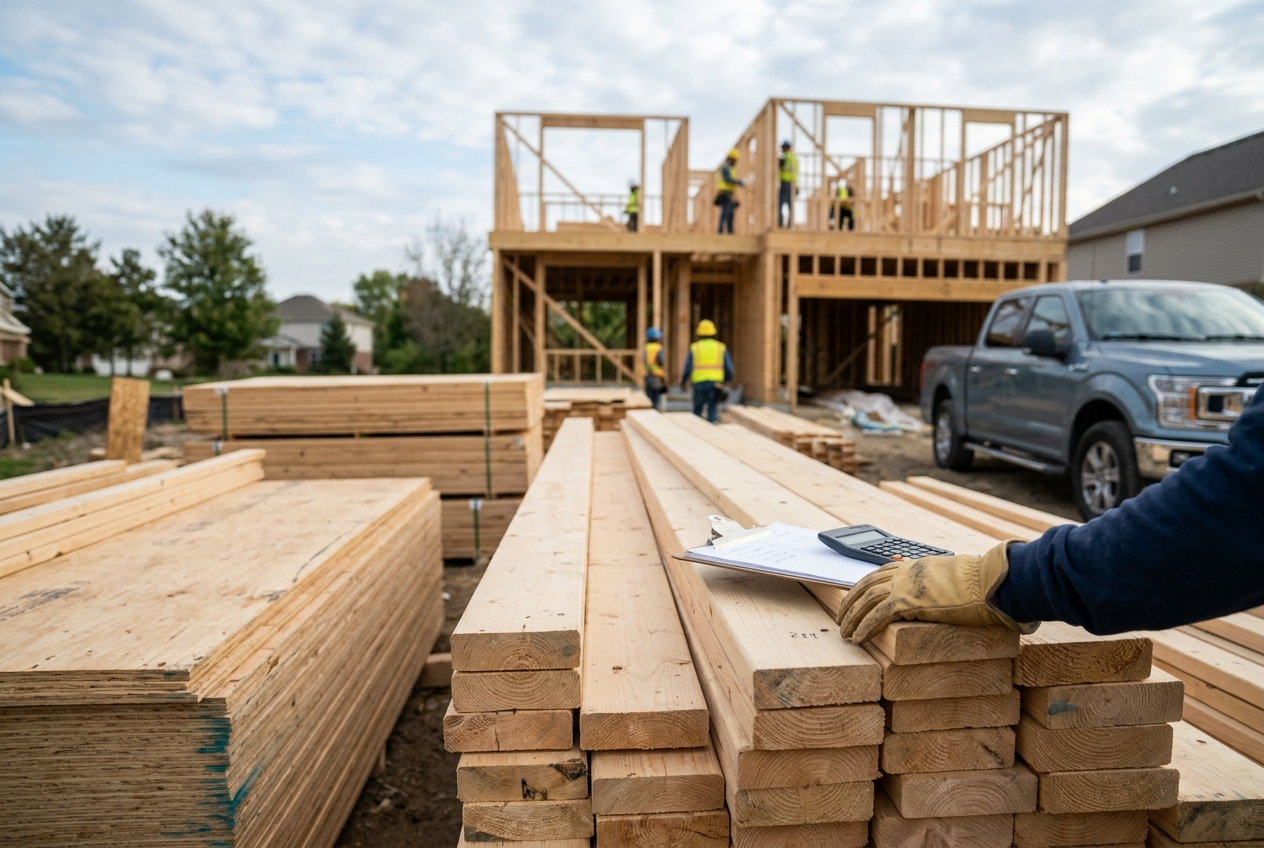
Price Surge: US construction input prices rose 11.2% year-over-year to September 2026, the fastest increase in almost four years.
Key Drivers: Metal prices (steel, aluminum, copper) and energy costs (crude petroleum, diesel fuel) are primary contributors to the significant cost increases.
Outlook: Costs are expected to continue rising through late 2026 and into 2027, driven by ongoing tariffs and global energy market volatility¹.
US construction input prices increased by 11.2% over the year to September 2026, the fastest annual rise in nearly four years.
This surge is putting pressure on both contractors and homeowners planning new construction or renovation projects. The primary drivers are significant jumps in metal prices and volatile energy costs, with expectations for continued upward pressure into 2027¹.
For homeowners, these rising costs mean that home improvement and repair projects will likely be more expensive. The price index for inputs to new residential construction, combining goods and services, was up 10.3% year-over-year in September 2026². Understanding the specific factors behind these increases can help homeowners plan for higher budgets and potential project delays.
Why Construction Material Costs Are Rising
The current spike in construction material costs stems from a combination of factors, including increasing tariffs, global energy market volatility, and lingering supply chain issues. These forces are affecting a wide range of materials crucial for home building and renovation.
Metal Price Increases
Metals are seeing some of the most dramatic price increases. Steel mill products rose 27.6% year-over-year from September 2025 to September 2026. Aluminum mill shapes increased by 25.2% year-over-year from September 2025 to September 2026. Copper and brass mill shapes saw a 30.0% rise year-over-year. Overall copper prices are up over 30% in the past year and more than 100% since early 2020¹.
Fabricated structural metal for non-industrial buildings also increased by 35%³ from September 2025 to September 2026. Electrical machinery and equipment prices grew by 13.3%¹ in the past year. These increases directly impact the cost of framing, plumbing, electrical systems, and many finished products in a home.
Energy Market Volatility
Energy prices are a significant contributor to rising construction costs. Crude petroleum prices jumped 28.3%⁴ in September 2026 alone. Diesel fuel (No. 2) prices more than doubled, rising 115.2%³ from September 2025 to September 2026. The national average for diesel fuel reached $5.45 per gallon by April 1, 2026, marking a 45% increase from the prior month and nearly 50% over the 2025 baseline average⁵.
Rising oil prices directly affect fuel costs for transporting materials and operating heavy equipment. They also impact the manufacturing of petrochemical-based products such as asphalt, roofing systems, PVC piping, and insulation⁶. The price of goods used in new residential construction (including energy) was up 1.8% over the month and up 9.7% from last year, while the price of services was up 2.2% over the month and up 11.3% from last year. Ongoing volatility in global energy markets is a primary driver for overall input price increases¹.
Impact of Tariffs
Trade tariffs are playing a substantial role in pushing up material costs. Section 232 metals duties were restructured in April 2026 to 50% on steel, aluminum, and most copper articles, with 25% on listed derivative products. A 50% tariff on semi-finished copper products was imposed in August 2025³. An existing 50% tariff on steel, aluminum, and copper has been in place since mid-2025, consistently adding to cost pressure¹.
New 50% tariffs on a wide range of Canadian goods, including paint, plywood and gypsum panels, took effect in August 2026, and flooring was added in October. These tariffs not only increase the cost of imported materials but also allow domestic producers to raise their prices³. The U.S.-China tariff truce, which offered short-term limits on new tariffs, was extended in September to January 10, 2027¹.
How Rising Costs Affect Homeowners
Homeowners are feeling the effects of these rising construction material costs in several ways. Project budgets are increasing, and securing favorable financing can be more challenging.
Higher Project Costs and Squeezed Contractor Margins
The direct consequence of soaring material prices is higher overall costs for home improvement and new construction projects. For example, lumber and plywood prices increased by 9.6% year-over-year. Precast concrete products saw a 10.5% year-over-year increase. The gap between what contractors pay for inputs (up 11.9% from September 2025 to September 2026) and what they charge for a finished building (up 5.4%) indicates squeezed profit margins³ . Many construction firms are absorbing most of these increases due to soft demand for projects, with data centers being a notable exception. Over 25% of Associated Builders and Contractors (ABC) contractors anticipate their profit margins will shrink over the next six months⁴.
To mitigate risks, contractors are adapting by including allowances or narrowing pricing windows for new projects. This means homeowners may see less flexibility in pricing or need to account for potential cost overruns. For those planning a major renovation, understanding these dynamics is key. Explore common budget ranges for projects like kitchen remodeling or bathroom remodeling.
Volatility in metal pricing can quickly eliminate projected margins for contractors working on fixed-price contracts, potentially leading to disputes or project delays.
Financing Challenges and Slower Growth
Homeowners are also facing elevated borrowing costs, with the 30-year fixed mortgage rate exceeding 7% in September 2026. This makes financing home improvement projects more expensive, adding another layer to the overall cost burden. This is occurring at a time when homeowner remodeling projects are already slowing down; Harvard's JCHS projects homeowner improvement and repair spending growth to slow to 0.5% through mid-2027⁷.
Outlook for 2027
All indications suggest that construction material costs will continue to rise through the end of Q4 2026 and likely into 2027¹. Tariffs on steel, aluminum, copper, and lumber are expected to remain in effect. The Associated Builders and Contractors (ABC) analysis of August 2026 data indicates that ongoing input price escalation will likely reduce contractor profitability in the coming months⁷.
Expected Price Trends
A significant decrease in construction costs would necessitate either tariff relief or a sharp decline in energy prices⁷. Forecasters anticipate no increase in overall construction spending in 2026 and only a modest gain in 2027, which is likely to fall short of keeping pace with inflation⁸.
Energy-intensive materials, metal products, and products heavily reliant on transportation will demand the most attention in 2027. Labor shortages, a persistent challenge, are also expected to continue into 2027⁸. For information on broader financial challenges, see our article on the US Home Insurance Crisis.
Planning for Home Projects
Given the current market conditions, homeowners embarking on projects like building a gazebo or a new home should anticipate higher costs and potential delays. Securing detailed quotes and discussing material sourcing with contractors is more critical than ever. Considering the rising cost to build a new home, homeowners may find it helpful to research articles like Cost for Amish to Build a 2000 sq ft Home to understand different construction models and their cost implications.
Homeowners should budget for potential cost increases and discuss strategies with contractors to manage price volatility. This might include using allowances for certain materials or having clear agreements on how price changes will be handled. Planning further in advance can also help account for potential delays in material delivery due to ongoing freight bottlenecks caused by Red Sea disruptions and the Panama Canal drought⁶.
Construction material costs are rising due to increased tariffs on metals like steel, aluminum, and copper, as well as significant volatility in global energy markets impacting crude petroleum and diesel fuel prices. Supply chain issues and transportation costs also play a role.
Metal products are leading the increases, with steel mill products up 27.6%, aluminum mill shapes up 25.2%, and copper and brass mill shapes up 30.0% year-over-year. Energy-related materials like diesel fuel, up 115.2%, are also major contributors.
Rising material costs directly increase the overall expense of your renovation project. You should expect higher quotes from contractors and potentially budget for additional allowances to cover material price fluctuations during the project's duration.
Yes, construction material costs are expected to continue rising through late 2026 and likely into 2027. Tariffs and global energy market volatility are predicted to sustain this upward pressure¹.
Tariffs, such as the 50% duties on steel, aluminum, and copper, directly increase the cost of imported materials. They also allow domestic producers to raise their prices, contributing to a broader increase in material costs for construction projects³.
Volatile energy prices, particularly for crude petroleum and diesel fuel, increase transportation costs for materials and fuel costs for heavy equipment. This also drives up the manufacturing costs of petrochemical-based products like asphalt and insulation⁶.
Homeowners should budget for potential cost increases, secure detailed quotes, and discuss material sourcing and price management strategies with their contractors. Planning projects further in advance can also help account for potential material delays.
Growth in homeowner remodeling projects is slowing, with projections for spending growth to slow to 0.5% through mid-2027. This indicates that higher costs and elevated borrowing rates are impacting homeowner demand.⁷
Deana is a Home Improvement Editor with a passion for helping homeowners navigate renovation, repair, and remodelling with confidence. Specializing in roofing, kitchen and bath remodelling, and outdoor living spaces, she combines industry knowledge with a genuine commitment to making complex home projects feel approachable for readers at every stage of their journey.
Her path into home improvement media began after several years working alongside licensed contractors in project coordination, where she gained firsthand exposure to the realities of home renovation - from permitting delays to material sourcing challenges. This hands-on experience gave her a practical, ground-level understanding of what homeowners actually need to know before hiring a contractor, choosing materials, or starting a project - insight that now shapes every piece of content she creates.
As an editor, Deana oversees content covering product reviews, cost guides, seasonal maintenance tips, and contractor vetting advice, working closely with writers and industry experts to ensure accuracy and relevance. She has a particular interest in emerging trends like smart home technology and energy-efficient upgrades, and enjoys translating technical information into clear, actionable guidance for homeowners.
Beyond editorial oversight, Deana stays closely connected to the pulse of the home improvement industry - tracking shifts in consumer preferences, pricing trends, and the challenges homeowners face when navigating renovation projects, from budgeting to finding trustworthy professionals.
When not editing, Deana enjoys visiting local open houses for design inspiration and tackling small DIY projects around her own home. Based in Adelaide, Australia, she believes a well-maintained, thoughtfully upgraded home is one of the most meaningful investments people can make in their day-to-day quality of life.
Sources:
2026 U.S. Construction Costs — Q4 Update, Kerrick Wille, 2026 (taxcreditadvisor.com)
Building Material Price Inflation Nears Four Year High – Eye On Housing (eyeonhousing.org)
Construction Material Prices 2026: Why Metals Lead, Sean Walker, 2026 (uniteideas.com)
Construction Materials Prices Increased 112 Year Over Year September (woodworkingnetwork.com)
Impacts of the 2026 Energy Crisis on the United States Freight Market (ez-crete.com)
Energy Costs and Construction Bids: 2026 Market Analysis, 2026 (contractorplus.app)
Construction Cost Forecast 2027: Materials, Labor & Rates (constructionsupplymagazine.com)
Construction Outlook Points to Uneven Market Heading Into 2027, 2026 (roofingcontractor.com)