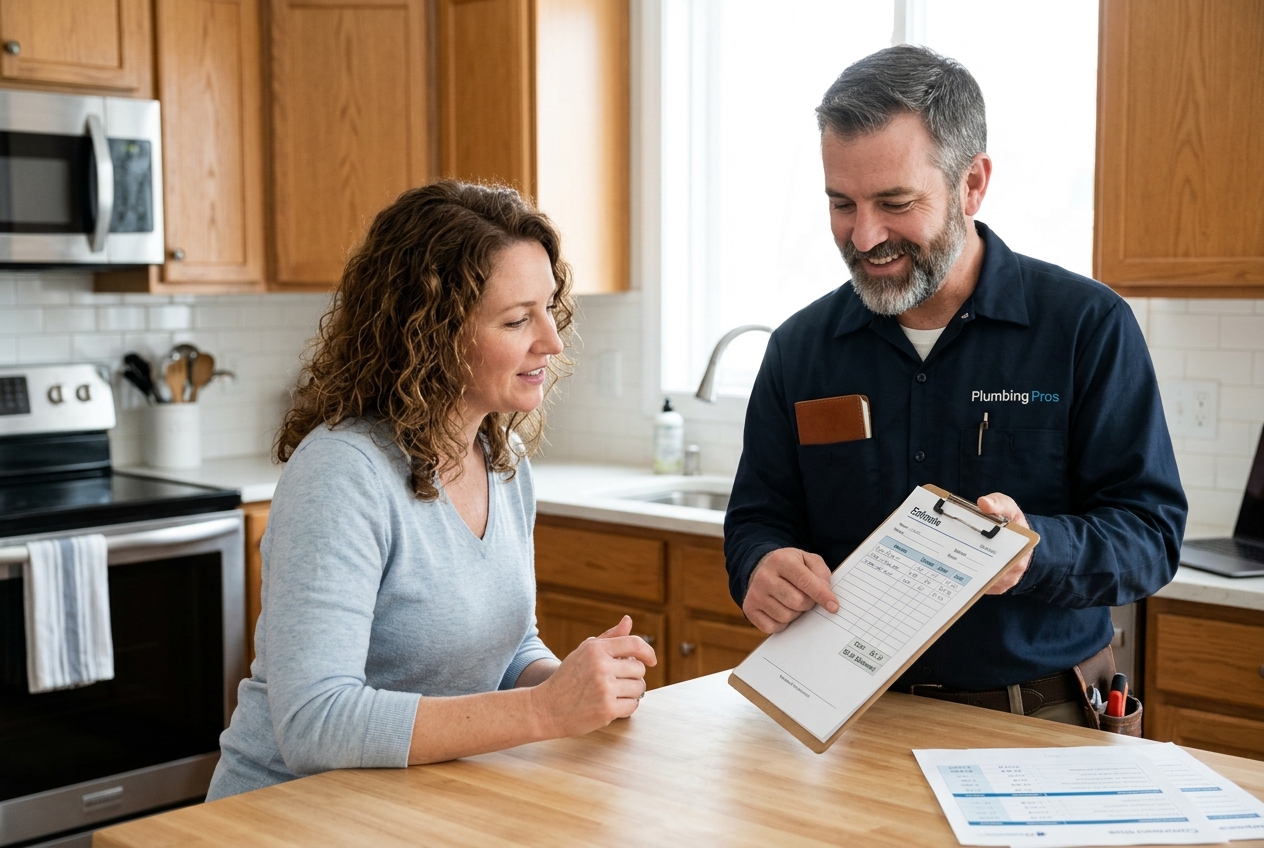
Understand scope: A free estimate covers jobs where issues are visible without extensive diagnostics.
Confirm fees: Always ask about potential trip, dispatch, or diagnostic fees before booking.
Compare quotes: Obtain at least three written estimates for significant jobs to compare costs and approaches.
Review details: Ensure estimates are itemized, specifying labor, materials, warranties, and exclusions.
A free plumbing estimate is a no-charge price proposal for a job where the scope of work can be determined without extensive testing or investigation . These estimates typically outline the work, labor, and parts needed. Many plumbers offer free estimates, but policies vary by company and service type¹.
Common jobs that receive free estimates include replacing a toilet, installing a garbage disposal, or swapping a water heater¹. For these, a plumber can inspect the site and confirm details with minimal investigation.
When a Free Estimate Becomes a Diagnostic Fee
Not all plumbing visits qualify for a free estimate. If the cause of a problem is unknown and requires troubleshooting, testing, or leak detection, the visit is considered a diagnostic service and a fee may apply.
Diagnostic fees often range from $50-$150, and are sometimes $79-$129. This fee may or may not be credited towards the repair if approved. A free estimate covers pricing for work the plumber can see and measure, but not necessarily the time spent finding out what is wrong¹.
Before booking any plumbing appointment, confirm if there are any potential charges, including trip, dispatch, or diagnostic fees¹.
It is crucial to clarify these potential charges before a plumber visits. If a diagnostic fee is charged for troubleshooting, inquire if it will be applied towards the repair cost if you proceed¹.
Why Multiple Estimates Matter
For any significant plumbing job, getting multiple estimates is highly recommended. Consumer protection bodies like the Better Business Bureau (BBB) and various plumbing professionals suggest obtaining at least three quotes².
Obtaining multiple estimates allows you to compare prices, services, and contractor professionalism. This helps you secure the best value and avoid overcharging³. Different plumbers might offer varied perspectives on potential issues and solutions, clarifying the scope of work and ensuring the chosen plan aligns with your specific needs⁴.
Comparing estimates also helps identify unusually low bids, which can signal shortcuts or hidden fees. This process helps you understand the 'real cost' and fair market value for a service. Ultimately, multiple estimates offer peace of mind by allowing for an educated decision, especially for significant repairs³. You can learn more about general vetting practices in our guide, Finding a Plumber Near Me: Urgent and Routine Plumbing Needs.
What a Comprehensive Estimate Includes
A comprehensive written estimate should specify the scope of work, materials, labor, and any additional fees². It should also clarify what remains uncertain if parts of the problem are hidden⁴.
Key Estimate Components
Itemized Materials: A detailed list of every part and fixture, including brand and model numbers where relevant. Plumbers typically apply a markup of 20-50% on parts to cover stocking, ordering, and warranty risk.
Labor Costs: Itemized labor, including the hourly rate or a flat rate for the job, and estimated hours. Hourly rates for residential plumbers in 2026 range from $85-$150/hour, varying by region, license level, and job complexity⁵.
Permit Costs: If required, the estimate should address permit costs, which typically range from $50 to $500. The absence of permits for required work is a red flag⁶.
Warranties: Both manufacturer warranties on parts and the plumber's workmanship guarantee should be clearly stated in writing².
Payment Terms: Details on when payment is due, accepted methods, and any required deposit⁷.
Additional Fees: Clearly outlined fees such as trip, dispatch, diagnostic, or disposal fees, noting if they are credited towards the repair¹.
Exclusions: Explicitly state what is not included, such as restoration work like drywall repair, painting, or flooring, especially for hidden leaks or major access needs. If a job requires cutting into walls or floors, clarify who covers patching, painting, or flooring restoration, as these are often separate costs (e.g., $200-$800 for drywall, $1,000-$3,000 for slab work)⁴.
Red Flags and Safeguards
When reviewing plumbing estimates, certain indicators should prompt caution. Being aware of these can help you avoid costly mistakes.
Warning Signs to Watch For
Vague Estimates: Estimates that are too general (e.g., "plumbing repair" or "fix leak") without specific details are red flags. These vague descriptions often lead to unexpected costs.
Lump-Sum Totals: A single lump-sum total without a breakdown of labor and materials makes comparison difficult and can hide excessive markups⁶.
Unusually Low Bids: A bid significantly lower than others for the same job can indicate inferior materials, skipped permits, omitted scope items, or a contractor planning to add charges later. The "expensive" estimate can often be the complete one².
High-Pressure Sales: Tactics like urgency (e.g., "price only good today") are red flags because legitimate pricing is based on consistent factors³.
Cash-Only Demands: A contractor demanding only cash and providing no receipts may be operating off the books, offering no protection in case of dispute⁸.
Unjustified Replacements: Be wary if a plumber recommends a major system replacement without proper inspection, testing, or explanation of why repair isn't viable⁹.
Essential Safeguards
Verify Licensing and Insurance: Ensure the plumber is licensed and insured. Most states require plumbers to be licensed, and some require a contractor license for jobs over a set amount, such as $1,000 in California. This protects you against damage or injury.
Written Contracts: For major jobs, require a written contract outlining the scope, timeline, payment, and how changes will be handled⁸.
Consistent Scope of Work: Request the exact same scope of work from all plumbers. Price differences are meaningless if estimates aren't based on identical services, materials, and steps.
Evidence for Hidden Issues: If a plumber identifies hidden issues, ask to see evidence, such as camera footage.
Clarify Price Type: Inquire whether the price is a fixed quote or an estimate that might change, and how changes will be handled (e.g., written change orders)².
Comparing Estimates Effectively
Once you have received multiple estimates, comparing them methodically ensures you make the best decision.
Pros
- + You clearly see what is and isn't included, preventing surprises.
- + Helps identify which plumber provides the most thorough and transparent offer.
- + Ensures a fair comparison by highlighting differences in proposed solutions.
Cons
- - Requires careful attention to detail across multiple documents.
- - Can be time-consuming to create and fill out a comparison tool.
Create a comparison grid, listing all line items: parts, labor, permits, warranties, and exclusions. Mark any blanks on the estimates. Do not focus solely on the lowest total; a seemingly cheap quote might be incomplete . Often, the "expensive" estimate is actually the complete one².
Final Checks
Experience: Ask about the plumber's experience with your specific type of job. Check reviews across multiple platforms.
Warranty: Clarify the warranty and workmanship policies.
Emergency Availability: Confirm emergency availability and how after-hours calls are handled¹.
Recommendation
Always obtain at least three detailed, itemized written estimates for any significant plumbing work. Thoroughly compare these estimates, focusing on the clarity of the scope, materials, labor breakdown, included warranties, and explicit exclusions. Prioritize transparency and a comprehensive plan over the lowest initial bid to avoid hidden costs and ensure a quality repair.
A free plumbing estimate is a no-charge price proposal for a plumbing job where the scope of work can be determined without extensive testing or investigation . It outlines the work, labor, and parts needed¹.
A free estimate is typically not possible when the cause of a plumbing problem is unknown and requires troubleshooting, testing, or leak detection . In these cases, a diagnostic service and its associated fee may apply.
Diagnostic fees for plumbing services often range from $50-$150, and are sometimes $79-$129. This fee may or may not be credited towards the repair cost if you proceed with the work¹.
Getting multiple estimates, especially at least three for larger jobs, allows you to compare prices, services, and contractor professionalism. This helps ensure you get the best value, understand the fair market rate, and avoid overpaying³.
A comprehensive estimate should detail the scope of work, itemized materials (with brand/model and markup), labor costs (hourly or flat rate), permit costs, warranties, payment terms, additional fees, and explicitly list any exclusions (e.g., restoration work)².
Red flags include vague descriptions, single lump-sum totals without breakdown⁶, unusually low bids compared to others, high-pressure sales tactics³, demands for cash-only payment⁸, or recommending major replacements without proper diagnosis⁹.
An unusually low bid can indicate inferior materials, skipped permits, omitted scope items, or hidden charges that will be added later³. Always compare the scope of work and details with other estimates carefully.
Yes, it is crucial to ensure the plumber is licensed and insured. Most states require plumbers to be licensed, and some require a contractor license for jobs over a set amount, such as $1,000 in California. This protects you from damage or injury during the work.
Deana is a Home Improvement Editor with a passion for helping homeowners navigate renovation, repair, and remodelling with confidence. Specializing in roofing, kitchen and bath remodelling, and outdoor living spaces, she combines industry knowledge with a genuine commitment to making complex home projects feel approachable for readers at every stage of their journey.
Her path into home improvement media began after several years working alongside licensed contractors in project coordination, where she gained firsthand exposure to the realities of home renovation - from permitting delays to material sourcing challenges. This hands-on experience gave her a practical, ground-level understanding of what homeowners actually need to know before hiring a contractor, choosing materials, or starting a project - insight that now shapes every piece of content she creates.
As an editor, Deana oversees content covering product reviews, cost guides, seasonal maintenance tips, and contractor vetting advice, working closely with writers and industry experts to ensure accuracy and relevance. She has a particular interest in emerging trends like smart home technology and energy-efficient upgrades, and enjoys translating technical information into clear, actionable guidance for homeowners.
Beyond editorial oversight, Deana stays closely connected to the pulse of the home improvement industry - tracking shifts in consumer preferences, pricing trends, and the challenges homeowners face when navigating renovation projects, from budgeting to finding trustworthy professionals.
When not editing, Deana enjoys visiting local open houses for design inspiration and tackling small DIY projects around her own home. Based in Adelaide, Australia, she believes a well-maintained, thoughtfully upgraded home is one of the most meaningful investments people can make in their day-to-day quality of life.
Sources:
Free Plumbing Estimates: Are They Really Free in 2026?, 2026 (royalpenguinplumbing.com)
How to Spot a Bad Plumbing Quote Before You Sign, 1-800-Plumber +Air, 2026 (1800plumber.com)
Why Getting Multiple Plumbing Estimates Is So Important, 2025 (serviceprosplumbers.com)
How To Compare Plumbing Estimates (westernrooter.com)
Plumbing Pricing Guide 2026: Flat Rate, Permits & How to Quote, Three Core AI LLC, 2026 (leadduo.io)
Plumbing Estimate Red Flags Homeowners Should Know, ZunoQuote (zunoquote.com)
What Should a Plumber Quote Include?, 2025 (gracoac.com)
10 Bathroom Contractor Red Flags That Should Make You Walk Away, Oakwood Remodeling Group, 2026 (oakwoodremodel.com)
Plumber Nashville TN | # 1 Rated Plumber (covertplumbing.com)